

Diligent little algae eaters, Otocinclus are peaceful and would make an awesome addition to your planted aquarium.
They’re easy to look after, provide plenty of entertainment, and will help keep your tank from being overrun by algae – as long as you keep them in the correct conditions.
In this Otocinclus care guide, I’ll go over how you can avoid the common mistakes which cause many hobbyists to lose their Otos in the first month.
And what you need to do to ensure your buddies live a long, happy and healthy life.
Common Names For Otoclinclus
- Oto
- Oto Cat
- Dwarf Sucking Catfish
- Midget Sucker Fish
Scientific Classification
- Kingdom: Animalia
- Phylum: Chordata
- Class: Actinopterygii
- Order: Siluriformes
- Family: Loricariidae
- Tribe: Hypoptopomatini
- Genus: Otocinclus
- Type species: Otocinclus vestitus
Natural Habitat
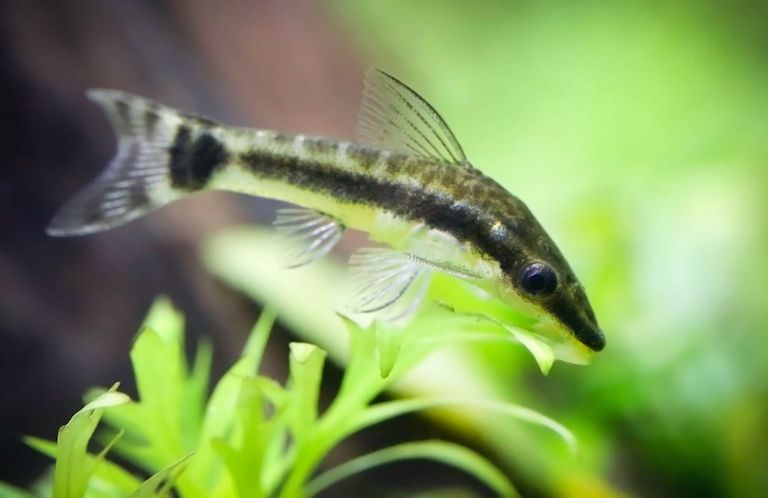
A genus of catfish in the family Loricariidae, Otocinclus are native to South America and can be found east of the Andes throughout the lowlands from northern Venezuela to northern Argentina.
Most active in the day, Otos swim in big shoals and inhabit well-oxygenated, moderate to slow-flowing streams and small rivers.Spending their time in the shallows and near the surface, Otos use their suckermouth to cling to roots, stones and plant leaves as they feed on algae and aufwuchs.
In-Tank Behavior
Super peaceful, if you house Oto’s properly they’ll show tons of activity and personality during the day.
Industrial workers, they’ll spend the majority of their time sucking away on rocks, leaves, or anything with algae growing on it.
My favorite is when they hang off the aquarium glass and you can see their suckermouth in full motion.
These fish are active and social. You’ll often see them swirling around each other, playing like a pack of small children. Otos prefer to stay together in a loose group.
At night, Otos will often dance around, especially towards the front glass. I often see mine swimming vigorously at the front of the tank after the lights have gone off for the evening.
Otocinclus Aquarium Setup
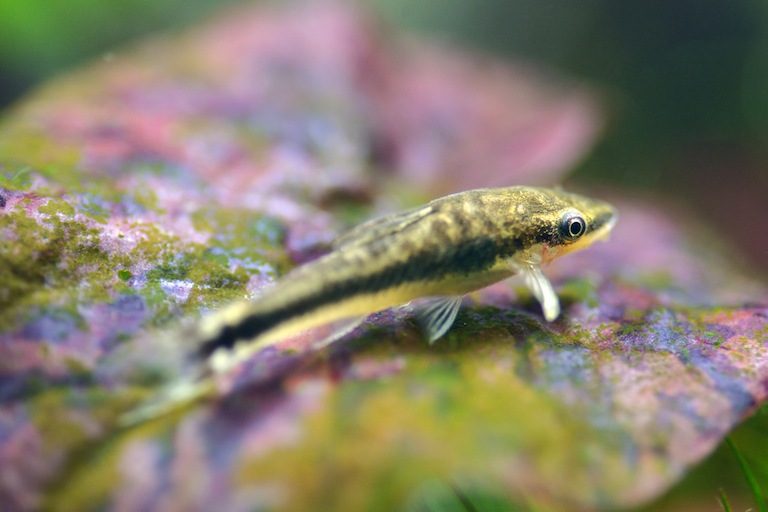
Otos will do best in a mature tank, one that is thoroughly cycled and has a robust supply of algae.
This species can be quite sensitive to water parameters.
You’ll need a mature filter capable of cycling your aquarium water at least four times an hour, the more flow the better.
Keep nitrate levels between 0-20 ppm and have no measurable ammonia or nitrite.
Otos prefer a stable pH, which is neutral to slightly acidic (6-7.5) and a water temperature between 72-82°F (22-28°C).
Stock your tank with plants (see more info below) and perform weekly 25-50% water changes to help keep your water as clean as possible.
Water Quality Overview
- Filter with a GPH rating 4x the volume of your tank
- Nitrates between 0-20ppm
- No measurable ammonia or nitrite
- Water Temperature: 72-82°F (22-28°C)
- pH: 6-7.5
- Water Hardness: 6° to 15° dH
Tank Size
Otocinclus are social fish, living in shoals of thousands in the wild. Because of this, you’ll need to keep at least 6 in your tank.
This species should be kept in at least a 20 gallon (76 liter) tank, but the bigger, the better.
Equipment
Good water quality is vital, so I recommend you use a filter with a GPH rating equal to four times the volume of your aquarium, at least.
It’s best to use a filter with a large biomedia capacity. Canister filters and strong hang-on-the-backs are best.
Otos thrive on strong water flow. You can add on an air pump or powerhead to create more current in the tank.
I’d recommend some LED lighting for your plants.
Tank Hardscape
Driftwood and rounded stones will provide your Otos with areas to graze. In the wild, these fish are often found underneath sunken logs.
Make sure you avoid any objects with sharp surfaces. Your Otos (and other fish in your tank) may damage themselves if they brush against sharp edges as they swim by.
Aquarium Plants
Otos especially like to graze along broad leaves. Here are some common plants that work well:
- Anubias barteri
- Cryptocoryne undulata
- Java Fern
- Amazon swords
Plants with broad leaves not only provide grazing area, they’re also great resting and hiding areas for Otos. They’ll lounge on leaves and hide among them if they feel shy.
Feeding Otos
Otos love to constantly graze on soft green algae growing on your substrate, decorations, aquarium glass and plants.
You should never add Otos to a newly set up tank. They need to be in a mature system that has lots of algae for them to graze on. These fish can starve to death if they don’t have a ready supply of food.
Now, this is important, and you should take note of this: Most aquariums with a stable ecosystem will not produce enough algae to sustain six or more Otos.
Because of this, you need to provide some extra food. You can do this by feeding them algae wafers or Catfish pellets.
My first choice is Omega One Veggie Rounds. I’ve had great results from these wafers.

You can also supplement their diet with blanched vegetables:
- Zucchini
- Spinach
- Romaine lettuce
When you’re feeding your Otos blanched vegetables, you’re going to need to weigh them down so it’ll stay in one spot long enough for them to reach it.
You can do this by using a Veggie-Clip, leftover plant weights or attach it to a small rock using a rubber band.As a general rule, don’t leave the vegetables in your aquarium for more than 3 days.
Thoroughly wash the vegetables – make sure they’re free of pesticides before you introduce them to your aquarium.
Otocinclus Tank Mates
Otos are small and very peaceful. They’re covered in armor plating, but that’s not much of a defense against large fish that can swallow them whole.
Extremely aggressive or territorial fish will bully Otos.
I wouldn’t recommend mixing them with voracious algae eating species, like bristlenose plecos. They will compete for territory and food.
Some Recommendations
- Boraras
- Cory cats
- Dwarf Gouramis
- Neon Tetras
- Rasbora
- Rainbowfish
- Ornamental shrimp
- Snails
Common Fish to Avoid
- Large cichlids
- Large plecos (they’ll compete for food)
- Goldfish
- Oscars
Sexing and Breeding Otos
It can be difficult to sex Otos because there’s no obvious distinction. But, if you look closely the females are slightly larger and wider than males.
And when it comes to in-tank breeding, it’s rare – but not impossible. If it happens, aquatic hobbyists don’t tend to notice until they’re greeted by their new friend in the tank.
It’s essential that the Otos have the tank to themselves, if you want them to breed. Other fish will eat the eggs and fry.
If you’re one of the lucky ones who manage to witness the mating process, you’ll see the female swimming up and down plants, rocks, or the sides of your tank with males in hot pursuit.
A lucky male will then get into a ‘T’ position with the female – causing her to release and hold her eggs with her ventral fins.
After the female has found a suitable surface to place the eggs, the male will fertilize them. The process is then repeated until the female’s done.You can read a successful breeding story here.
Unlike other Loricariids, Otocinclus males do not guard their eggs.
Buying Otocinclus – Be Warned!
A huge problem with keeping Otos is the first month of ownership. It’s common for hobbyists to report high loses in the first few weeks – even in ideal tank conditions.
So what’s going on?
Well, the poor things were likely starving.
Otos can end up going weeks, even months, without food during the process of being caught in the wild, sorted and shipped through various dealers and wholesalers on their way to live fish stores.
Having been used to an environment with plenty of algae and plants, they’re then starved and left in a bare tank – it’s no surprise there’s often losses.
The fish then arrive in the fish store, where they’re commonly kept in overcrowded tanks with little algae to feed on.
If the pet store doesn’t provide them with algae wafers or vegetables they won’t last long.
It’s not a case of Otos being a fragile fish, it’s the fact they’re generally kept in harsh conditions before they’re bought.
Temperature swings, oxygen changes, irregular light cycles, dramatic movements and can also add stress.
But, it’s not all doom and gloom – you can use the following tips to buy healthy Otos.
How to Buy Healthy Otos?
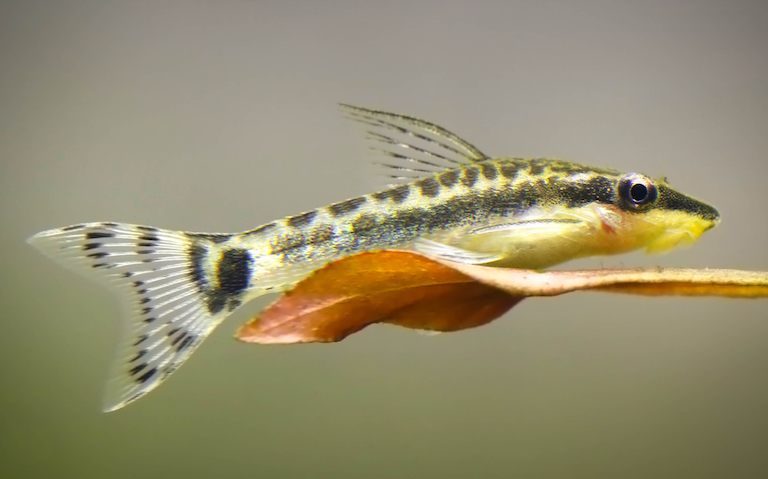
To avoid the disappointment of losing your lovely Otos in the first few months, it’s important you pick the healthiest Otos from your fish store.
The following tips aren’t the ultimate answer, more a guide to give you and the Otos the best chance for success.
It’s a good idea to speak with the workers at the live fish store. Ask them the following questions:
How long have they been in the store?
It’s common for Otos to die shortly after arriving at a pet store, so if they’ve had them for a few weeks it’s a good sign.
What are you feeding them?
If they say ‘Flake food’ – say no and leave. If they struggle to give you an answer – nope, this store is not for you.
Take a Close Look at Their Appearance
Check and see if they’ve got nice plump bellies. You don’t want skinny fish with flat bellies. They’re starving.
Buy Tank-Bred Otos
This is easier said than done. Tank-bred Otos would be a better option, except they’re extremely hard to source.
Most are wild caught and shipped in through big distributors.
How to Introduce Your New Otos
After you’ve selected the best Otos available, it’s time to introduce them to your cycled aquarium.
You’ll also want some algae growth in your tank for when they arrive. It’s a good idea to turn up the lights a bit to get some extra algae growing.
If at all possible, quarantine your new Otos for several weeks to ensure that they are healthy.
Once you’re confident they’re in good condition, you can begin to introduce them to your display tank.
I highly recommend drip acclimating Otos. For more information, see our detailed article, here.
Keep a close eye on them during the first month; making sure you keep on top of your 25-30% water changes.
If they survive, you’ve got a big chance they’ll be around for a long time – as long as you take care of them properly.
Final Thoughts
Oto cats are actually pretty tough little fish. If they weren’t, they wouldn’t be able to survive the stressful process of being caught in the wild and shipped all over the world.
Sure, they do best in clean water, with stable parameters, but so do most fish!
Do your best to buy healthy fish that aren’t starving to death.
Make sure that you’re providing them with enough food. They should always have nice, round bellies.
If they don’t, add some food to the tank!
I really think this species is worth a little extra hassle. They’re great algae eaters and are so cute and fun to watch.
I hope you find this article helpful.
I wish you and your fish the very best!
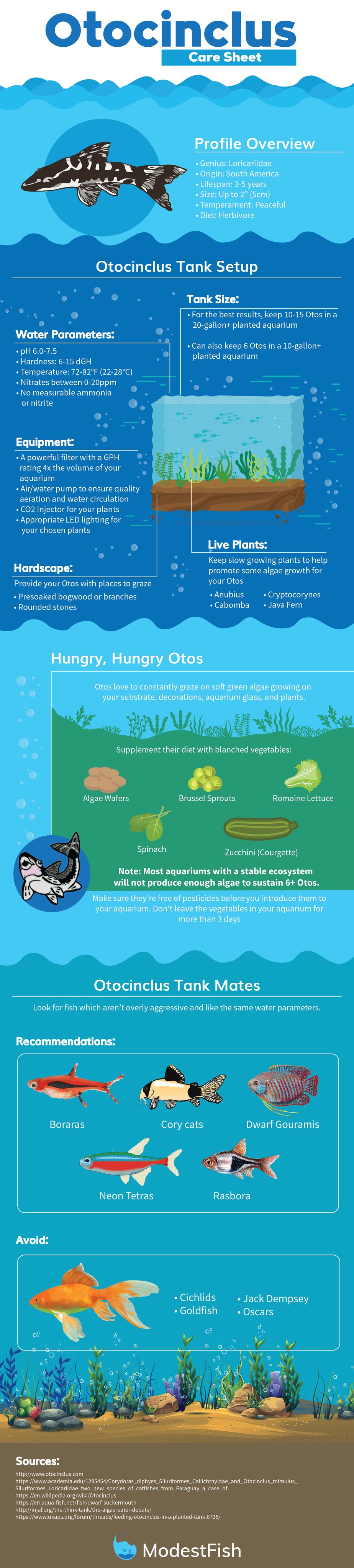
Infographic: Otocinclus Care Guide

I’m in the planning stages of making a planted aquarium and I would like to have a small school of Otos in there. Would the plant species MIcro Sword (Lilaeopsis novae-zelandiae) or the plant Four Leaf Clover (Marsilea quadrifolia) be good for the Otos? Both plants would create a carpeting or lawn effect in the foreground of the tank.
Hello, Danielle, thank you for your comment. Yes, they’d be fine 😀
A couple of tips for you.
For Micro Sword:
– The very fine and delicate. So be careful not to damage or tear the roots when planting
– They have short roots and can come loss and float around. You can just replant them.
– They’re slow growing and can get a build up of algae, but with your oto, it should feed on the algae. Other ways to help combat this is to avoid having large clumps of this in your tank.
For Four Leaf Clover:
– Not much to say here. It’s one of the easiest carpeting plants you can have.
Wish you all the best 😀
Awesome!!! Thank you so much for your tips!
Your website has been, without a doubt, the most helpful and informative resource that I have.
Thank you so much 😀
Great article. Are Ottos more active and prefer to feed during the night ? I have some Bolivian Rams which are very peaceful in my community aquarium and I’m looking for a more active bottom dwelling type of fish. Thanks.