

You can really create a thriving community tank around dwarf gourami that’ll bring you enjoyment for years to come.
And in this guide, I’ll share with you need to know so you can pick the best tank mate for your dwarf gouramis.
Table of Contents
What Makes an Ideal Tank Mate?
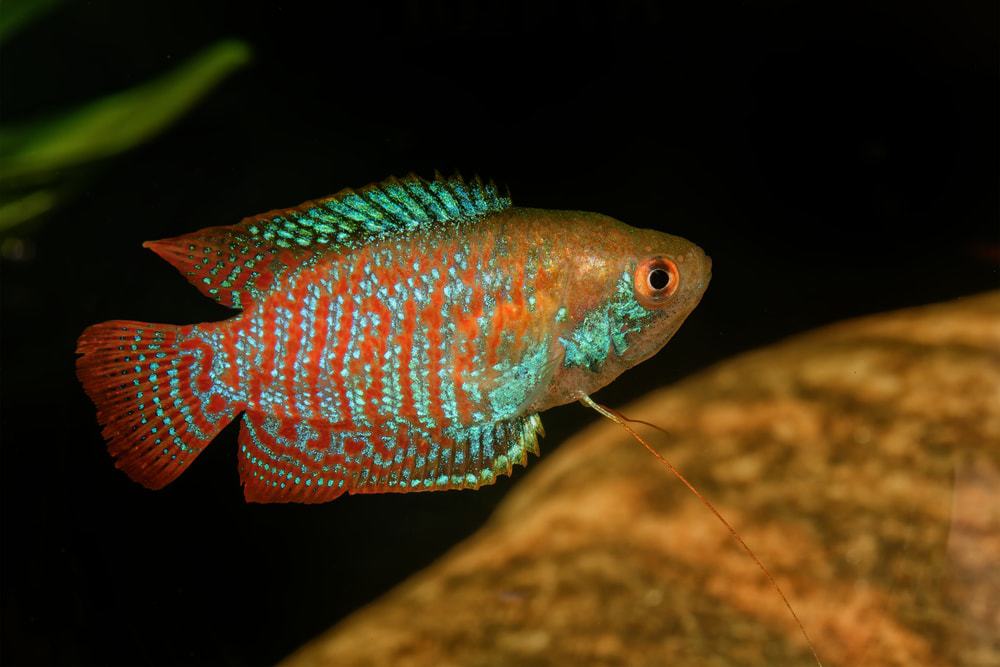
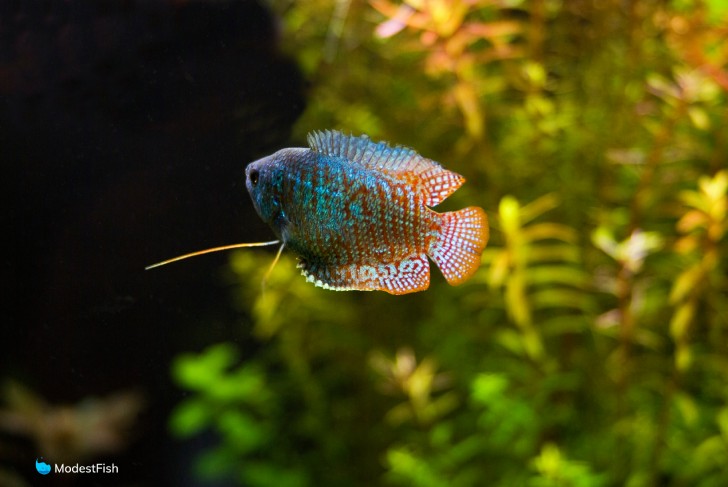
Just like the name implies, dwarf gouramis really don’t get very big. And while they can get aggressive with other males of the same species, they’re otherwise pretty wimpy.
They need tank mates that aren’t big or aggressive so they don’t get beat up or killed.
So the best kind of fish to mix with dwarf gouramis are small, peaceful community fish.
It’s also a good idea to go with fish that need similar conditions.
Gouramis come from blackwater environments in Southeast Asia, like slow moving streams, ponds and rice paddies. They thrive in warm water that’s soft and slightly acidic and that has thick plant growth.
Ideal tank mates need to be able to thrive in warmer temperatures with only a gentle current running through the tank and they need to be comfortable with dense planted areas.
Pro Tip: Even though they’re from another part of the world, a lot of South American fish originate from habitats that are very similar to the native waterways of gouramis. So don’t just limit your search to other Southeast Asian fish.
What Makes a Bad Tank Mate?
Here’s what you should watch out for.
Boys Will be Boys
Dwarf gouramis don’t do well in groups, at least the males don’t. In the wild, each male will stake out a little territory and then defend it against any other male that dares to come near.
Then he’ll strut around and generally make a show of himself in order to attract a lady friend.
In an aquarium, male gouramis want to drive away all the other males, but since there’s nowhere to go, they will just fight and fight. Some people will say that you can have several males in a tank as long as it’s big enough, but this has not been my experience.
So don’t expect to keep other male gouramis as tank mates, even if they’re different species.
You can keep females together in a group, but the vast majority of dwarf gouramis you’ll find in live fish stores are males.
Mistaken Identity
Sometimes, gouramis can mistake other species of fish for other male gouramis and attack them.
So avoid species that also have bright colors and big flashy fins, like:
Big Bullies
Definitely avoid large and/or aggressive fish. Things like Oscars, African cichlids or arowanas will terrorize and possibly eat your dwarf gourami.
Pro Tip: Many of the fish you find in live fish stores are juveniles that will grow much larger as they mature. Research a species before you buy it so you know what to expect as far as size and aggression levels when they’re adults.
8 Best Tank Mates for Dwarf Gouramis
1. Neon Tetra
- Care level: easy
- Temperament: peaceful
- Size: 1.5 inches (4 centimeters)
- Min tank size: 10 gallons (38 liters)
- Diet: omnivore
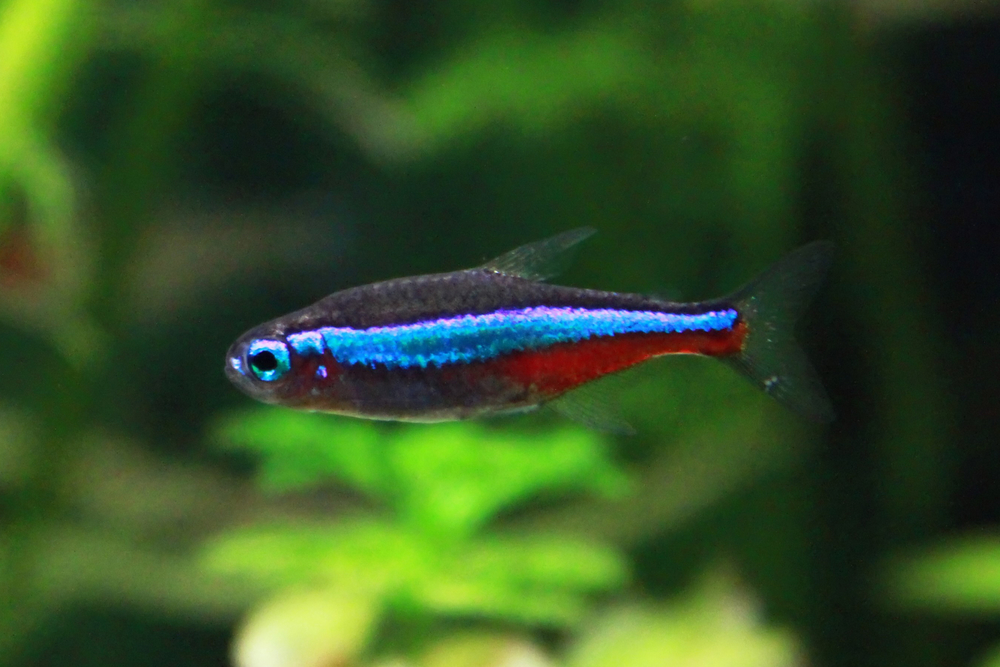
Neon tetras are a mainstay in the aquarium industry. They are a small, colorful schooling fish that originates from South America but has been exclusively tank bred for decades.
Neons should be kept in a group of five or more.
The front half of their bodies is a neon iridescent blue that tapers off halfway along their bodies and their tails are a vivid red.
They are peaceful little fish that really don’t bother anyone and they’re very hardy. They will thrive in a heavily planted tank and prefer soft, slightly acidic water, similar to what dwarf gouramis need.
Pro Tip: Schooling fish instinctively group together, counting on safety in numbers. Without a big enough school, fish like this will feel very insecure and stressed all the time since their instincts tell them they don’t have enough buddies to watch out for danger.
Most of the species on this list are schooling fish that need to be kept in a group in order to be happy and healthy long term.
Read: Neon Tetra Care Guide
2. Cardinal Tetra
- Care level: easy
- Temperament: peaceful
- Size: 2 inches (5 centimeters)
- Min tank size: 10 gallons (38 liters)
- Diet: omnivore
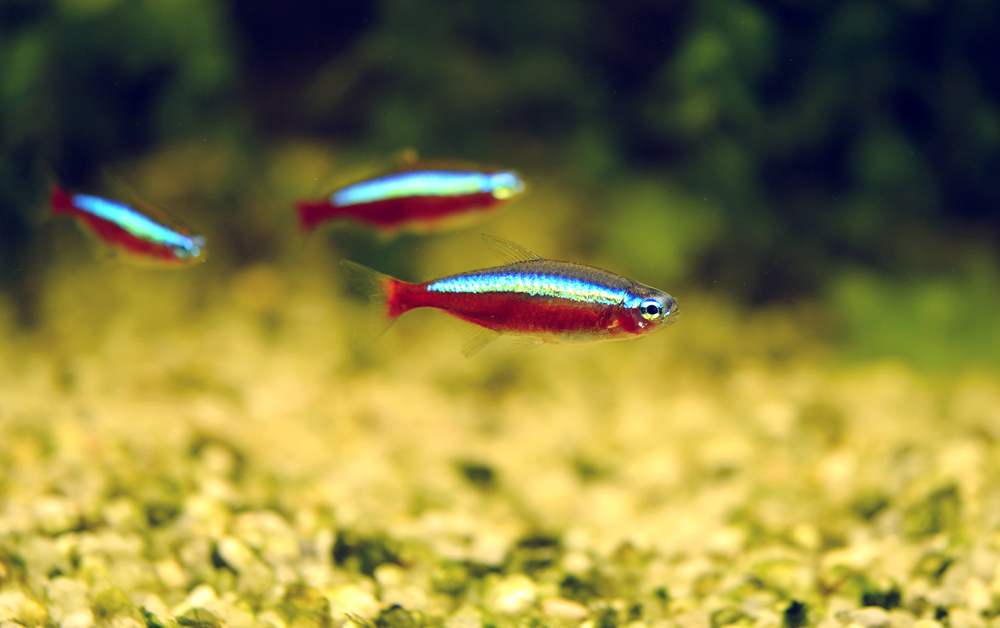
The cardinal tetra is the slightly bigger cousin of the neon tetra. In fact, the two species are so similar, they’re often confused. Cardinal tetras get a bit bigger than neons and their blue and red stripes extend the full length of their bodies instead of tapering off halfway.
Cardinals are also a schooling fish that need to be kept in a group of five or more, so make sure you have enough room for them.
These little guys are hardy and interesting to watch as they swim in a school around the tank. They will appreciate a heavily planted tank, just like dwarf gouramis.
3. Mollies
- Care level: easy
- Temperament: peaceful
- Size: 3-6 inches (7.5-15 centimeters)
- Min tank size: 20 gallons (75 liters)
- Diet: omnivore
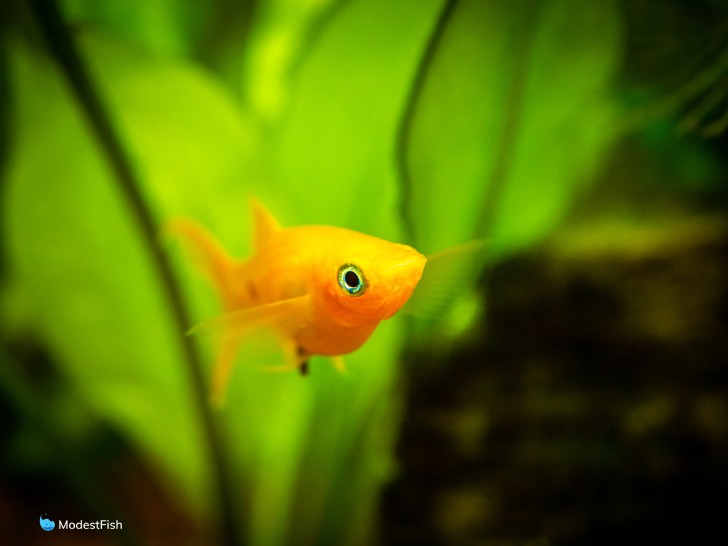
Mollies are active top dwelling fish that can be found in almost every live fish store. There are many different captive bred varieties that can adapt to a wide range of water parameters. Although they prefer harder water, mollies and dwarf gouramis can still be kept together.
This species likes to have some open swimming areas along with some planted areas, so be aware of that when setting up your tank.
Mollies are livebearers, meaning they give birth to live young. They can very easily start to breed like crazy in an aquarium and start to overrun it.
Also, mollies are really fast and can be somewhat aggressive when it comes to food. It’s not that they hurt other fish when they’re feeding, it’s just that they’re such chowhounds that it can be hard for slower fish to get to food fast enough.
You might want to consider adding food to more than one place to give the gourami a better chance at sneaking a meal around the voracious mollies.
4. Chili Rasboras
- Care level: easy
- Temperament: peaceful
- Size: inches 0.75 inches (2 centimeters)
- Min tank size: 10 gallons (38 liters)
- Diet: carnivore
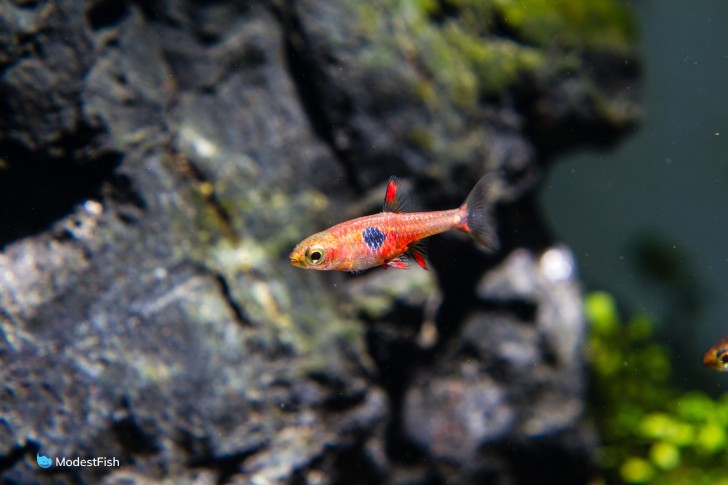
Chili rasboras are a gorgeous species of nano fish. They’re a slender-bodied fish with rich red coloration and a dark iridescent stripe on each side. This species is another peaceful schooling fish that does best in a group of 10 or more.
Just like dwarf gouramis, chili rasboras prefer soft water and a heavily planted tank. They originate from Southeast Asia, just like the ancestors of the dwarf gourami, so they both thrive in similar conditions.
I think these fish make an excellent contrast to a powder blue dwarf gourami. The gourami cruising around while a school of bright red fish zooms by would look really beautiful.
These little guys are fairly easy to keep, but be aware that they need really clean water. Be prepared to keep a strict maintenance schedule and absolutely avoid overfeeding to help keep your water pristine.
5. Zebra Danios
- Care level: easy
- Temperament: peaceful
- Size: 2 inches (5 centimeters)
- Min tank size: 20 gallons (75 liters)
- Diet: omnivore
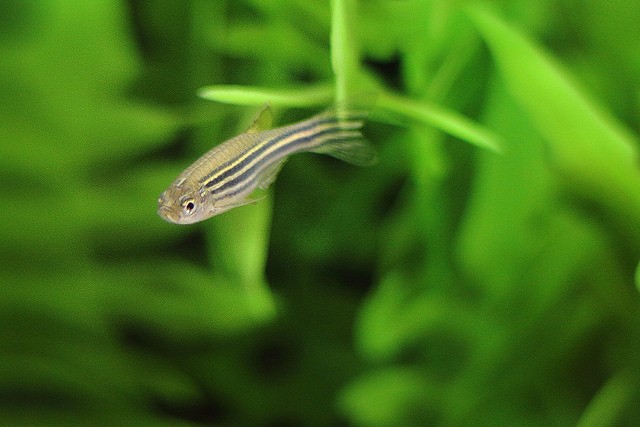
Zebra danios are adorable little fish. They’re slender bodied, with blue and yellow iridescent stripes running from nose to tail. I love how shiny they are and I think they’re really eye catching, despite the fact that they’re really small.
OK technically, zebra danios can live in an aquarium smaller than 20 gallons, but frankly, they’re like hyperactive little kids and I think they’re happier in a bigger tank. That gives them more room to zoom around and play.
They are a schooling fish that is happiest when kept in a group of 10 or more. So trying to keep them in a smaller tank doesn’t give them the room to school and swim around naturally.
They’ll gladly dart in and out of densely planted areas but they also need some open swimming areas.
In the wild, these fish originate from areas known for soft water, but they’ve been tank bred for so many generations that they’re really adaptable when it comes to water parameters.
6. Harlequin Rasboras
- Care level: easy
- Temperament: peaceful
- Size: 2 inches (5 centimeters)
- Min tank size: 20 gallons (75 liters)
- Diet: omnivore
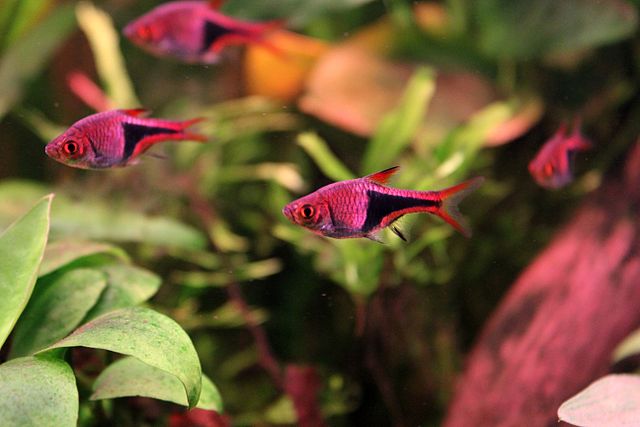
Harlequin rasboras are larger cousins of the chili rasboras. They too originate from soft water environments in Southeast Asia, some of the same habitats where you can find wild gouramis.
Harlequins get about twice the size of chili rasboras. They’re a dusky red/gold/orangey color with a large triangular-shaped black marking on both sides. I’ve always thought they were really cute, with big eyes and a color that really isn’t very common in aquarium fish.
They are a schooling fish that needs to be kept in a group of five or more. They will shoal together and their colors will be brighter if they feel more secure in their group.
Harlequins will appreciate having some open swimming areas mixed with densely planted areas where they can hide if they are startled.
7. Otoclinus Catfish
- Care level: intermediate
- Temperament: peaceful
- Size: 1-2 inches (2.5-5 centimeters)
- Min tank size: 10 gallons (38 liters)
- Diet: herbivore
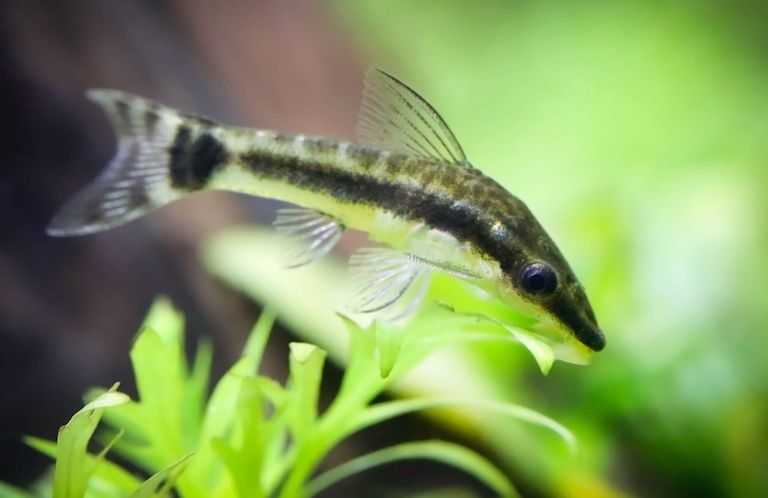
Otoclinus catfish (aka oto cats) are tiny schooling catfish. They have a suckermouth, similar to a pleco, and live exclusively off of algae in the wild. They will scour your tank for algae like it’s nobody’s business.
These little guys are ridiculously cute. They’re a very slim-bodied fish that’s silver in color with black stripes on both sides. The top of their bodies are covered in dark grey and black speckles.
They need to be kept in a group of five or more. And what really makes them lovable is their behavior. They’ll tumble around and play with each other like little kids. It’s easy to fall in love with all their goofiness.
They can be hard to keep at first. They are wild caught fish. Unfortunately, they’re often mishandled by wholesalers and pet stores. The poor little oto cats are not fed adequately and can be half starved to death by the time they make it to a store display tank.
Don’t buy oto cats unless they’re really active in the tank and have nice round bellies. Once they start to get skinny, they’re often already too far gone and can’t be brought back.
Even if you buy healthy ones, you may have several die within the first few weeks as they get acclimated to the tank.
Don’t put them in a newly set up tank. They need a healthy algae population so they have enough to eat.
Read: Otocinclus Care Guide
Corydoras Catfish
- Care level: easy
- Temperament: peaceful
- Size: 1-4 inches (2.5-10 centimeters)
- Min tank size: 20-30 gallons (75-113 liters)
- Diet: omnivore
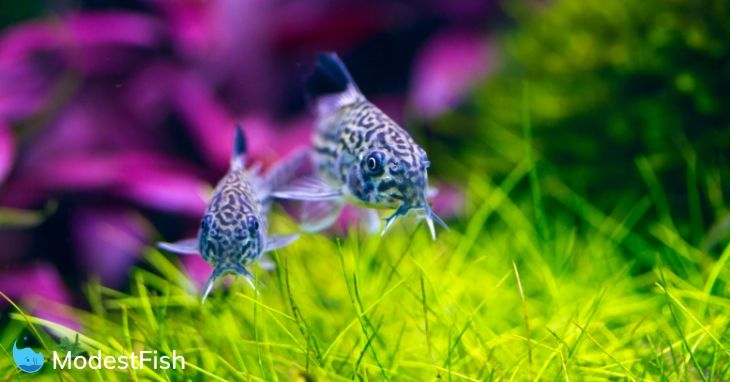
Corydoras catfish (cory cats) are small South American bottom feeders. They are widely popular in the aquarium trade because they are an excellent addition to an aquarium cleanup crew and are completely non-aggressive.
There are several different species available in the aquarium trade. Some only reach about an inch long while others can get as large as 4 inches.
They are very gregarious and need to be kept in groups of five or more to be happy.
Corys are really interesting to watch and could be the centerpiece of a tank as far as I’m concerned. They are always together, whether they’re searching the bottom for food or piled up taking a nap.
These fish do need open areas of substrate but will also dart in among your plants at times.
Cory cats also do best on a sand substrate. They’ll spend a good part of their time digging around in the sand looking for food.
Which Tank Mate is Right for You?
When it comes to choosing which tank mate will be right for you, I think the biggest thing to consider is your tank size.
If your tank is under 20 gallons, it’s best to go with one of the smaller species, like chili rasboras or neon tetras.
If you tank is 20 gallons or over, you have a lot more options. Then it really becomes more about your personal taste.
Since dwarf gouramis primarily hang out at the top of the tank, I like the idea of mixing them with bottom dwellers like oto and cory cats.
You can really create a thriving community tank around these fish that will bring you enjoyment for years to come.

Thank you Katherine! Your info and insights were very helpful. As a retired teacher it’s fun to see someone who writes well and the zeal comes thru!!
Thank you for this information! This article was very helpful ?
Very well documented and useful stuff for a beginner like me. Thanks a lot