

The Seachem Tidal Hang-on-Back filter has plenty of power and an enormous amount of space to add and customize your own filter media.
It’s looks great on paper, so I wanted to put the seachem tidal hob through it’s paces and compare it other filters in the category.
I was really impressed, and I think you will be too. However, just because this filter is great, it might not be for you. Read on to find out.
Seachem Tidal Filter Review
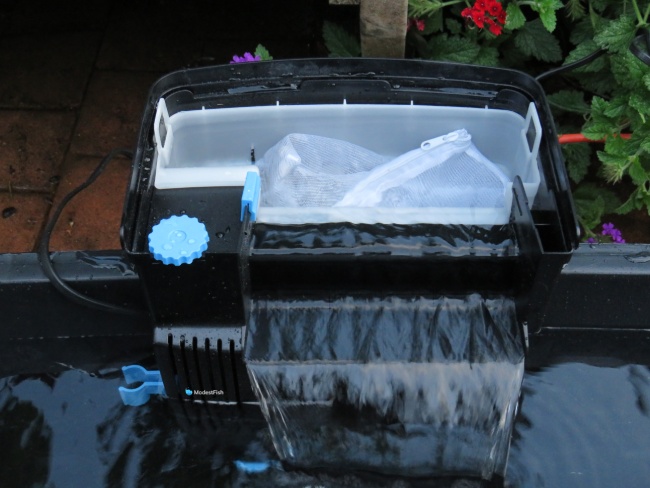
I highly recommend this filter for most aquarium applications. It has tons of space to load up on different kinds of filter media.
Unfortunately, I don’t currently have a good workaround to make this filter shrimp safe.
This filter features a motor that is housed inside the tank (an internal motor) versus an external motor that is outside the aquarium. An internal motor needs no priming at initial set up or after maintenance.
As long as the water is above the minimum water line, this filter will start itself right up with no fuss. It’s awesome!
The internal motor also has the bonus of being quieter than external motors.
If there were easy ways to make this filter shrimp safe, I’d deem it the most perfect filter ever created.
The shrimp issue notwithstanding, I think this filter is one of the best on the market and find it to be well worth the price.
I tested a Tidal 75 for this article, but Seachem also makes a Tidal 35 and a 110 suitable for smaller and larger aquariums.

How I Tested & Reviewed The Seachem Tidal Filter
I purchased five different hang-on-the-back filters so that I could compare them head-to-head. All were rated for 60-70 gallon (227-265 liter) tanks:
- Seachem Tidal 75
- Fluval C4
- Aquaclear 70
- Marineland Penguin
- Tetra Whisper EX 70
I tested the GPH (gallons per hour), to see how much water each filter pump could move. I did this by hanging each filter on the side of a sturdy plastic tote filled with water.
I plugged the filter in and made sure that it was well primed and pumping out the maximum amount of water.
Then a 4 gallon (15 liter) tub was lowered into the tote so that it caught all of the water spilling out of the front of the filter. I timed how long it took for the tub to fill with water.
To be fair, I tested each filter four times, twice with media and twice with all the media removed.
To make the math a bit easier, I converted all the times to seconds, so 01:07 would become 67 seconds, and so on.
I averaged together the two times from each category for each filter and then divided that time by 4. This gave me how many seconds it took per gallon of water pumped through the filter.
There are 3,600 seconds in an hour. So, to get the gallons per hour, I divided 3,600 by the average time.
Here’s an example if the recorded times were 01:05 and 01:10.
That would be 65 and 70 seconds, respectively.
(65+70)2= 67.5 average time
67.54 = 16.875 seconds per gallon
360016.875 = 213.33 gallons per hour
I did this for each filter to compare the GPH stated on the box versus what the pump could actually produce.
I also looked at some key features that are important to me in a hang-on-the-back filter.
- Installation – how difficult was it to install the heater?
- Maintenance – how difficult is monthly maintenance for this filter?
- Biomedia capacity – is there ample room for biomedia?
- Priming – does the filter require priming or will the motor start on its own?
- Filter media – does the filter come with all the media I need? Or would I need to buy some to get started?
Seachem Tidal Filter In-Depth Review
What’s in the Box?
Here’s the breakdown of the features by category:
- Installation – very easy, just rinse the media and place it in the back of the filter, hang it on the back of the tank and plug it in. The Tidal also utilizes a big plastic screw as a leveling device. This makes getting the filter level easier than any other hang-on-the-back that I’ve ever messed with. I also love that the screw can’t be easily knocked off the filter, unlike the leveling devices used by other filter companies that fall off if you just look at them funny.
- Maintenance – again, very easy. The whole media chamber is lined with one big basket that you can easily remove. You can even snap the filter lid on the bottom of the basket to catch drips while you carry the basket.
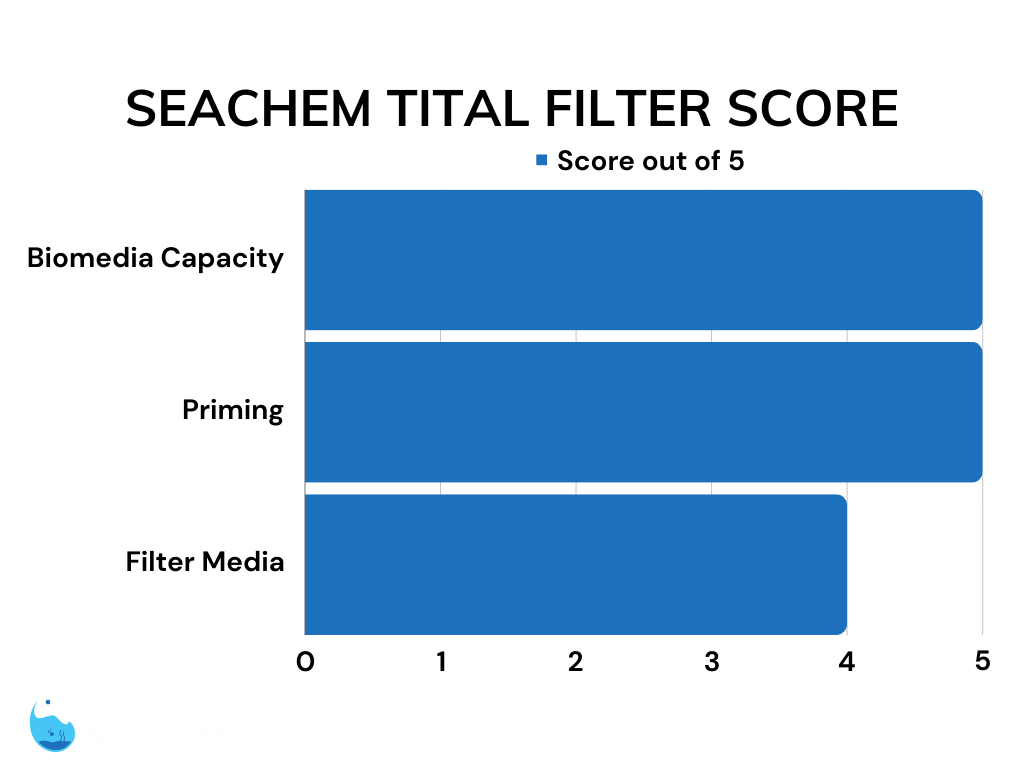
- Biomedia capacity – in a word, enormous! The basket is very spacious. There is more room in this filter for biomedia than any of the other four hang-on-the-backs I tested.
- Priming – no priming needed, ever! Just plug it in and it’ll start pumping on its own.
- Filter media – includes reusable sponge and mesh bag of biomedia, but no chemical media. You don’t actually need the chemical media, so technically, this is all you need to get started with this filter.
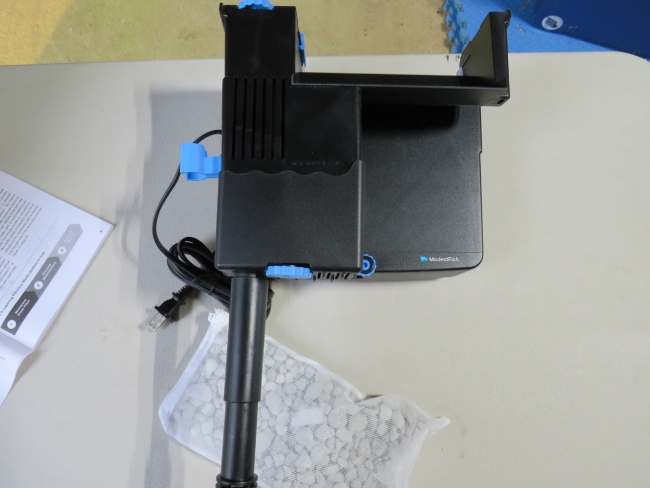
There’s not a whole lot in the box besides the filter itself.
It does come with a reusable sponge for mechanical filtration that fits in the bottom of the filter and a mesh zipper bag with Seachem Matrix biomedia.
Once you install this media, there is still lots of room to add more.
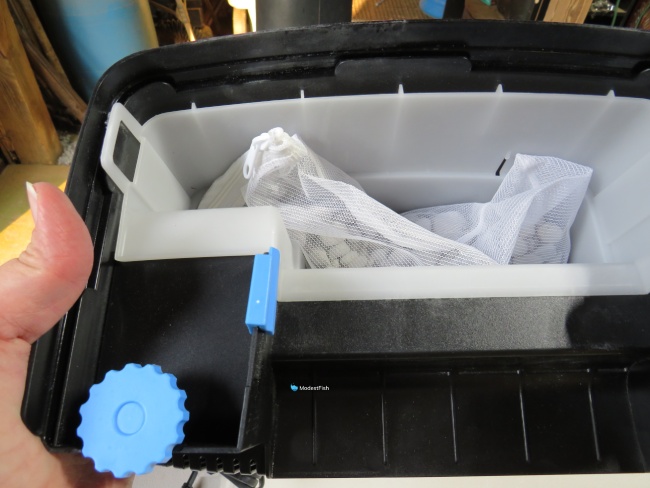
This filter does not include any chemical media like activated carbon or Seachem Purigen.
You don’t actually need to run carbon in your aquarium filter. I typically don’t run it in my filters at all unless I’m trying to remove medications.
There are tanks in my house that have gone years without ever having carbon in the filter.
But, I know there are some hardcore carbon fans out there that will want to add some. The nice thing, there’s so much room you could easily add one of those refillable bags with loose carbon and throw it in there and still have room to spare. It’s great.
I’m not concerned about the carbon and just filled the extra space with spare biomedia.
Unlike most hang-on-the-back filters on the market, this filter has a built-in surface skimmer. There’s a grate on the front of the filter that sucks in surface water and runs it through the filter media.
Honestly, I’m not a huge fan of the surface skimmer. I think it’s unnecessary at best and a downright pain at worst.
The surface skimmer captures bigger chunks of plant material and detritus that would normally get caught in the strainer. So, instead of the stuff being stuck to thes strainer on the outside of the filter, it gets sucked into the filter. It’s way easier to clean off the strainer than to get it all out of the media basket, in my opinion.
It can easily suck in flakes or other floating foods before your fish have a chance to eat them.
You can use a floating feeding ring to help prevent floating foods from being sucked into the filter, if needed.

The skimmer is something I can totally do without and I wish there was an option without it.
However, something I do like about Seachem Tidal filters, they have what’s known as an internal motor, which means the motor that pumps the water through the filter sits inside the tank instead of outside it.
There are some serious advantages to this.
Because the motor is inside the tank, the water absorbs the noise, making this filter very quiet. There’s no buzzing or loud hum, you only hear the water moving through.
Also, because the motor sits inside the water, there’s no need to prime the filter. With an external motor, you have to fill up the media compartment with water before the pump will start sucking water out of the tank.
And you may need to prime the filter and mess with it a bunch if the power goes out, sometimes even if it’s just for a few minutes.
And if you’re not home to prime the filter, it can run dry and burn up the motor.
But, with an internal filter, you just plug it in and it sucks in water from the tank with no fuss, no worries that a power outage will cause your filter to run dry.
On the downside, this filter struggles if you need to keep your water level a little low and leave a gap at the top of the tank (for things like giving turtles or frogs breathing space, archer fish or to make room for floating plants to bloom).
You can have a tiny gap, but if the water gets too low, the surface skimmer will start sucking air and the filter won’t work right.
If you need to leave a gap at the top of your tank, I’d suggest going with a filter with an external motor, especially the Aquaclear 70.
There is also an optional heater holder that you can slide onto the side of the filter. I like this feature, it’s a good position that will cause a lot of flow over the heater, making temperature control more efficient.
Seachem Tidal Filter Pros & Cons
Pros:
- Internal motor that doesn’t require priming
- Easy maintenance
- Simple installation
- Comes with mechanical and biomedia
- Built in heater holder
- Huge filter media compartment
- Quiet running
Cons:
- Doesn’t include chemical media
How Does it Compare To Other HOB Filters?
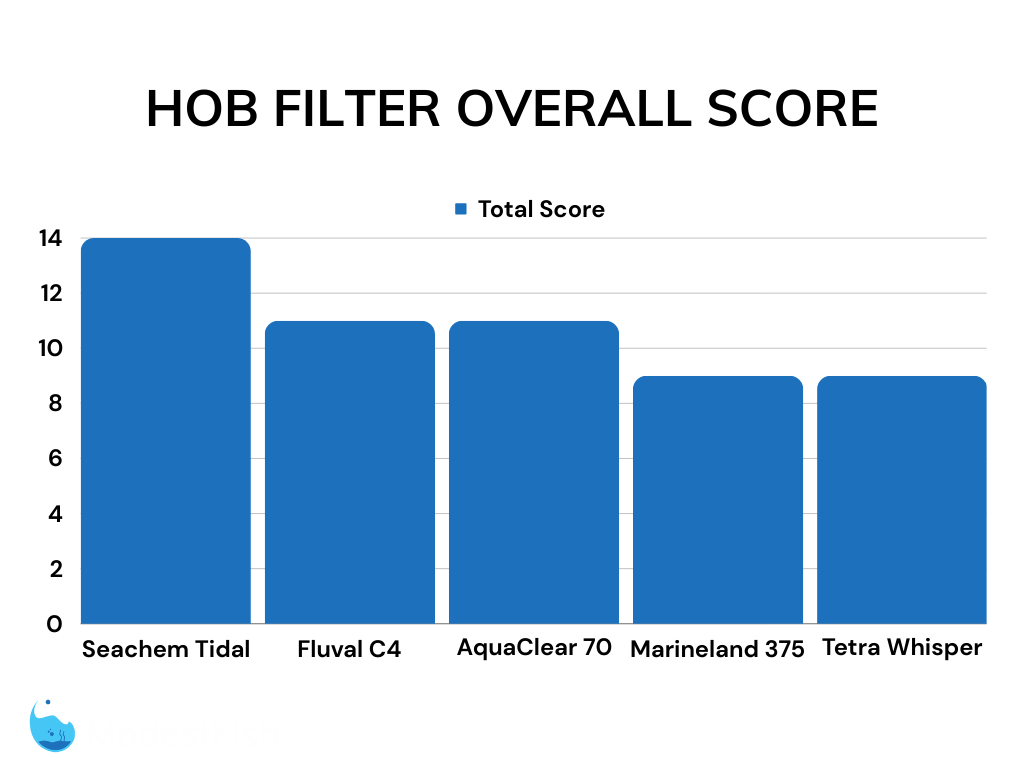
The Seachem Tidal filter performed well when it came to GPH, coming in second when I compared the GPH of all five filters.
Here’s a chart that shows how all five compared as far as pump speed.
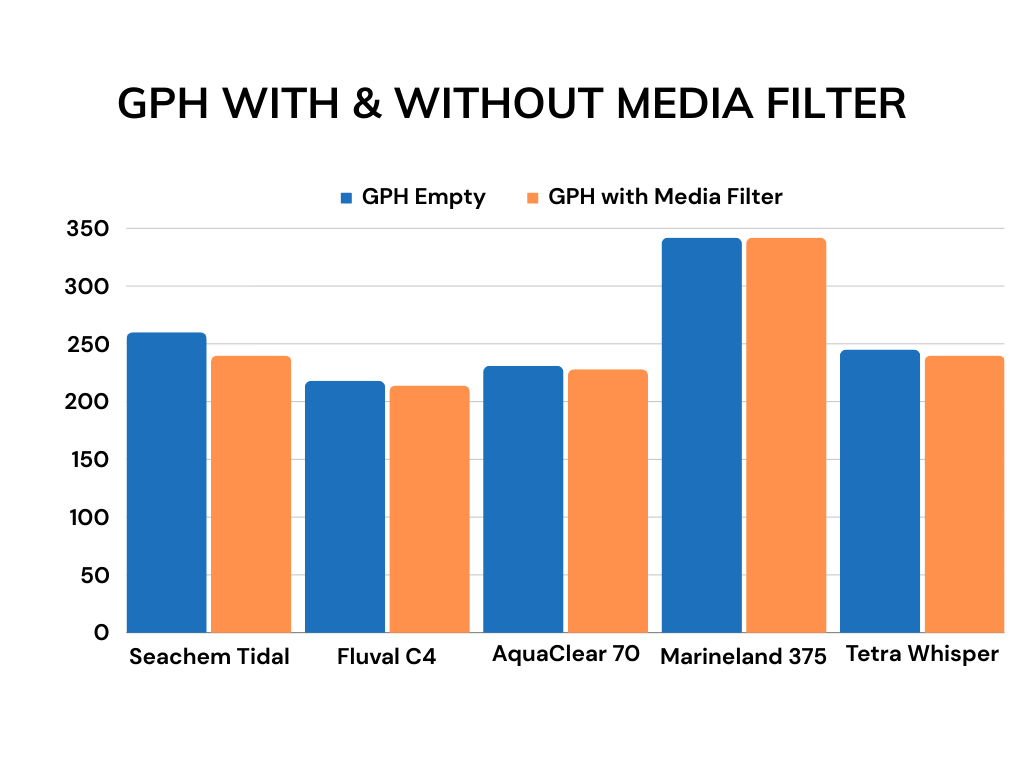
It pumped out 254.87 when it was empty and 246.15 when I added the included media.
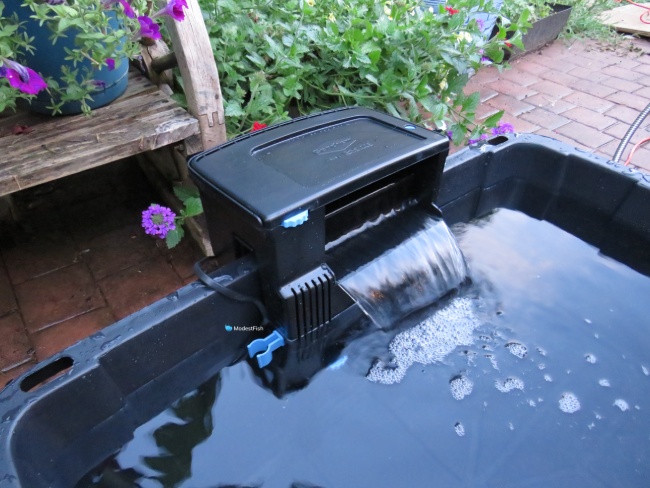
The Marineland Penguin blew the doors off the competition as far as GPH went, however, I still prefer the Seachem Tidal, Fluval C4 and Aquaclear 70 over the Marineland because of better features, especially since the Marineland depends on cartridges.
The Tidal might not have won the GPH battle, but it came in a very respectable second.
But remember, GPH is an important consideration, but it’s not everything.
It’s the features that make the Tidal the standout.
I really like the internal motor. My other top choices, the Fluval and Aquaclear, both have external motors that may not start themselves back up after a power outage. I’ve experienced this several times over the years. But, the Tidal will always start itself up like a little champ.
One thing I don’t like, you can’t make this filter shrimp safe. It’s possible for shrimp, especially baby shrimp, to get into this filter through the intake tube and the surface skimmer.
I even contacted the Seachem support forums and was told that I “could attach a small screen or mesh netting over the surface skimmer if concerned about shrimp getting into it.” I find this a less than ideal solution. Having a hot glued screen on the front of my really expensive filter doesn’t sound very appealing.
The support person tried to assure me that they had not had trouble with shrimp getting into their Seachem 35, but I’m not going to bet my shrimps’ lives on it.
I’ve found shrimp in the back of an Aquaclear that even had a sponge pre-filter blocking the intake and no surface skimmer. I still haven’t figured out how that is even possible, but it happened.
So leaving a hang-on-the-back wide open in a shrimp tank does not seem safe at all.
I also tried to fit my favorite brand of sponge pre-filter onto the intake of the Tidal 75 and could not find an adapter that would work. This is the first filter that I wasn’t able to figure out a way to attach this pre-filter to.
So, if you have shrimp, I’d recommend going with the Aquaclear and adding a pre-filter instead of the Seachem Tidal.
Maintenance is easy for Tidal! The entire media chamber pops out of the filter and snaps onto the lid to avoid drips as you remove it. Super nifty feature!
Maintenance on the Penguin and Whisper filters are also easy because they use cartridges, but I really don’t like filter cartridges. Every time you throw out a cartridge, you’re also throwing out all the beneficial bacteria that has grown on the mechanical media.
I also don’t like how expensive cartridges are. I much prefer using reusable mechanical media and biomedia that’s meant to stay in the filter long term.
I would say that the maintenance on the Tidal filter is similar to that of the Fluval C4 and a little easier than the Aquaclear. The basket on the Aquaclear can be kind of awkward to pull out. You have to pull the entire filter off the back of the tank and drain it before you remove the media, or else risk a big wet mess.
The basket set up on the Tidal and the C4 are so much easier!
Final Review Verdict
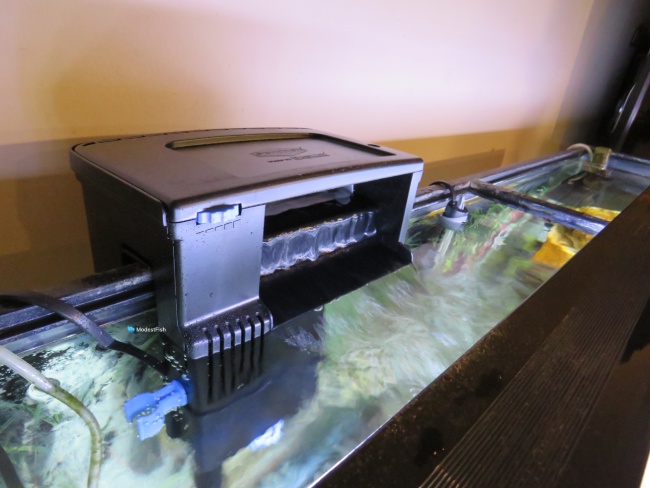
After all my comparisons and tests, this filter is my number one pick. If you could easily make it shrimp safe, I would call this the perfect filter.
It’s got plenty of power and an enormous amount of space to add and customize your own filter media.
It’s quiet, doesn’t require priming and maintenance is a breeze. Two out of my five tanks have Seachem Tidal filters, and I’ve got to say, it’s one of the simplest filters to set up and use that I’ve ever come across.
After running and maintaining these for months, I can say with confidence that I highly recommend these filters.
I hope you find this article helpful.
I wish you and your fish the very best!

On your gallons per hour test, it would be more transparent to mention the rating of the filters. For example, while the Tidal did beat the Aquaclear, the Tidal is also rated as 350 gph while the Aquaclear is rated for 300 gph, so it would be expected if you went by the specs on the box to get more from the Seachem, so no real surprise there. Likewise it appears that your test just confirms that the highests rated pump is the fastest in your test and the rest fall in line with their ratings in relation to the other filters.
I figured it was worth pointing out that the graph shown is not necessarily showing longer is better unless pure flow rate is your intention. Perhaps another graph you could do is the volume of filter media you can put into each filter. That is something that is usually never listed on the specifications of a filter, but is equally important, if not more important, then flow rate. This would then give a more informed set of data for people who might be weighing these two factors against each other (example a tank being setup for fish from very calm waters would want a low flow rate but maybe not at the sacrifice of going with a much smaller volume model).
Hi Patrick, thank you so much for your comment and feedback. We agree with you, we should make it more obvious. And for the volume of filter media, that’s a great idea! We’re going to look into how we can test and measure this and will update all articles in the future with this information.
I have the Tidal 55 and I made a pre filter from a large piece of foam cut down to size and cut a hole partially through the centre.
I have another CON. Putting it back together after you’ve taken it apart for cleaning. I am having so much trouble. Can’t get the pump to go back on the filter. It slid out no problem but I can’t seem to get it back on. Waiting to hear from Seachem.