

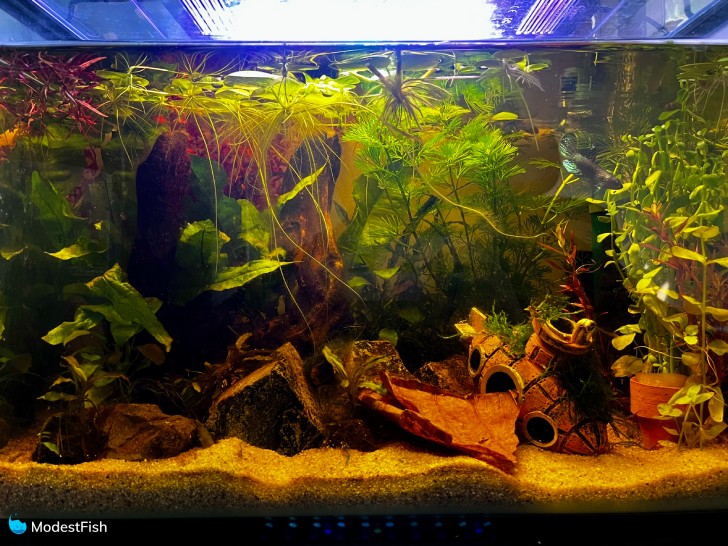
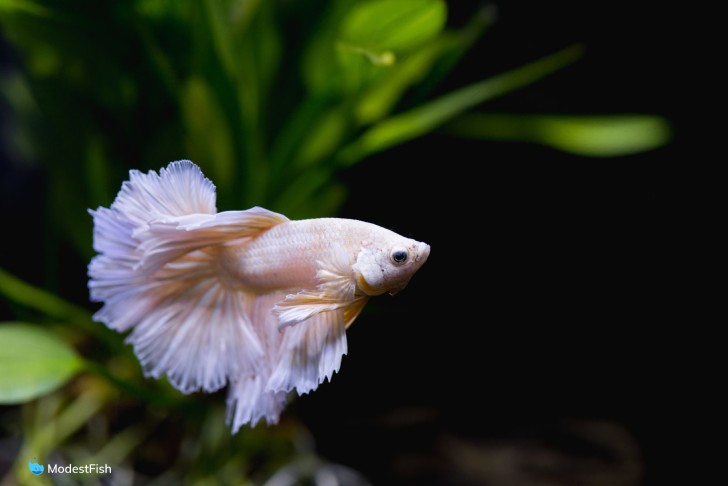
Betta splendens love low-light plants tanks which help mimic their natural environment. The safer your betta fish feels, the more fun and active it’ll be in the tank. And you’ll get the maximum enjoyment out of seeing your betta explore and show natural behaviors.
But, deciding on your plants can be a bit daunting.
To make it easier for you, I purchased 11 of the best plants for betta fish tanks, planted them and rated them on 10 different aspects to help you understand the pros and cons of each. What you’ll learn is, there is no one best plant, rather, you’ll want a combination of plants that’ll make your betta feel safe and keep the water parameters stable.
Overview Of Plants For Betta Fish
- Amazon frogbit (Limnobium laevigatum) 9.6/10: This nifty floating plant gives Bettas cover at the water’s surface, mimics the fish’s natural habitat and discourages jumping
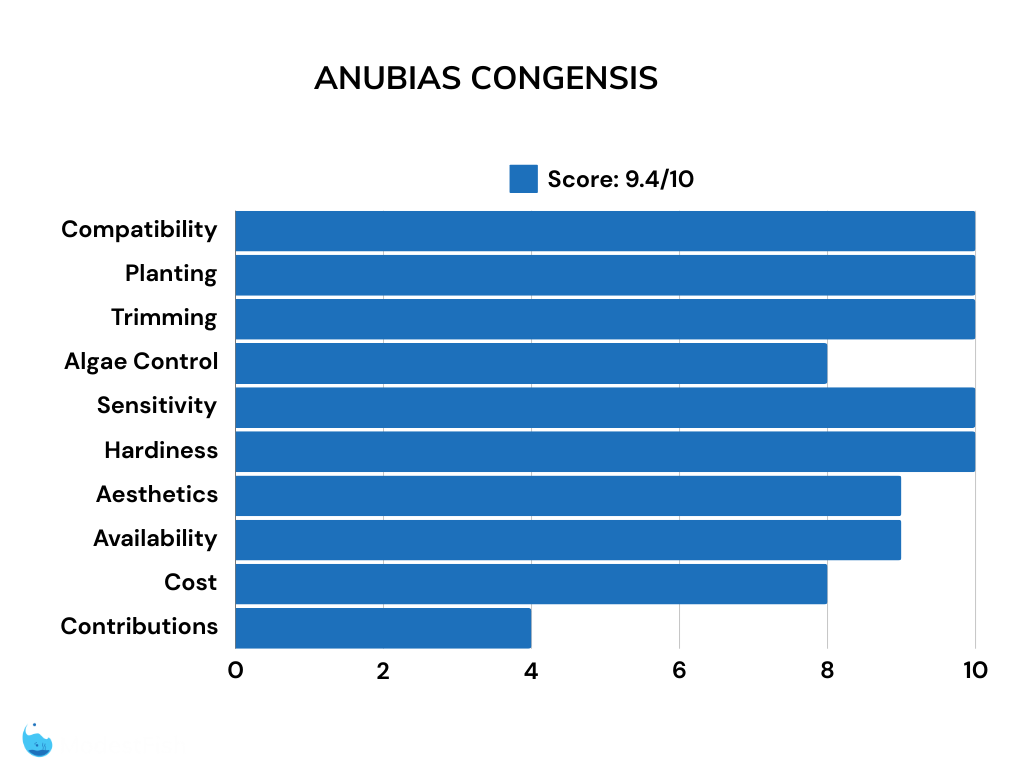
- Anubias congensis 9.4/10: This tall anubias species is the perfect thing for Bettas to take a nap on.
- Anubias nana 9.4/10: This tiny anubias species makes a great foreground plant in a Betta tank.
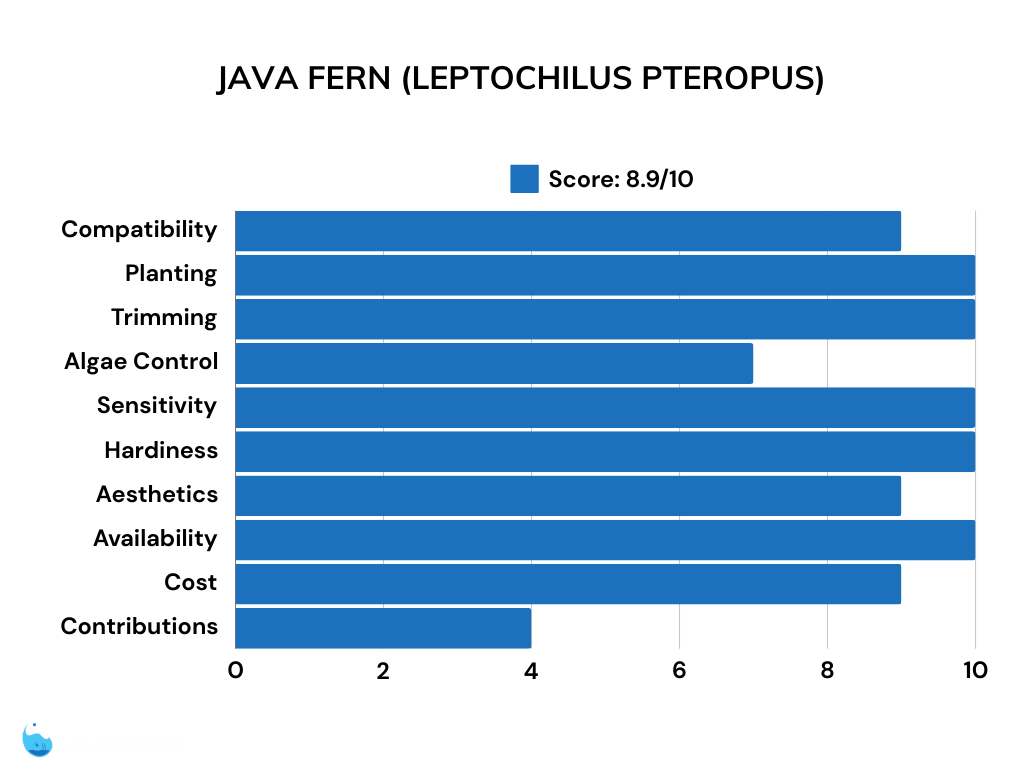
- Java fern (Leptochilus pteropus) 8.9/10: Clumps of Java fern are the perfect thing for Bettas to hide in when they feel insecure.
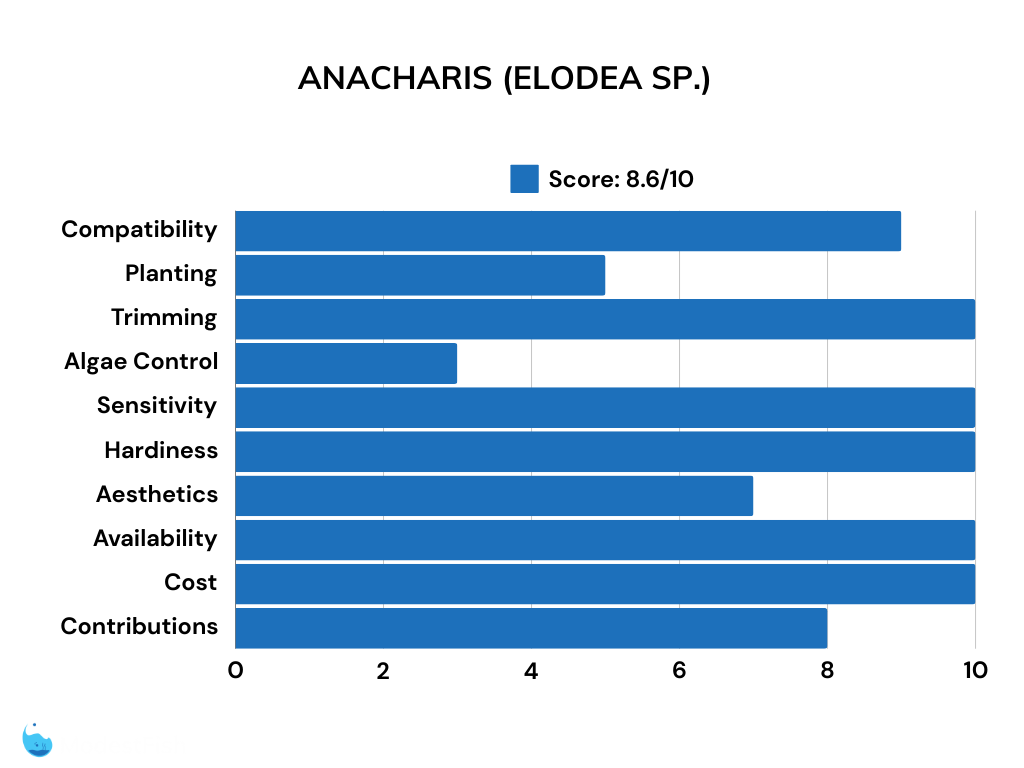
- Anacharis (Elodea sp.) 8.6/10: A fast growing plant that can help keep nutrients in check in a Betta tank.
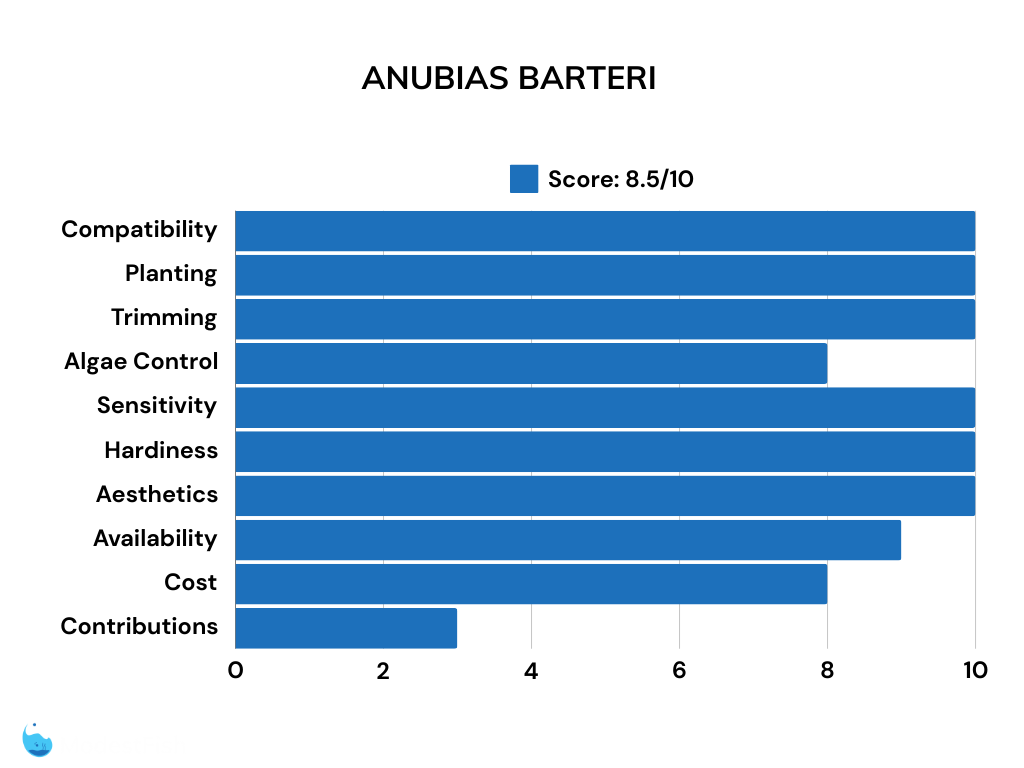
- Anubias barteri 8.5/10: Has beautiful broad leaves that Bettas can nap on.
- Hornwort (Ceratophyllum demersum) 8.5/10: Grows quickly, and its tall, bushy growth can provide cover that makes Bettas feel more secure at or near the surface.
- Water sprite (Ceratopteris thalictroides) 8.4/10: A simple background plant that can help provide some cover at the water’s surface to help make Bettas feel more secure.
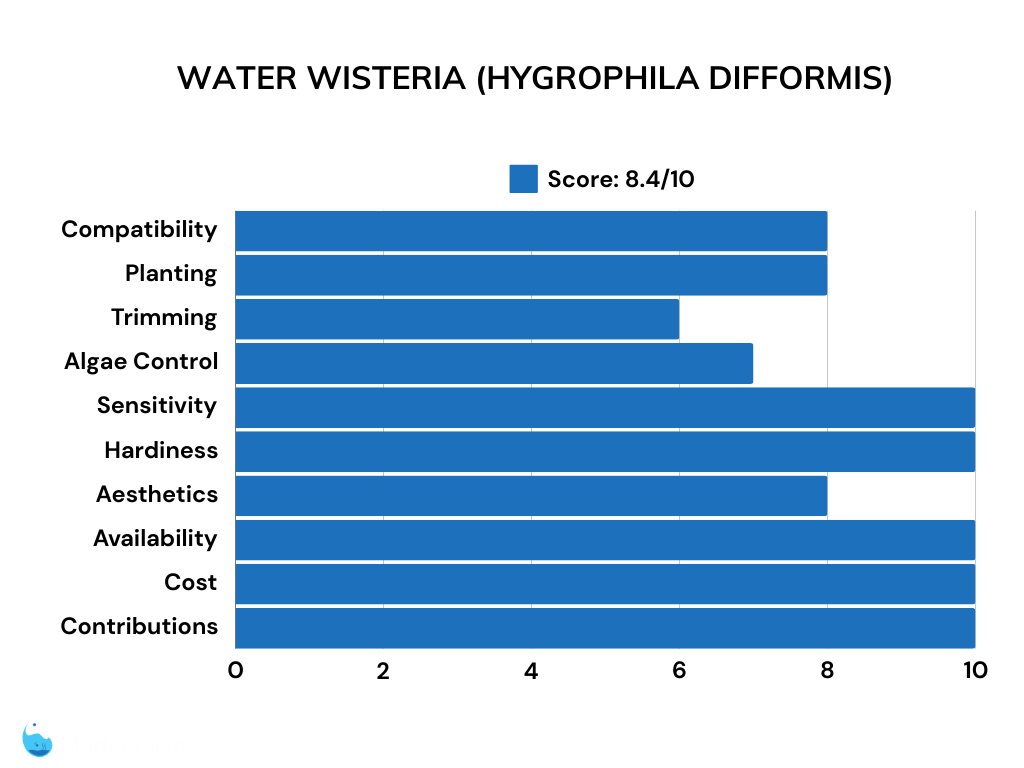
- Water wisteria (Hygrophila difformis) 8.4/10: Similar to water sprite, but its thicker leaves are better for Bettas to hide in.
- Moss balls (Aegagropila linnaei) 8.0/10: Require almost no care and can be entertaining toys that your Betta can push around the tank.
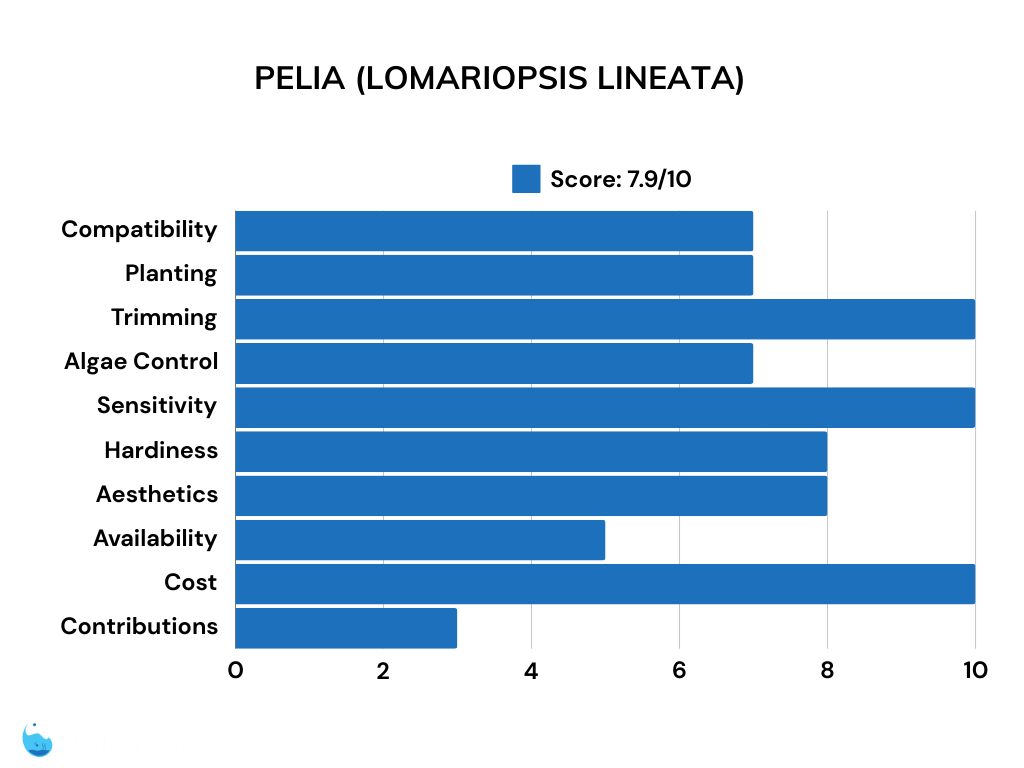
- Pelia (Lomariopsis lineata) 7.3/10: Low growing, moss-like plant that will grow well even in a simple low-tech Betta tank.
How I Ranked The Plants
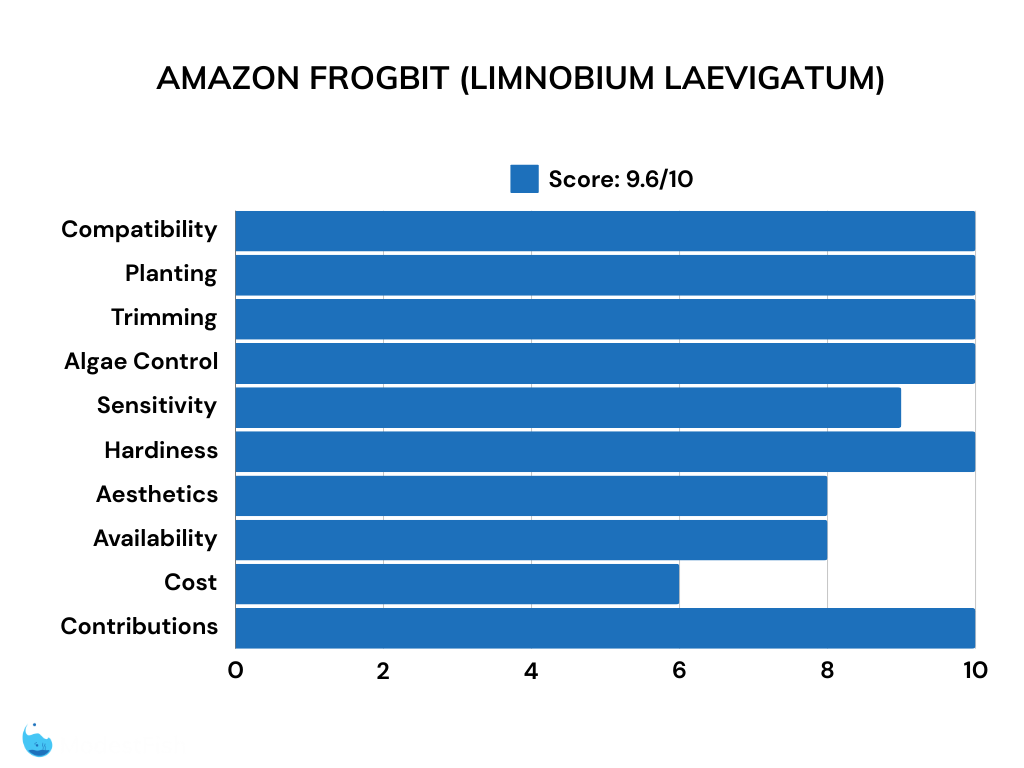
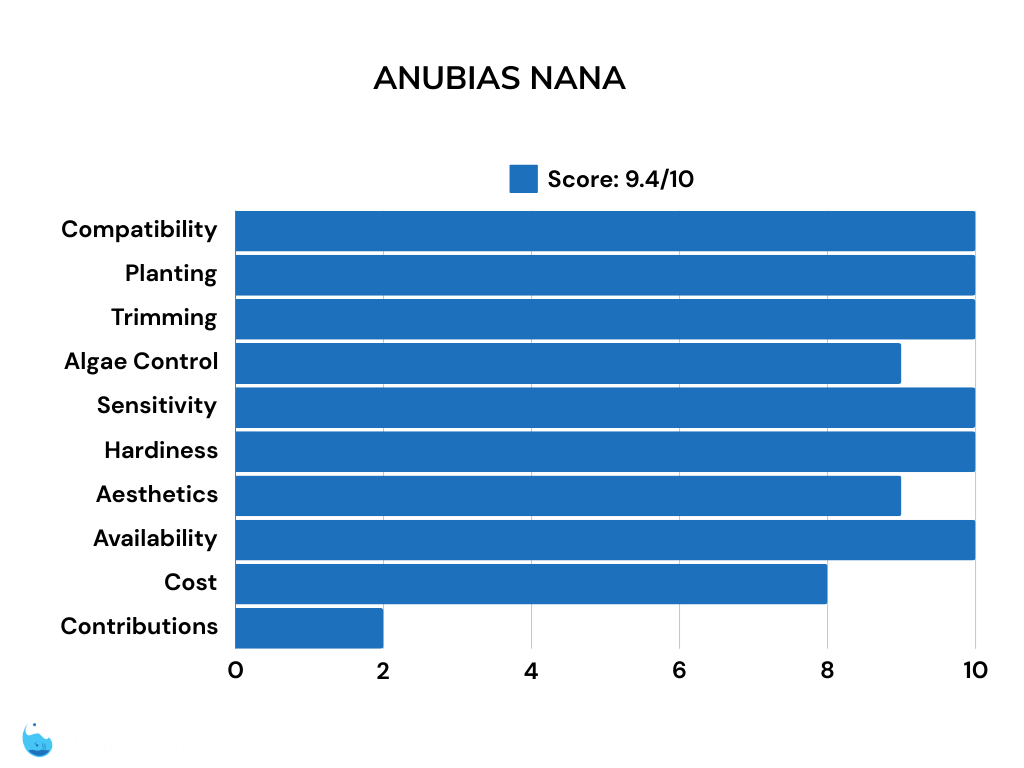
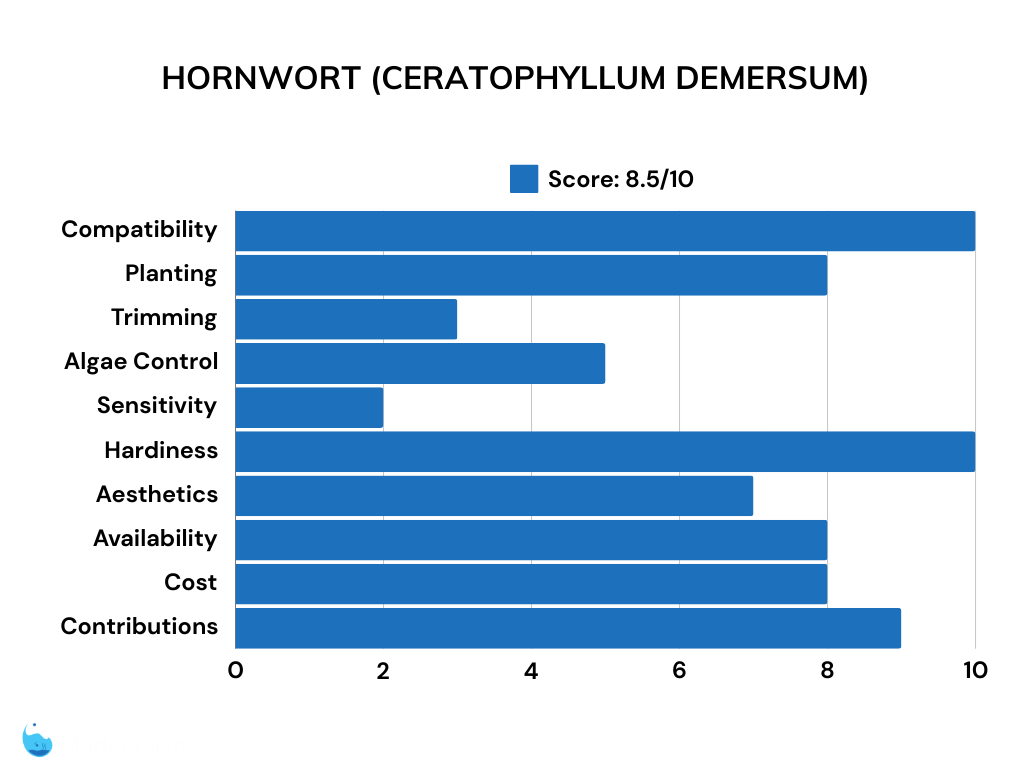
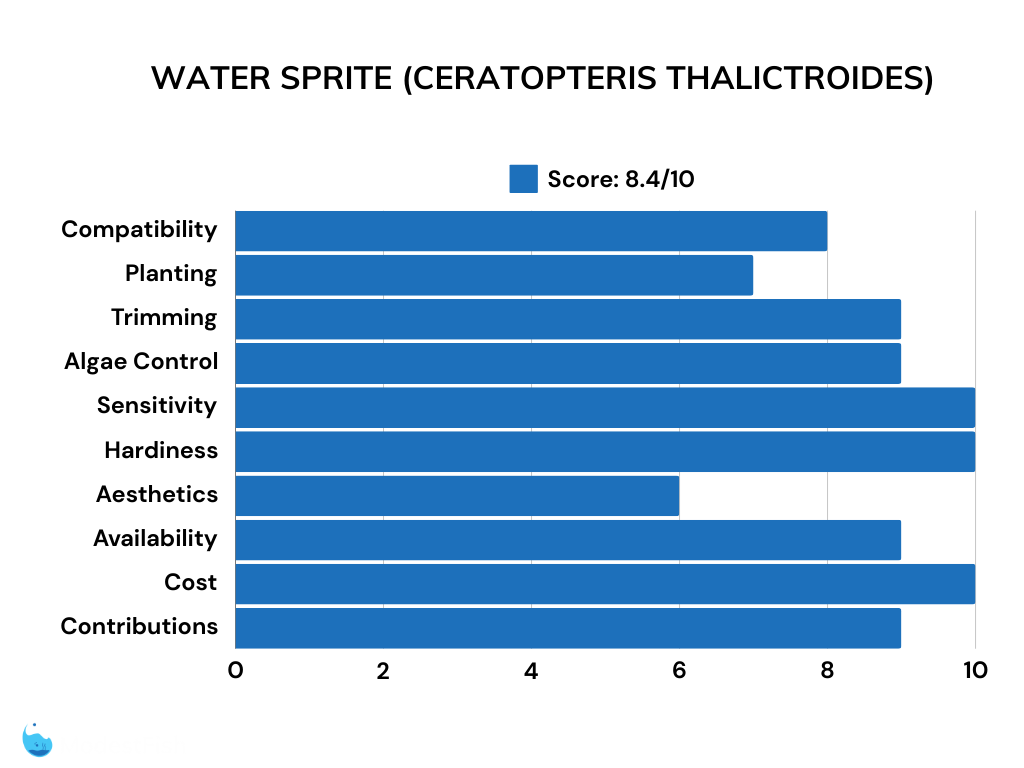
To find the best plants for betta fish, I rated 11 different species on 10 different data points: Compatibility, Planting, Trimming, Algae Control, Sensitivity, Hardiness, Aesthetics, Availability, Cost, Contributions.
However, because this article is focusing on plants which help create the best habitat for betta fish to feel safe and secure, the score for compatibility was given a weight of 55% of the total score, making it the most important factor. Everything else was weighted at 5% (to add up the remaining 45%).
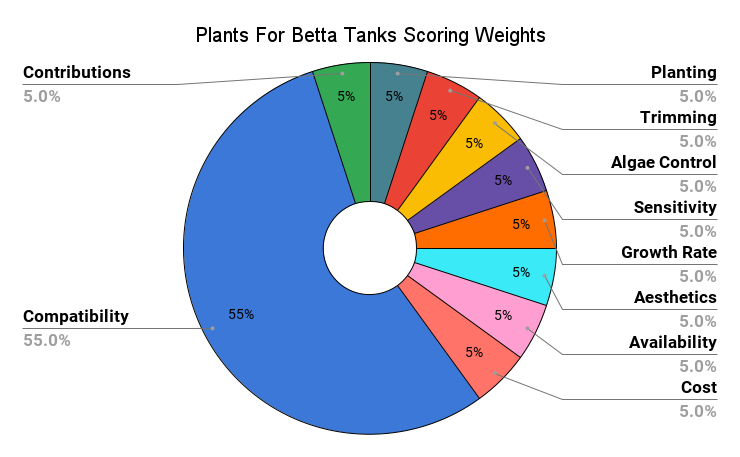
Use these comparisons to learn what some plants do better than others.
The plants were given a score of 1-10 (10 being best) for the following criteria:
- Compatibility (55% of total score) – how effective is this plant for makign betta fish feel safe and secure?

- Planting (5% of total score) – how hard is it to place the plant in the tank and get it to stay put?
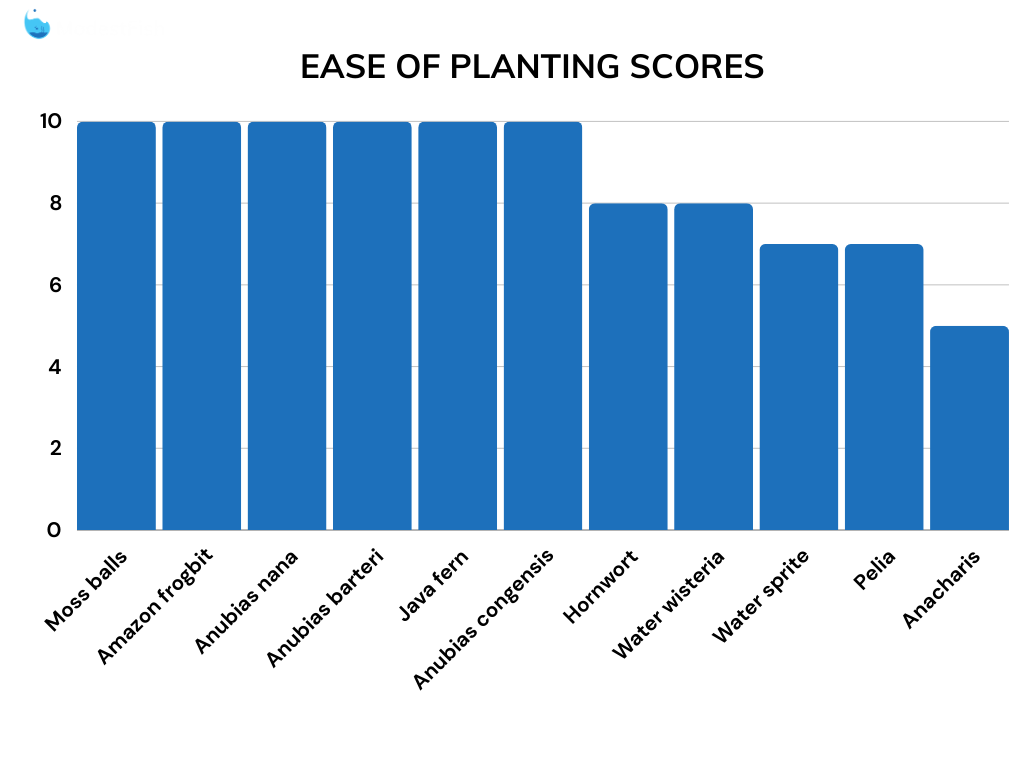
- Trimming (5% of total score) – how frequently does the plant need to be trimmed?
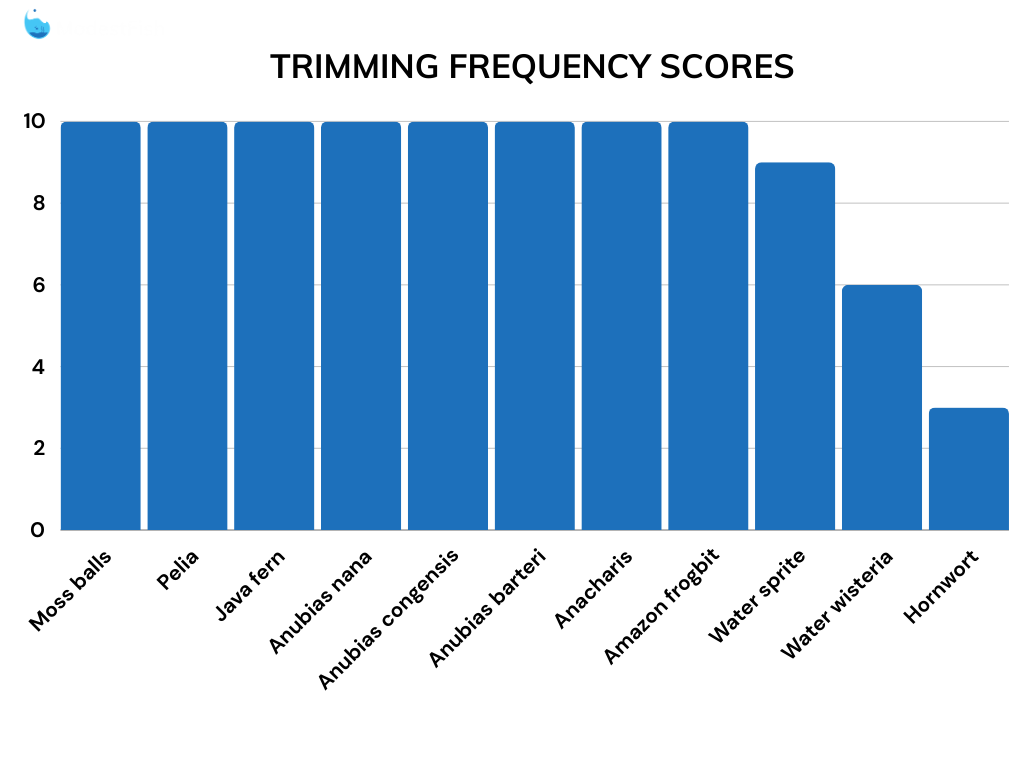
- Algae control (5% of total score) – how difficult is it to remove algae from the plant?
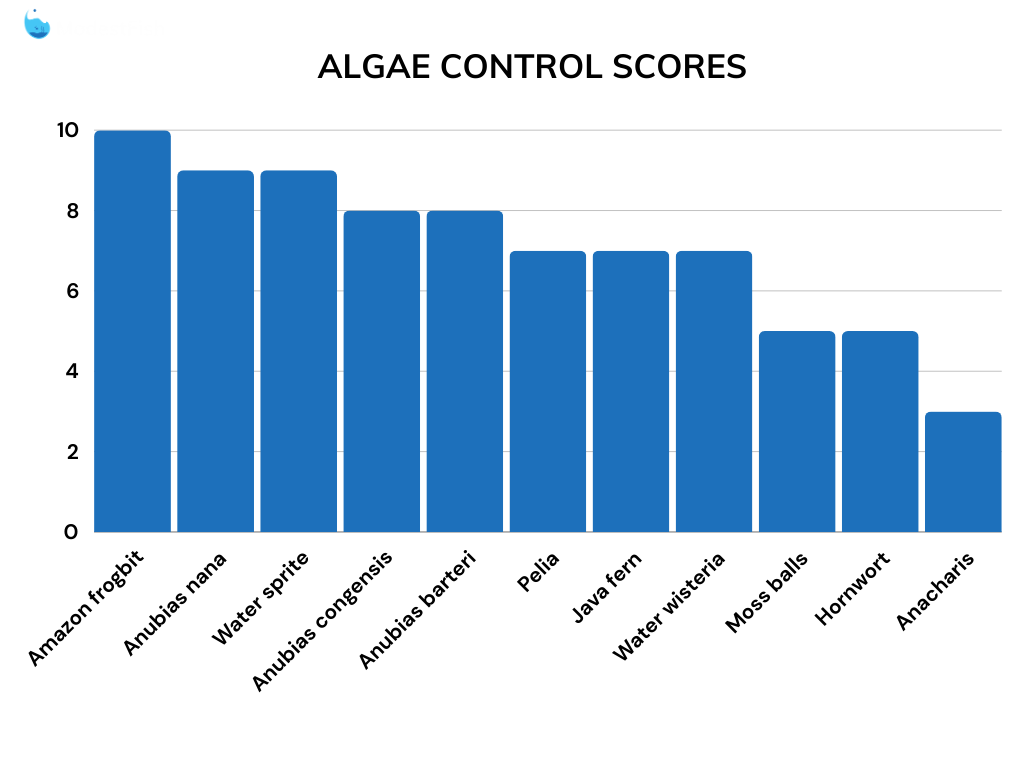
- Sensitivity (5% of total score) – do changes in water parameters cause the plant to melt back and lose its leaves?
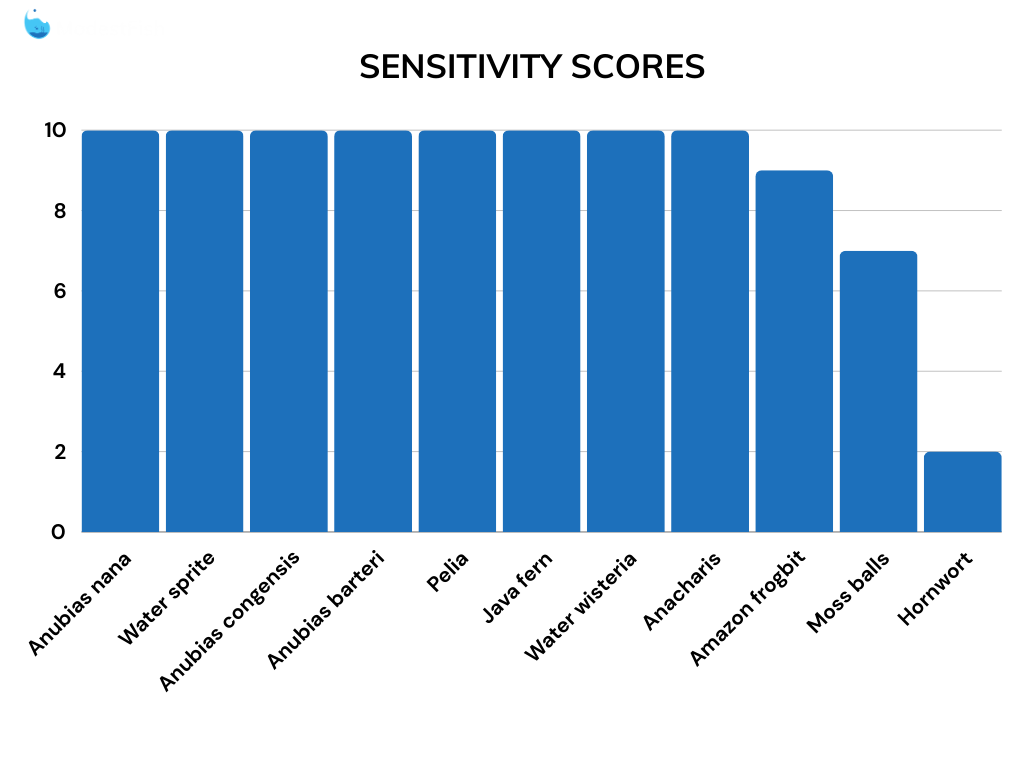
- Hardiness (5% of total score) – is the plant tolerant of varying conditions and/or benign neglect over time?

- Aesthetics (5% of total score) – how attractive is the plant to look at?

- Availability (5% of total score) – how easy or difficult is it to find the plant in stores and online?

- Cost (5% of total score) – how much does the plant cost versus how much of it you get when you purchase it?

- Contributions (5% of total score) – how much nitrate and other excess nutrients does the plant eat up?

The total average scores after testing were:

Plants For Betta Fish Individual Reviews
1. Amazon Frogbit (Limnobium laevigatum)
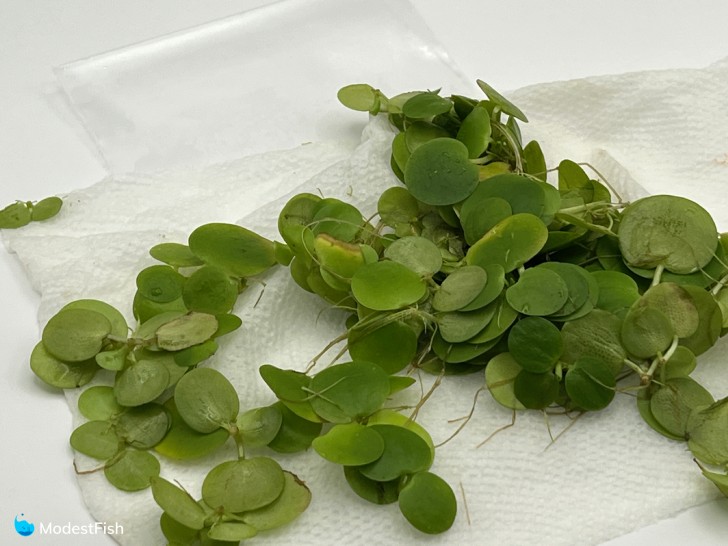
I love frogbit. I keep it in several of my tanks, it is the best plant you can keep in your betta tank.
Growing well in medium and high-lighting, it’s a beautiful floating plant growing in clusters of bright green leaves.
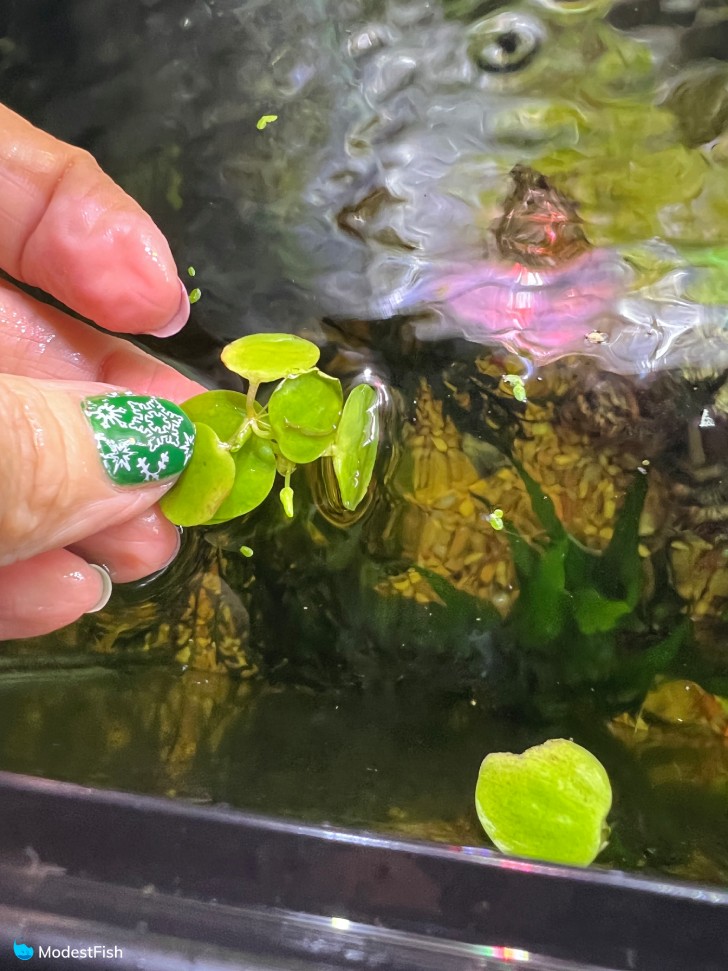
Frogitbit provides shade and cover to help keep your betta feeling safe and discourage jumping. Bettas love swimming through the trailing roots, which by the way, also do an outstanding job of removing nitrates from the water column.
I’ve always found that frogbit grows quickly, the higher the lighting, the more quickly it will spread along the water’s surface. The plant will send out a long, thin runner that sprouts a cute little baby frogbit plant, just a single leaf and tiny clump of roots, at first.
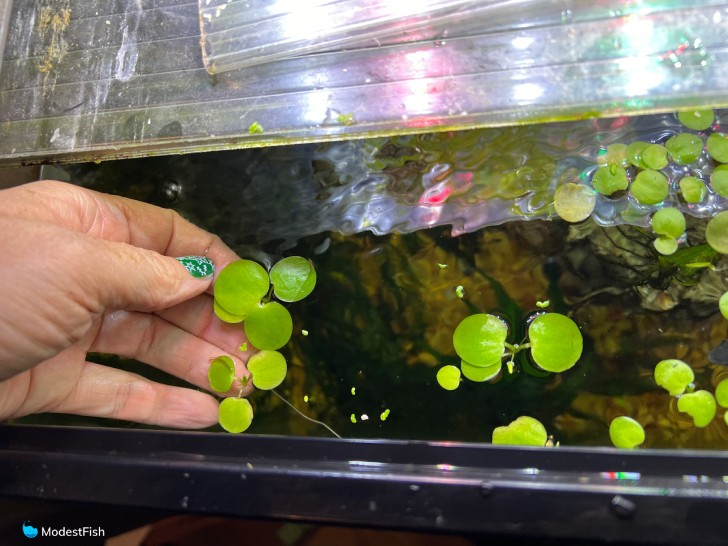
Although it does grow really fast, all you have to do is scoop out a few with your hands every now and then when it gets too much. Personally, I dispose of mine in my compost bin as they’re a great source of nitrogen.
Betta’s don’t like a strong flow, and neither does frogbit. If you have a hang-on-back filter, you may need to baffle it to reduce water flow.
A match made in heaven? I think so. Frogbit is perfect for betta tanks.
Pros:
- Beautiful, looks like tiny lily pads
- Discourages betta from jumping
- Provides shade to make betta feel safe
- Easy to plant
- Removes lots of nitrate
Cons:
- Doesn’t thrive in low light
- Can’t withstand water current well
Verdict – This nifty floating plant gives Bettas cover at the water’s surface and mimics the fish’s natural habitat.

2. Anubias congensis
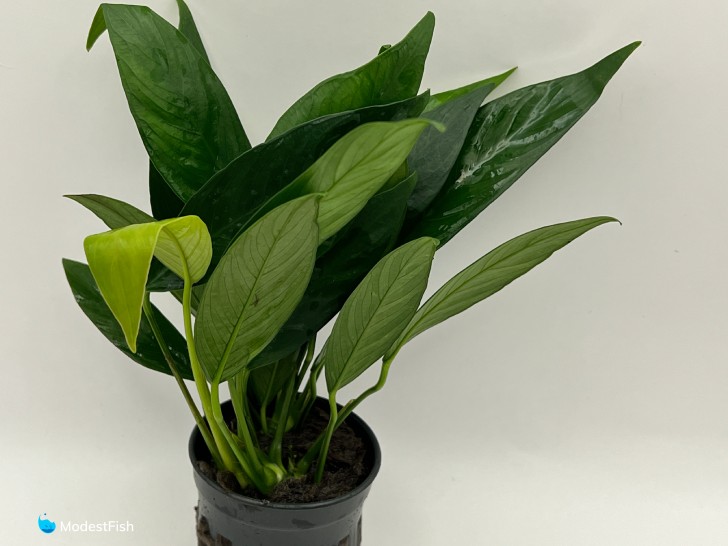
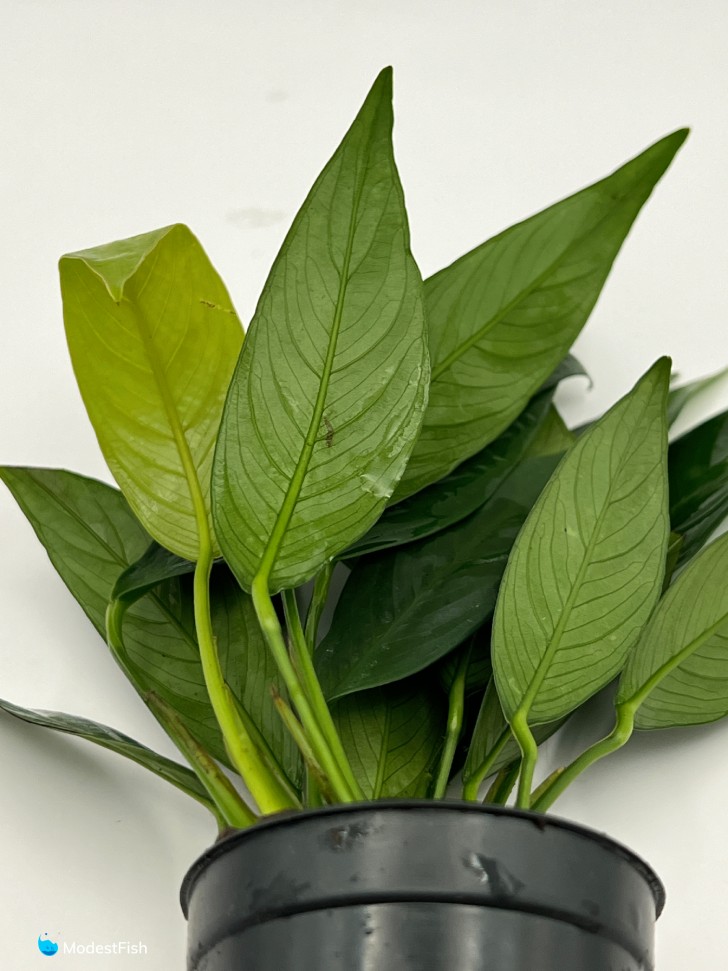
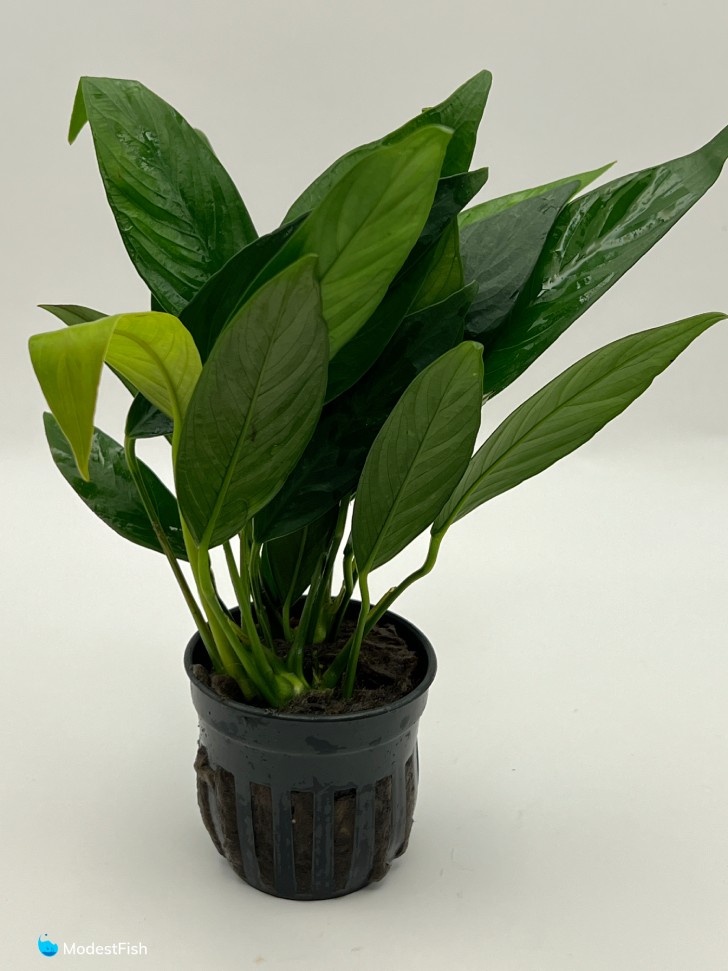
One of the larger species of anubias kept in the hobby, congensis is a hardy epiphyte plant that’ll do great in your betta tank.
It can take a bit of time to get established, but once it does it’ll grow large broad leaves that are perfect for betta to take a nap on and hide under.
Anubias congensis is tolerant of algae control measures like rubbing algae off the leaves or spot treating with Seachem Excel and peroxide.
It’s very easy to plant. I just glue the rhizome to a rock or piece of driftwood. I then pretty much put it in the tank and leave it alone to do its own thing.
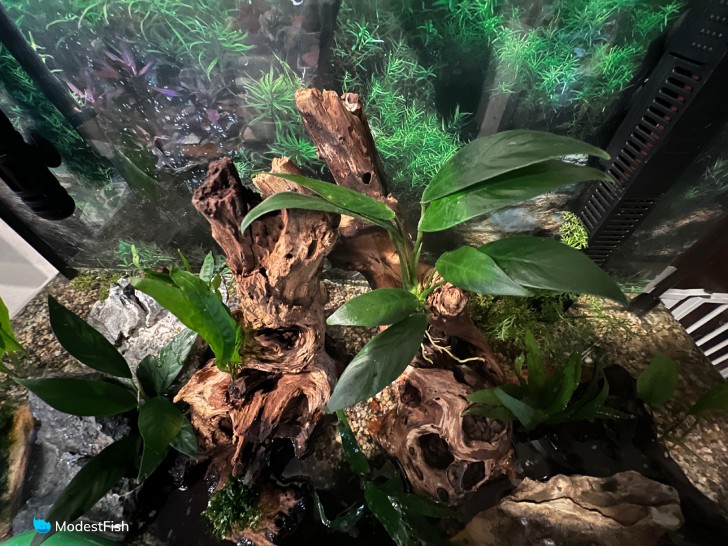
In betta tanks, I think they’re best placed towards the back of the tank, otherwise the large leaves could block other smaller plants from getting enough light.
This plant doesn’t contribute a huge amount to eating nitrates, but when keeping with some other faster growing plants, it’ll serve as a great place for your betta to feel safe.
Pros:
- Large broad leaves are great for bettas to nap on
- Easy to plant and maintain
- Larger anubias that really stands out
- Beautiful, long, pointed leaves
- Easy to clean off algae
Cons:
- Slow to get established
- Slow growth rate
- Doesn’t eat up much nitrate
Verdict – This tall anubias species is the perfect thing for Bettas to take a nap on.

3. Anubias nana
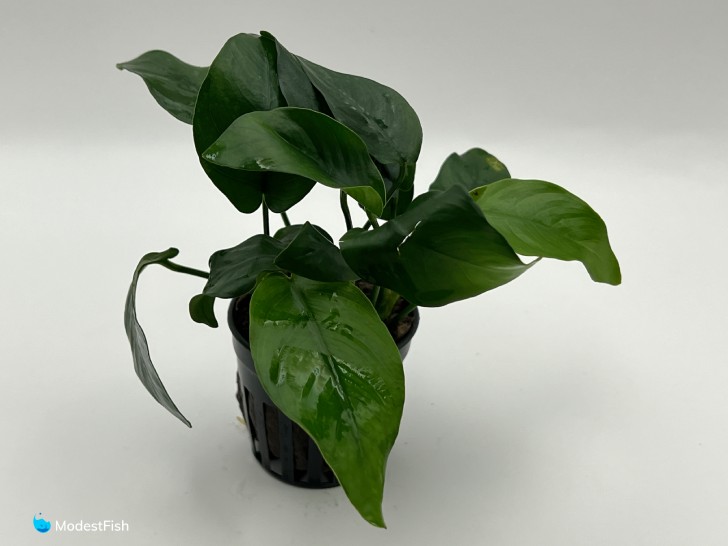
If anubias congensis is an ideal background plant, the smaller anubias nana works as an excellent foreground plant in your betta tank.
It’s my personal favorite species of anubias, and it stays small, so is perfect for 5 gallon betta tanks. It grows bright green leaves and creeps along the substrate, forming a long rhizome with tiny leaves.
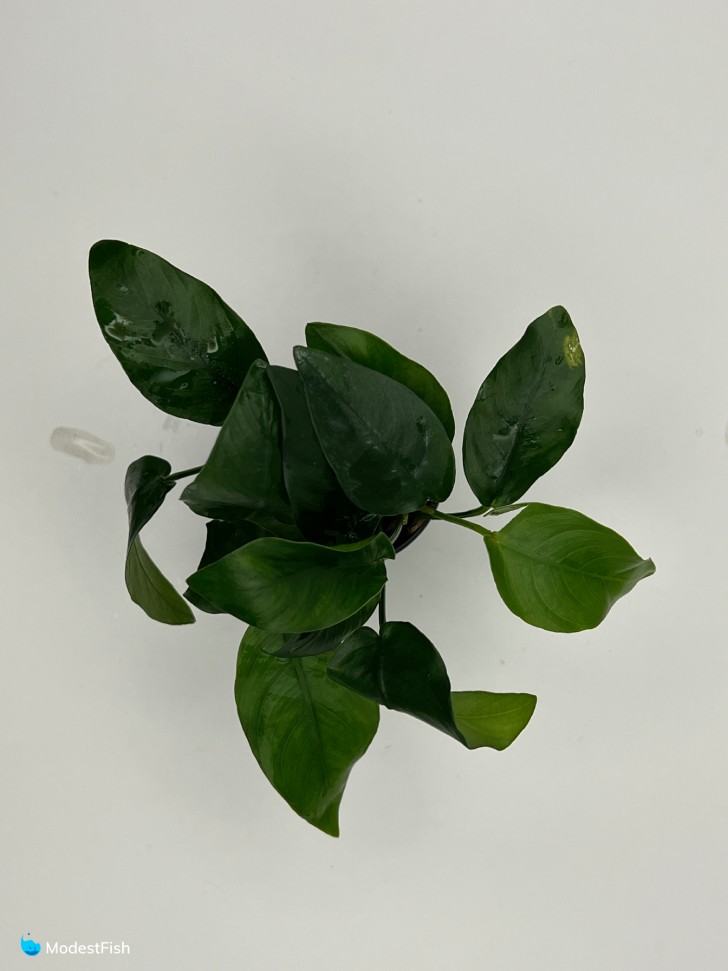
Just make sure it doesn’t get overshadowed too much by taller plants. I’ve lost a few over the years due to keeping them in very shaded parts of my tanks.
Algae control with nana is pretty easy. It’s tolerant of spot treatments like seachem excel.
Anubias nana is very easy to plant and care for. Just attach the rhizome to a rock or piece of driftwood and let it be in your tank.
Pros:
- Perfect dwarf plant for small betta tanks
- Easy to plant and needs almost no trimming
- Thrives on neglect
- Great no maintenance foreground plant
Cons:
- Easily overshadowed by larger plants
- Grows slowly
- Doesn’t eat up much nitrate
Verdict – This tiny anubias species makes a great foreground plant in a Betta tank.

4. Java Fern (Leptochilus pteropus)
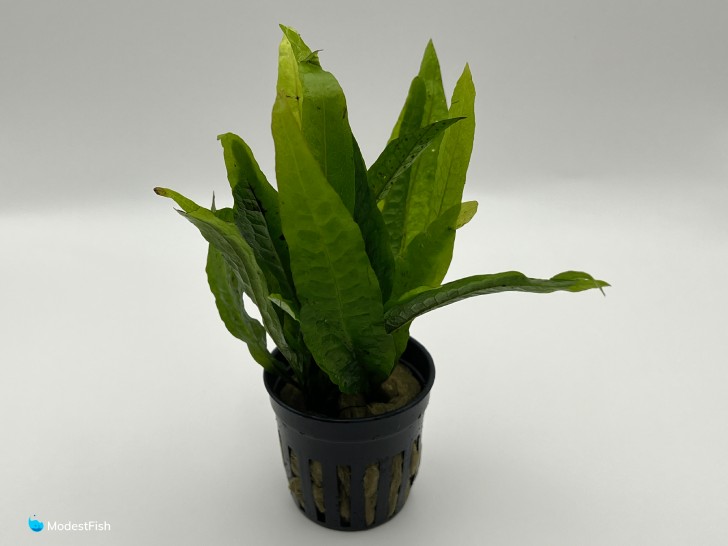
Java fern is one of my most favorite plants and goes in every betta tank I have. Over the years it’s proven to be one of the hardiest and easiest plants I’ve ever owned.
It’s another epiphyte, a plant that lives on the surface of things like rocks or sunken logs rather than being rooted down in the substrate. You just use regular super glue (pure cyanoacrylate) to attach it to a rock, piece of driftwood. The plant’s roots will stick to the surface on their own over time.
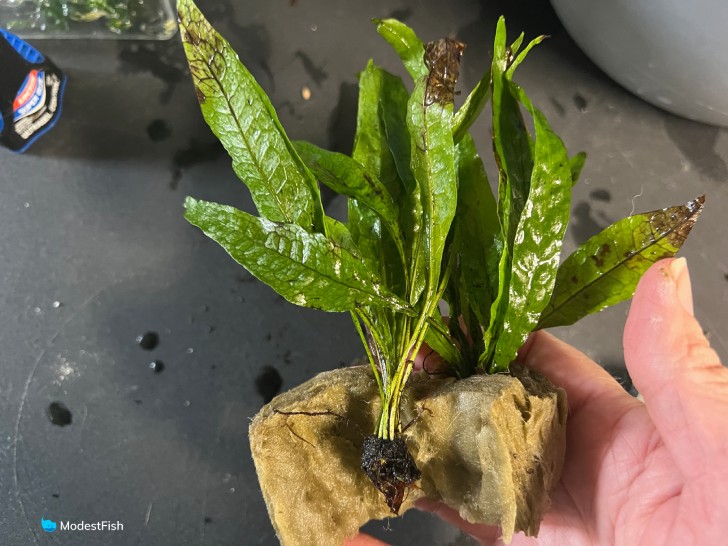
And once established it’ll grow in clumps of dense leaves, creating the perfect place for a betta to hide and explore when feeling insecure.
I love how its bright green leaves look in the tank; they are really pretty.
Java fern grows fairly slowly. I feel like this has pros and cons. It means that it doesn’t need frequent trimming, making it low maintenance, which I like, but it also means it does not eat up a lot of nitrate from the water column.
I get algae off of my Java fern leaves by gently rubbing them with my thumb, which will dislodge softer algae off the leaves.
But, I’ve found Java fern can be very sensitive and melt back from algae treatments like peroxide, so if I need algae spot treatment, I only use Seachem Excel on it.
Pros:
- Provides foliage for bettas to hide and feel safe
- Easy to plant
- Extremely tough and versatile
- Bright green leaves
- Grows a bit faster than anubias
Cons:
- Grows slowly
- A bit harder to clean algae off leaves than anubias
Verdict – Clumps of Java fern are the perfect thing for Bettas to hide in when they feel insecure.

5. Anacharis (Elodea sp.)
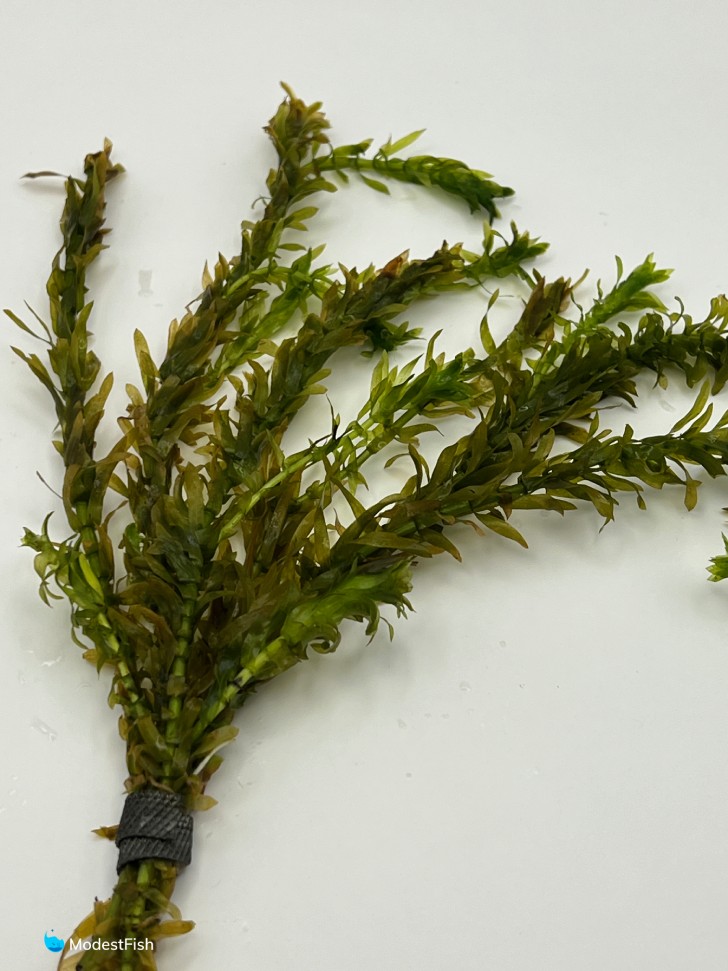
Anacharis will be an excellent addition to your betta tank, as long as you don’t mind a bit of maintenance.
It grows really quick. Really.
It’s a fast growing stem plant that’ll eat up loads of nitrates from the water column and help keep your betta tank’s parameters stable. You can plant anacharis in any kind of substrate as it’ll mainly feed through its leaves.
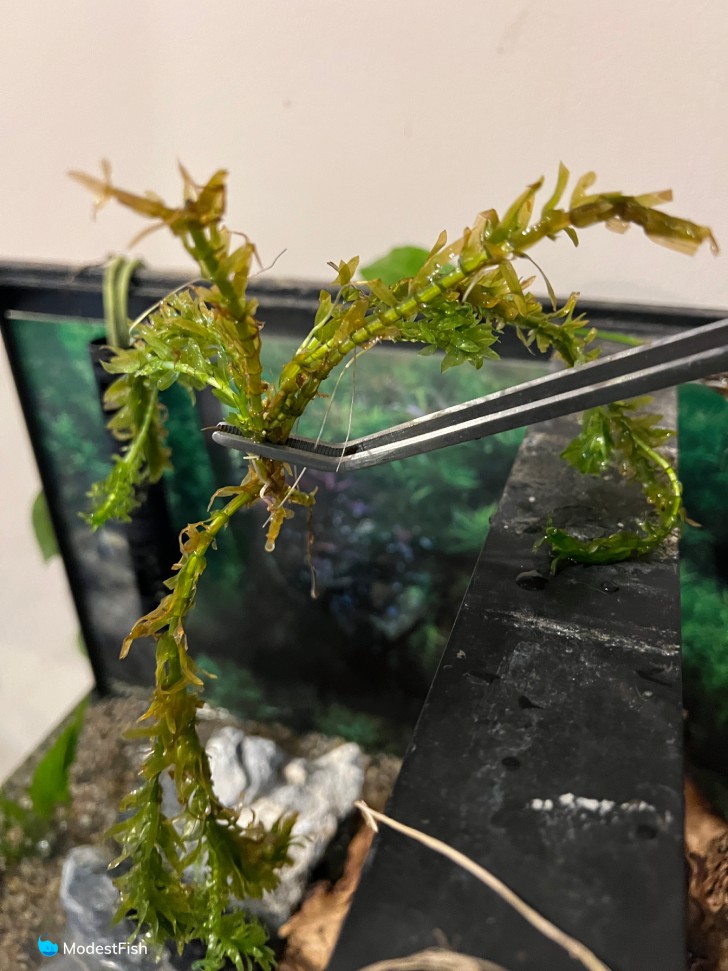
A downside of anacharis is algae control. It can be a bit tough to remove and it can be a bit sensitive to spot treatment. The bottom of the plant can get really raggedy and beat up looking, so it’s often necessary to pull up the whole plant, cut off the bottom portion and then replant the tops.
I love how bright and green the stems look in betta tanks. And I find active betta love to weave in and out of them. The main recommendation for anacharis is because it does such an excellent job at maintaining stable water parameters.
Pros:
- Fast growing plant that can really lower nitrates
- Will quickly grow to the top of the tank
Cons:
- Requires frequent trimming and replanting
- Hard to control algae on its surface
Verdict – Anacharis is a fast growing plant that can help keep nutrients in check in a Betta tank.

6. Anubias barteri
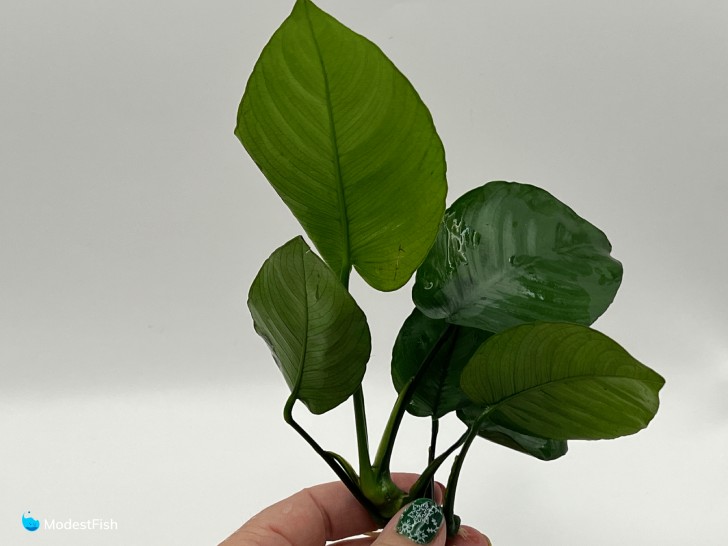
Another anubias on the list, I know, I know, but I just love the shape and texture of the broad leaves.
Bettas love a low-light environment, so having species like anubias is ideal as they thrive in dim conditions.
It won’t eat up a ton of nitrates like anacharis or frogbit, but when combined, it helps create a healthy environment for bettas. Again, it’s an epiphyte plant, so just glue (use cyanoacrylate glue) it to rocks, logs or any hardscape. It requires pretty much no upkeep.
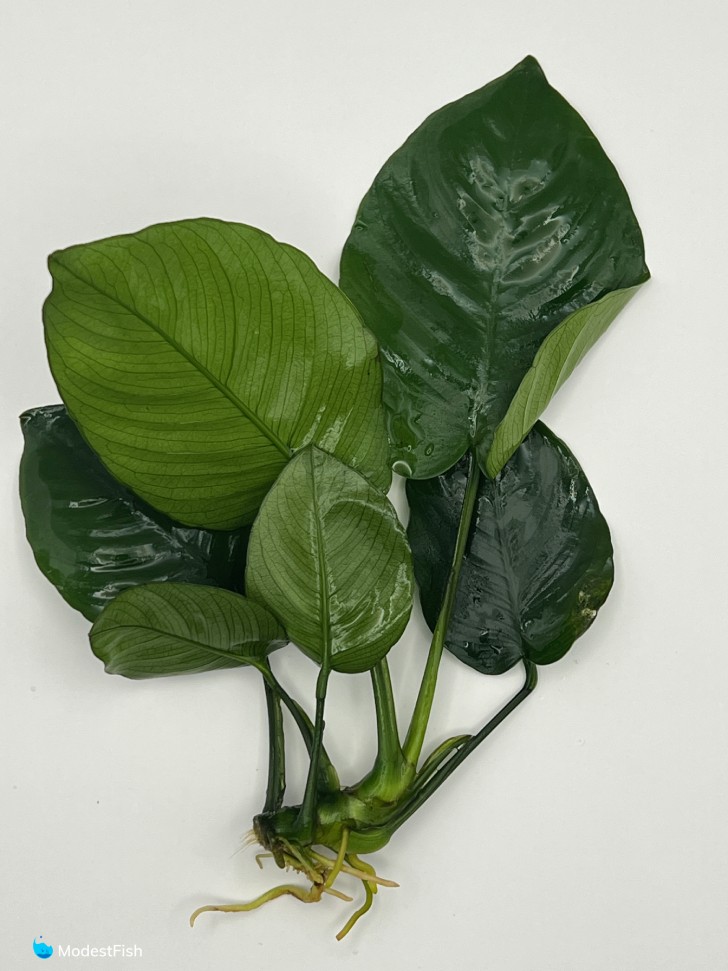
A lot of the time, I glue my anubias plants to small rocks, something just big enough to weigh it down, so I can pick it up and move it in the tank any time I want.
It’s a tough, beginner-friendly plant that’ll adapt to a wide range of water parameters. And bettas love to nap on their leaves.
Pros:
- Beautiful leaf shape and texture
- Hardy and undemanding
- Easy planting
- Doesn’t need much trimming
Cons:
- Slow growing
- Doesn’t remove a large amount of nitrates
Verdict – Anubias barteri has beautiful broad leaves that Bettas can nap on.

7. Hornwort (Ceratophyllum demersum)
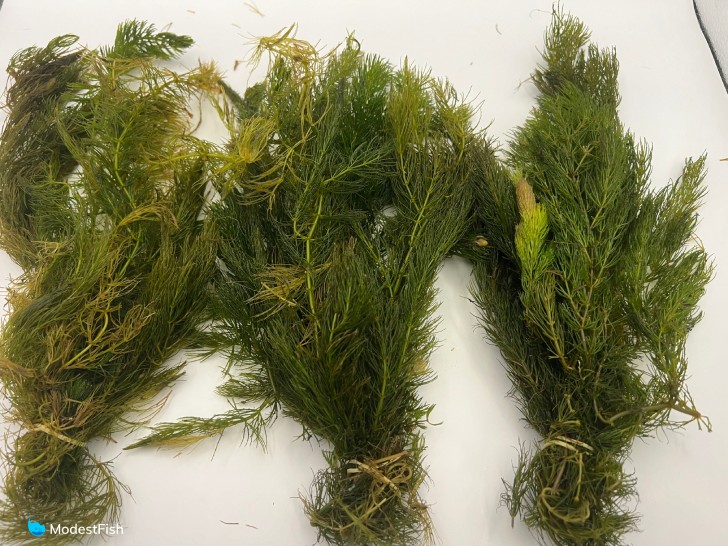
In my opinion, hornwort, once it’s established, is one of the best plants you can keep with a betta fish. It grows tall and long with thin pine needles which provide lots of shade and places for betta so explore and swim through.
Hornwort shines through its ability to eat nitrates up from the water column. Whenever I have used it, I always noticed a significant improvement in nitrate levels.
It’s a fast growing stem plant. You can plant it in a substrate or let it float freely in the tank. Either way, it’ll grow a busy mass of stems providing great cover and places for your betta to explore.
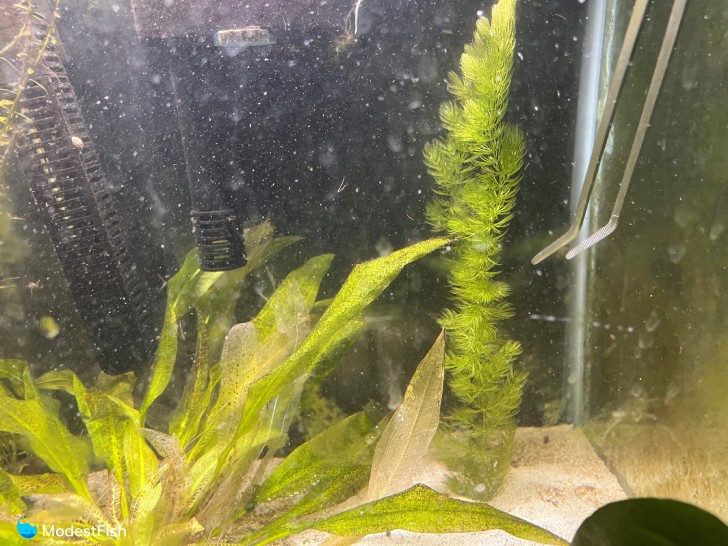
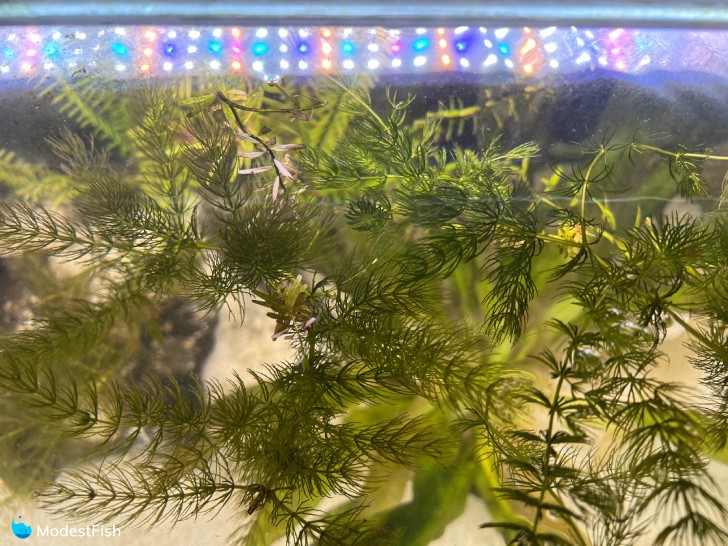
In my experience, the only real problem with this plant is getting it established. Sometimes, when hornwort is first introduced, it will start to drop all of its needles and melt back.
I’ve always seen it recover, but all those dropped needles can make a huge mess in the tank that’s hard to clean up.
Because it’s so sensitive, it’s best to quarantine this plant in something like a bucket with bubbler or a bare bottom tank that is easy to clean. Fill the quarantine tank with old aquarium water so the hornwort can get used to your tank’s parameters. Once the plant starts to bounce back, you can move it to your betta tank.
Pros:
- Creates dense foliage for bettas to feel safe.
- Fast growing plant that eats up nitrate
- Beautiful distinct shape
Cons:
- Very sensitive plant that can be hard to get established
- Very messy if it melts back
Verdict – Hornwort grows quickly, and its tall, bushy growth can provide cover that makes Bettas feel more secure at or near the surface.

8. Water Sprite (Ceratopteris thalictroides)
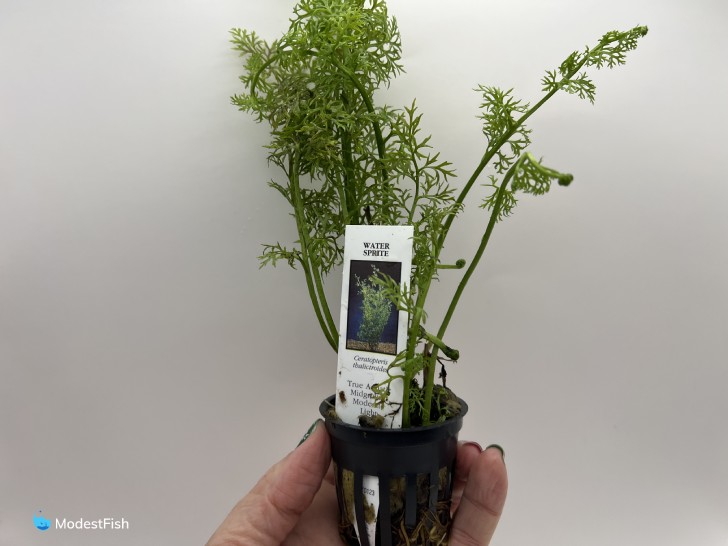
Like hornwort, water wisteria is a stem plant which can be planted into substrate or left to float in your betta tank. When it’s rooted into substrate, it can require regular trimming and replanting. But, if you leave it floating, it’s much simpler to care for.
When floating, it does a great job of discouraging bettas from jumping whilst providing shade and cover for it to feel safe. It looks great from above, but can look a bit messy from below the surface.
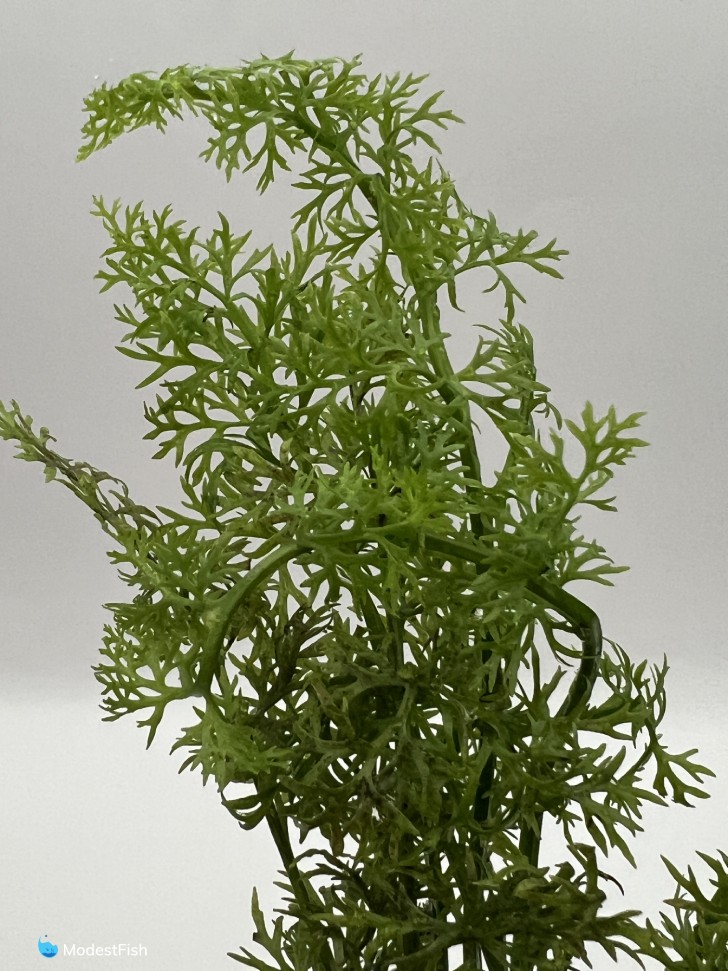
But bettas do love a tangle of mess to explore and squeeze through.
If you decide to plant in substrate, it can be a bit annoying to keep it down. So either bury the stems several inches deep and/or place rocks around it to help weigh it down while it roots.
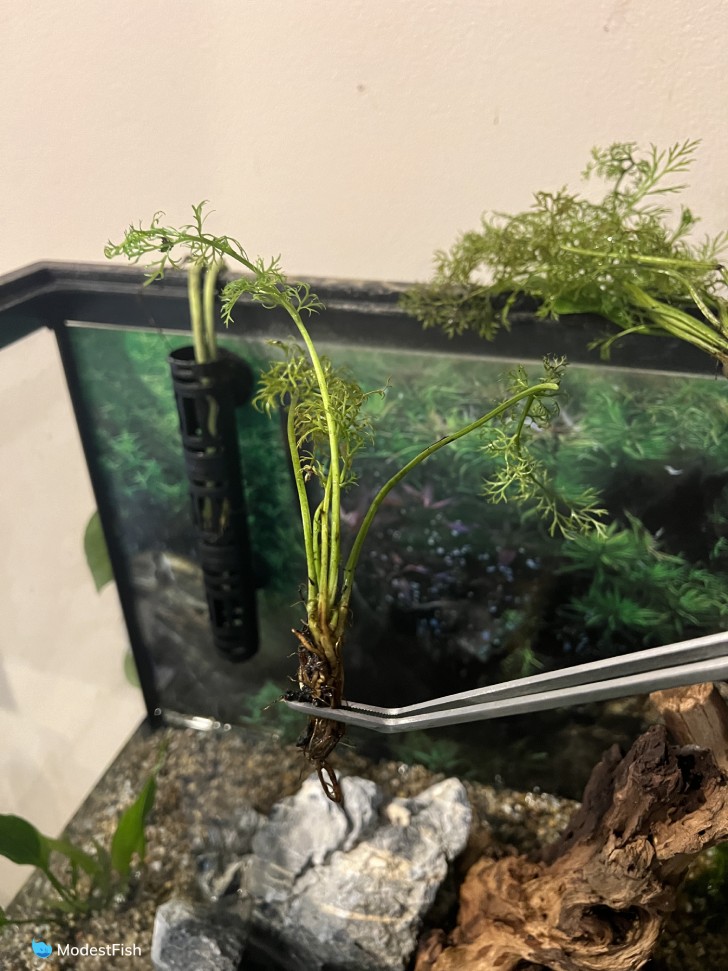
It does grow very fast, which is great for keeping nitrates stable, but does mean you need to frequently trim to keep it from taking over the tank. If you plant and trim, the best thing to do is cut the tops off and rebury them in the substrate.
Pros:
- Provides lots of shade for bettas
- Provides dense foliage for bettas to explore
- Trimming is simple
- Grows quickly
- More delicate looking than wisteria
Cons:
- Looks messy from below
- Frequent trimming
Verdict – Water sprite is a simple background plant that can help provide some cover at the water’s surface to help make Bettas feel more secure.

9. Water Wisteria (Hygrophila difformis)
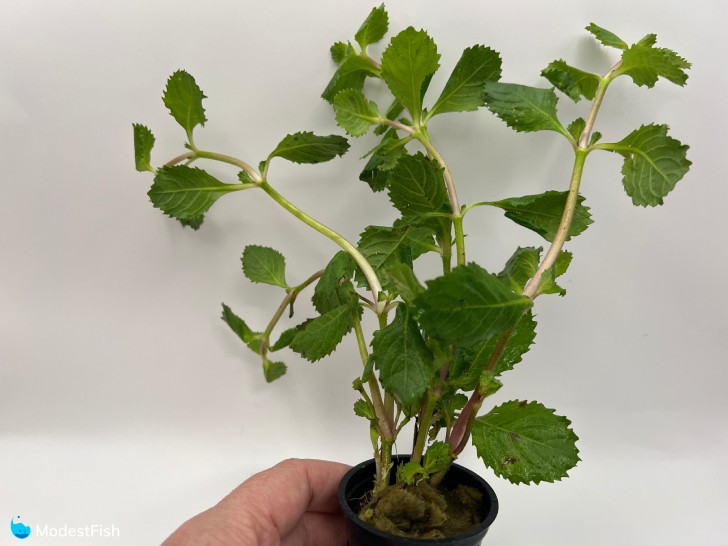
Very, very similar looking and acting to water sprite, however it has thicker leaves for bettas to hide in. I’ve kept it for years and it grows like a weed. I swear, if you look close enough, you can see this stuff growing. I see noticeable growth every week.
This bright green plant has super cool palmate leaves when it’s grown underwater. And does a great job of removing nitrate from the water column. It’s one of the best plants for this.
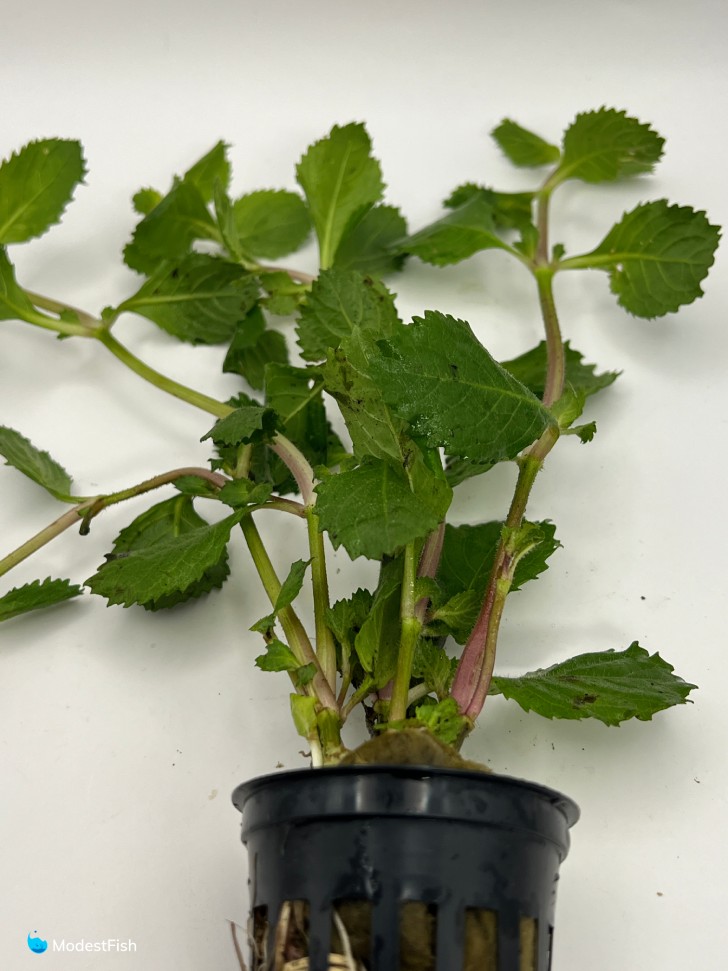
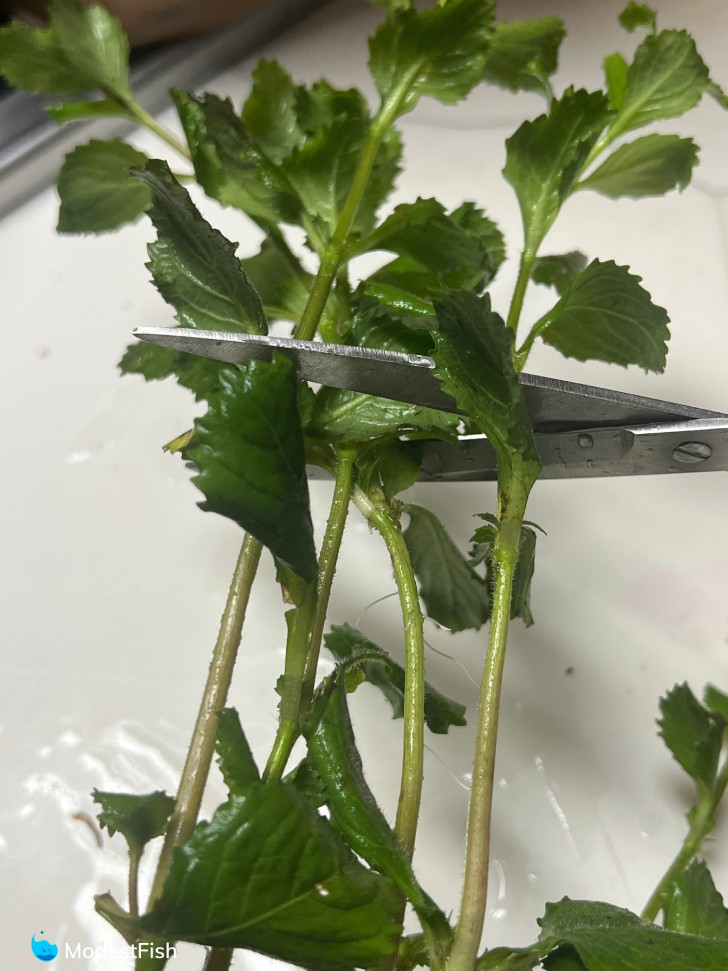
But, all that fast growth is a double edged sword. You’ll need to frequently trim this plant. I usually recommend that you pull up the plant, cut off the tops and then replant those cuttings.
The bottom portion of water wistera often loses its leaves and just looks raggedy. So this plant helps your water parameters, but it does require some labor.
Pros:
- Leaves provide great place for bettas to hide
- Fast growing
- Eats up a lot of nitrate
- Grows to the water’s surface
Cons:
- Needs frequent trimming and replanting
Verdict – Water wisteria is similar to water sprite, but its thicker leaves are better for Bettas to hide in.

10. Marimo Moss Balls (Aegagropila linnaei)
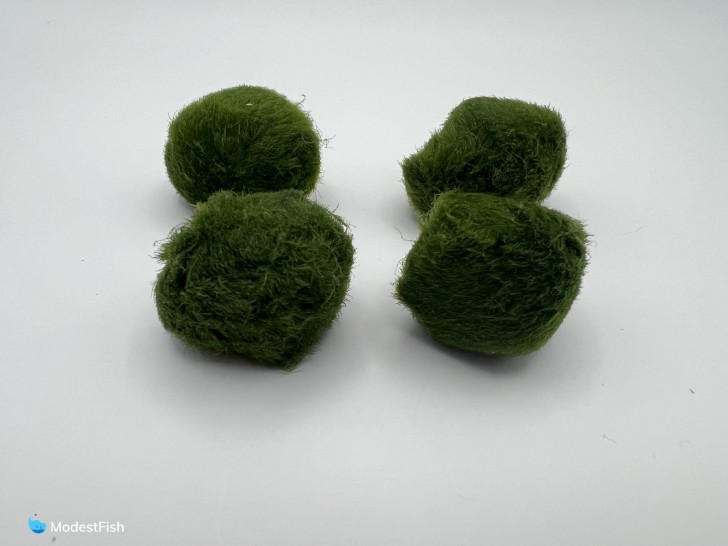
Marimo moss balls always end up low down on my list. And it’s not because I don’t like them or they are hard to care for. On the contrary I keep moss balls in most of my tanks and always with betta fish. They’re the easiest plant ever to keep in your tank.
They just don’t do much for the water.
But, bettas love interacting with these moss balls and resting on their soft surface.
Their maintenance is easy, just squeeze them out occasionally to get rid of any trapped debris. Also turning them occasionally so all sides can get some light is also good.
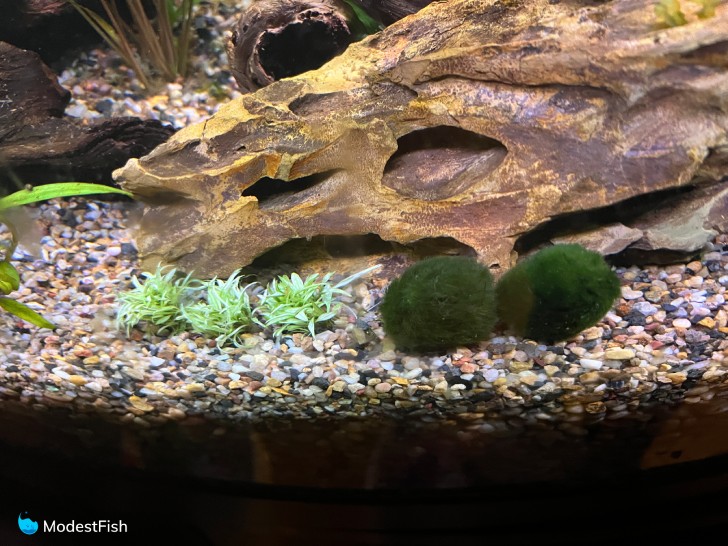
The only reason they score so low is they grow so slowly and barely eat up any nitrates. But, they are fun and it’s super cute to watch bettas play with. Get moss balls, just make sure you have other plants as well.
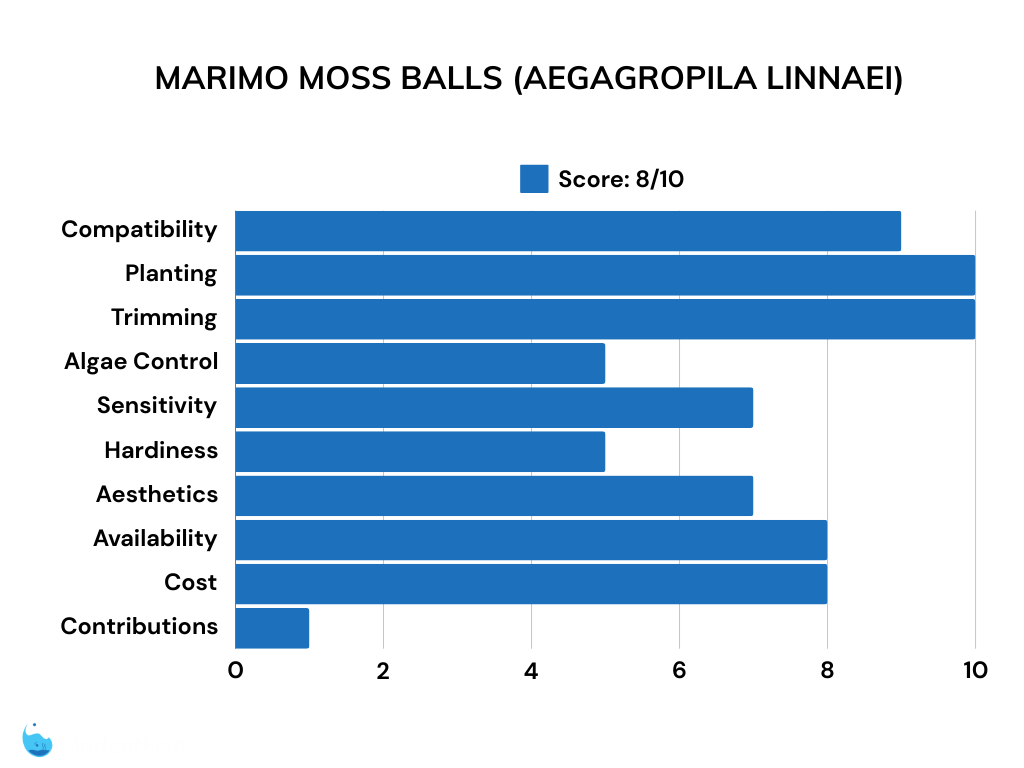
Pros:
- Bettas love to play with them
- Interesting little plant
- Easy to care for
Cons:
- Grows very slowly
Verdict – Marimo moss balls require almost no care and can be entertaining toys that your Betta can push around the tank.
11. Pelia Moss (Lomariopsis lineata)
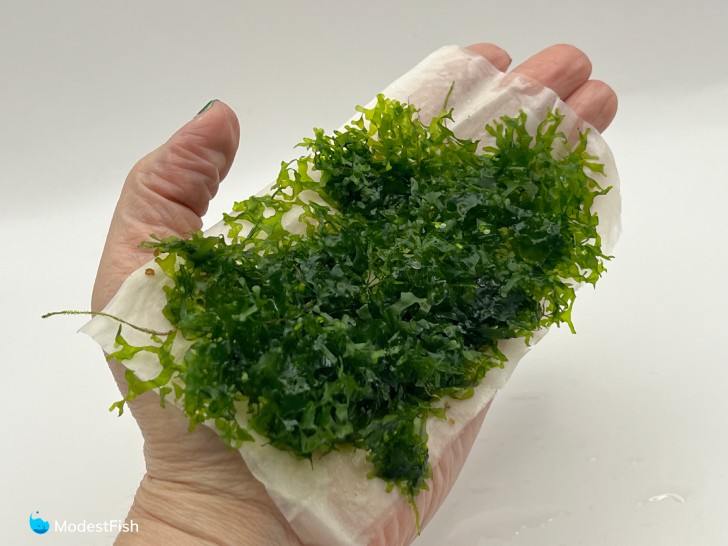
This is an odd little plant I’ve enjoyed keeping over the years. It’s not actually a moss, it’s closely related to a liverwort (non-vascular plants that grow in moist environments).
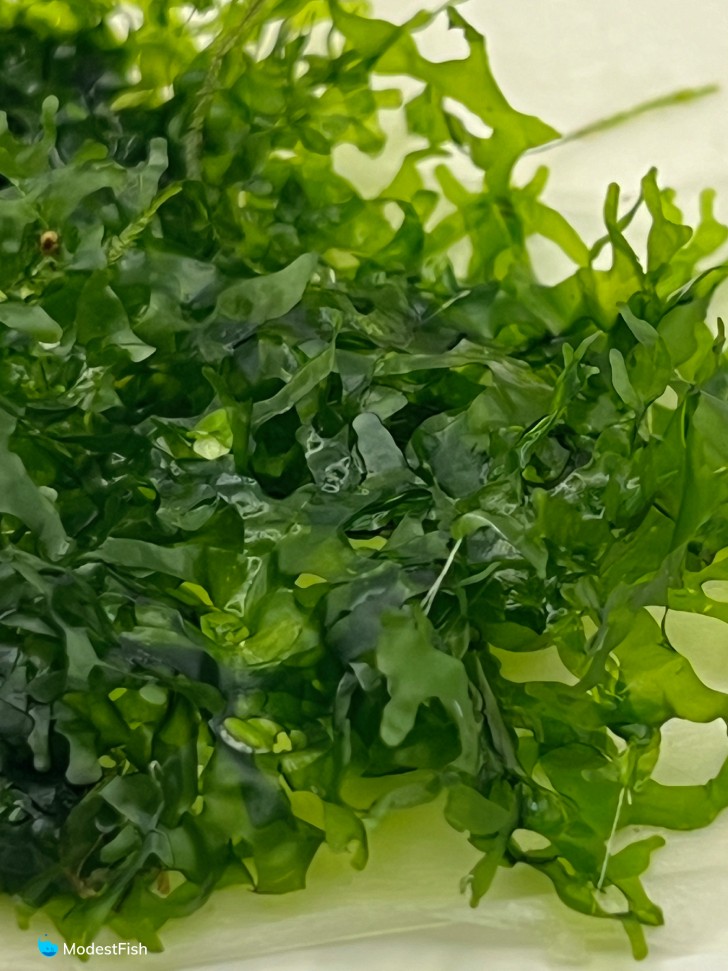
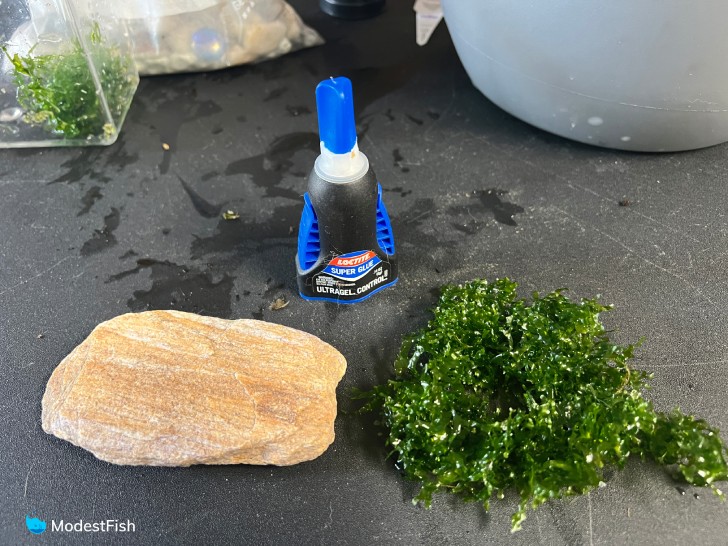
It’s a fast growing plant, forming a ruffled layer of bright green leaves (technically thalli) which hug substrate and hardscape. It’s very easy to plant and care for in your betta tank. To plant pelia moss, I just super glue it to whatever rock or driftwood I want it to cover. It does not take long for the pelia to start spreading.
Betta fish have delicate fins, and the way pelia moss attaches and covers hardscape, can make it a great way to naturally cover sharper or rougher edges and protect your betta.
The one downside that I’ve found is that this plant is delicate, meaning it breaks apart easily if it’s banged into.
It’s low-light requirements means it’ll grow perfectly fine in an ideal betta habitat without fancy high-end equipment.
Pros:
- Creates dense foliage for bettas to rest on
- Can use it to cover rough surfaces
- Easy low light moss
- Grows quickly
- Great for shrimp
Cons:
- Delicate and easy to damage
Verdict – Pelia is a low growing, moss-like plant that will grow well even in a simple low-tech Betta tank.

Which Plant is Right For Your Betta?
When deciding on your plants, it’s best to consider what they do well and what they do poorly. A betta tank with only slow growing plants can quickly get overwhelmed with algae build up. Whereas, if you only have fast growing plants, you might get less algae, but you’ll spend tons of time trimming.
Instead, you should aim to create balance. Having a mixture of anubias with broad leaves for your betta to rest on are great. Then throw in some faster growing stem plants like hornwort or wisteria as well as a floating plant like frogbit. When you have this balance, throwing in some marimo moss balls for your betta to play with will work wonders.
Having a mixture of different types of plants will help create the best environment for your betta to feel safe and secure. Once this happens, you’ll see your betta be more active and confident.

Can you have live plants and fake in aquarium?
Yes you can 🙂