

Do fish sleep? Simply put, yes fish sleep. But, it’s not the same as how you and I sleep. And not all fish sleep in the same way.
In this guide, you’ll learn the mechanics of fish sleep in relation to human sleep.
It’s fascinating, so let’s get into it.
So… Do Fish Sleep?
Well, yes…kind of? But, a sleeping fish is really different from how you and I sleep.
Almost all species of fish go into some sort of “rest mode.”
But it’s not really the same kind of sleep state that humans, dogs, cats or other mammals go into each night.
Fish don’t dream or have the same phases of sleep that we do.
But, they do meet the basic criteria for sleeping.
So What is Sleeping, Exactly?
Before we disucss fish sleep, lets figure build a platform by first deciding what sleep is.
The French psychologist, Henri Piéron laid down the definition of sleep in 1913 that is still used today:
– A stereotypic or species-specific sleep posture. We’re used to this in mammals. Most of them lay down in order to sleep.
– Maintenance of behavioral quiescence. In other words, the animal becomes inactive or dormant. It doesn’t eat or move around a bunch.
– Elevation of arousal threshold for stimulus. That is fancy scientist talk for the animal being less aware of its surroundings and not reacting as strongly to a stimulus.
For example, someone could walk into a room and say your name when you were awake, and you would immediately react. But, if you’re sleeping, someone might need to say your name several times, and loudly, for you to react at all.
– The state must be reversible. So, if you give an animal enough stimulation, it will wake up. This distinguishes sleep from things like being knocked unconscious or slipping into a coma.
No matter what kind of stimulus you give, someone in a coma will not simply wake up. So it’s different from just sleeping.
How Does this Relate to Fish?
Fish don’t roll up in a blanket and start snoring like we do, but they still show behaviors that count as sleeping.
Sleeping Posture
When fish sleep, they lie on the bottom, in a plant or hover almost motionless when they’re sleeping.
Dormancy
A sleeping fish will stop swimming, or swim very little, and stop eating.
Unresponsive
A sleeping fish won’t react to someone walking up to the tank, peering over the surface of the water, or food being dropped in the water.
You Can Wake Them Up
It is possible to wake a sleeping fish. Enough light or noise will eventually get them to wake up.
How Do Fish Fall Asleep?
The biggest single factor in how fish know it’s time to take a little snooze is light.
Diurnal fish, ones that are active during the day and dormant at night, can’t see that well in the dark. When the sun goes down, they instinctively go into hiding or get into some other kind of resting posture.
Nocturnal fish are more active at night. So they’re triggered into activity by the sun going down. During the day, they hide somewhere dark, like a small cave or among tree roots, and wait for darkness to come so they can go out and feed.
But why and how does this happen?
Well, it all relates to a hormone called melatonin.
Most vertebrates, like fish, rodents, amphibians, and even humans, have something called a pineal gland. It’s a tiny little gland in between the two hemispheres of the brain.
The pineal gland produces melatonin. When the pineal gland senses light, it slacks off and stops producing the hormone.
But when the lights go off, it kicks into gear and starts pumping out melatonin into the brain.
The really interesting part is that melatonin makes diurnal animals sleepy but has the opposite effect on nocturnal animals.
The same hormone that makes you want to lay down and go to sleep actually wakes up a bat and makes them want to get on with their day or…errr…night.
So darkness is just as important as light.
Pro Tip: It’s healthier for fish and live plants if they have a consistent number of light and dark hours. If you’re bad about remembering to turn your tank lights off, consider putting them on a timer.
Melatonin levels are vital to maintaining healthy, happy fish.
Researchers created genetically modified zebrafish (Danio rerio) that aren’t capable of producing melatonin, so they never go into rest mode. Studies have found that these fish are in a constant state of anxiety and have a much shorter lifespan than normal.
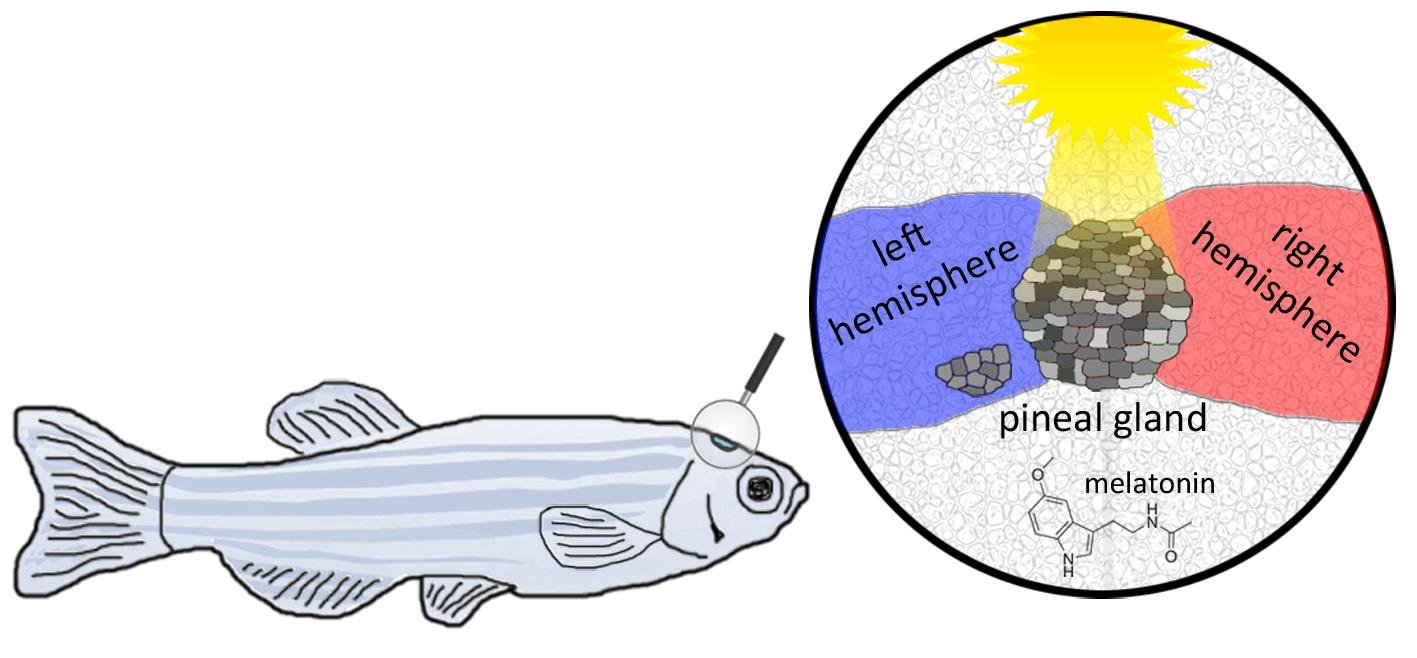
Their behavior is very similar to how humans and other mammals react to extreme sleep deprivation.
The really important thing to note about this is that all fish need a light/dark cycle. Without it, their bodies don’t know when to rest or when to wake up.
In an aquarium, we control how intense the light is and how long it stays on. It’s essential to provide your fish with both a day and night cycle to mimic what they would find in nature and regulate their sleep/wake cycles.
Pro Tip: Never leave your aquarium lights on 24 hours a day. This can stress fish since light triggers their normal sleep/wake cycles. You’re also more likely to develop nuisance algae problems if the tank gets constant light.
Why Do Fish Sleep?
No one knows for sure why fish sleep.
They don’t dream and it doesn’t seem like they need to go through the complicated process of turning short-term memory into long-term memory like mammals do.
What does seem to happen is fish go into a kind of low energy mode so they can recuperate, heal injuries, fight disease and/or grow.
It also might be a way to conserve energy during times when they can’t do much anyway.
Most fish are diurnal, so they’re much more active during the day. Once the lights go out, they can’t see as well. If they can’t see, they can’t find food or evade predators as efficiently.
So it makes sense that they would rest during these times so their bodies don’t waste energy.
Pro Tip: Fish sleep is important. Fish that don’t get enough rest can be seriously stressed, just like sleep deprived people. Constant stress makes fish more vulnerable to disease and shortens their lifespan.
How Long Do Fish Sleep?
Researchers Scott S. Campbell and Irene Tobler, from the University of Zurich, examined the sleep durations for 168 different species of animals.
They noted that it is very difficult to pinpoint just how long fish actually sleep because scientists can’t really hook fish up to electronic monitoring equipment. This makes it nearly impossible to figure out if there is a true difference in brain activity when a fish is resting versus when they’re active.
So most scientists have to observe the sleeping fish directly to try to figure out how much they sleep within a 24 hour period.
One study examined 200 species of fish. It found that some, like tuna, swordfish, sturgeons and some sharks, never seem to rest at all. Their activity appears to stay constant throughout the day and night.
Other studies have found that many reef fish hide and become completely inactive as soon as it gets dark.
It’s also been found that some freshwater fish rest for different lengths of time depending on the season. Some fish double their resting time during cold months.
So, just like other factors about fish sleep, it really depends on the species.
Do All Fish Sleep in the Same Way?
Do all fish sleep in the same way? Nope. Each species has different sleep patterns and habits.
For instance, parrot fish hide in a coral reef, wrap themselves in a thick layer of mucus and snooze until morning.
Disgusting and yet fascinating.
The mucus “sleeping bag” helps protect them from predators and parasites.
Bettas like to lay on a leaf or get inside a floating log to take a nap. That way, they can stay near the surface of the water without having to expend much energy.
If a betta doesn’t have anything near the surface, they may rest on their sides along the bottom or even point their heads straight down and let their tails float up.
More than one betta owner has been scared thinking their napping betta was dead. Especially since bettas will take naps like this during the day.
Goldfish sink down and rest at the bottom of the tank at night, moving very little. Their colors will dim while they’re resting.
A lot of diurnal species do this, like tetras and guppies. If they dim their colors and sink to the bottom, they’re harder to see and are less likely to end up as a midnight snack.
Other species will swim very slowly against a gentle current to sleep. It looks like they’re active, but they’re actually putting out very little energy and just taking a breather for a while.
See? There’s a lot of different fish sleep behaviors.
It’s good to research your species so you know what their normal sleep habits are like.
Do Fish Sleep in the Day or Night?
This is another thing that depends on the species.
Most diurnal fish sleep at night. And some low energy species, like bettas, may take little naps throughout the day and sleep most of the night.
Nocturnal fish usually find a nice hiding spot to hang out in while it’s light outside and rest up.
A lot of plecos and catfish are this way. They hole up in a cave or under a log somewhere and only venture out once it’s dark.
Then there are species that are kind of in between. Some predatory fish are active most of the day, but then become much more active once it’s dark. So they may rest part of the day and part of the night.
Do Fish Sleep with Their Eyes Open?
Yep. Fish have to sleep with their eyes open. They don’t have eyelids.
Well, some sharks do. But, they don’t close them to sleep, only to protect their eyes as they bite something.
Not closing their eyes is probably a good thing. Even if fish require rest, they still need to have at least a little bit of awareness of their surroundings.
Otherwise, hungry predators could just wait for everybody else to fall asleep and then roam around eating all the resting fish.
How Can I Tell if My Fish is Asleep?
This can be tricky, and again, it depends on the species.
For many fish, they won’t really rest until the lights are completely off. This makes it hard for you to tell that they’re sleeping because you can’t see them.
But here are some common things that fish do when they’re sleeping so you can tell the difference between a sleeping fish and a dead one:
Resting body posture – this varies from species to species. I’ve always noticed it the most with bettas. They may float head up, head down, lie along a leaf, or even lie on their sides on the substrate.
Sinking to the bottom – many species of fish will rest on or close to the bottom of the tank when they are sleeping. This is very common with bettas, tetras, goldfish, tiger barbs, guppies, danios, etc.
Dimmed colors – many fish will mute their colors while they’re resting.
Inactivity – fish will stop swimming as vigorously. They may stop altogether or simply float in a calm spot in the tank and only flick their tails occasionally.
Hiding – a lot of the time, fish will go hide while they’re resting. They nestle into plants, retreat to caves or hide behind decor.
Lack of response – resting fish won’t respond the way they normally do. They won’t rush to the front of the tank for food or won’t react to someone walking by the tank.
Pro Tip: If you can’t tell if your fish is dead or just sleeping, give them a couple of hours. If the fish is sleeping, you don’t want to disturb their rest. If they really are dead, waiting a few hours to make sure won’t hurt anything.
Fish Sleep: It’s Different
So, do fish sleep?
Fish don’t necessarily sleep the way that we do. No blankets, pillows or snoring.
And luckily, no drooling.
But, fish do go through periods of rest during the course of a 24 hour period.
Sometimes, a sleeping fish can freak you out because it looks like it’s dead. Just keep an eye on it. If it really is dead, it will still be dead when you check on it later.
But if the fish is just sleeping, it’s a good idea to let it finish it’s nap.
I know I’m pretty grumpy when someone wakes me up early, or at all really.
It’s important for fish to get enough rest. It helps them heal, grow and just generally recuperate from a hard day of constant swimming.
The number one factor that governs fish sleep is a cycle of light and darkness. It’s a good idea to give fish (and even plants) consistent light and dark periods.
This helps their bodies regulate their sleep/wake cycle and lowers fish stress.
And anything you can do reduce stress is always a good idea.
Share on your Pinterest!

Heard a kid ask his parent yesterday..
“Do Fish Snore”??? 🙂 🙂
Answers on a postcard…..