

Finding plants to go in your goldfish tank can be a bit tricky. They’re masters at destroying aquascapes. They dig up, eat plants, and then look you in the eye and beg for food. Unbelievable.
But, there are some plants that taste nasty and can help with all the waste they produce. And this guide will help you learn the pros and cons of using java fern, anubias congensis, anubias barteri, anacharis, african water fern, and hornwort in goldfish tanks.
Overview of Best Plants For Goldfish Tanks
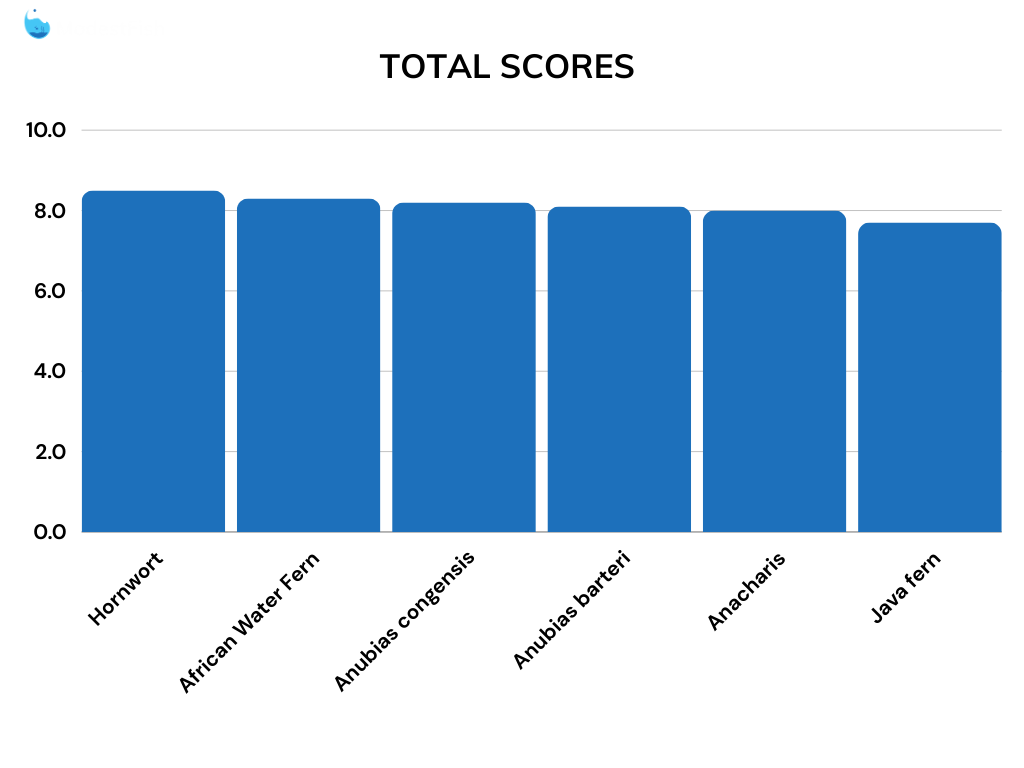
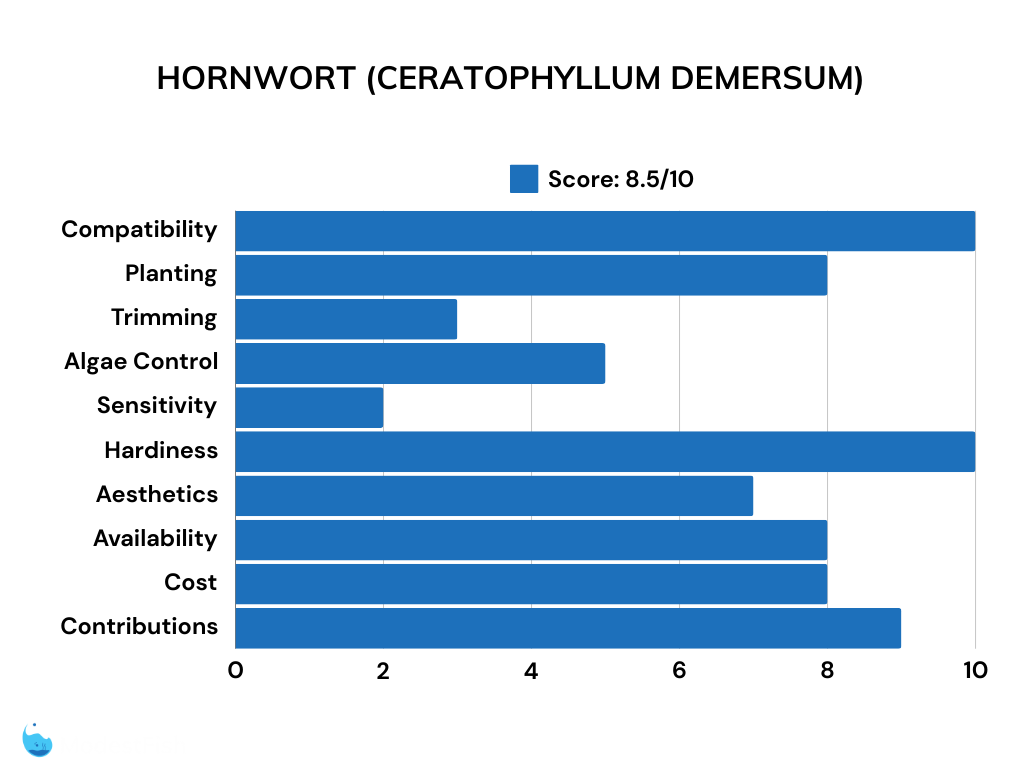
- Hornwort (Ceratophyllum demersum) 8.5/10: The needle-like leaves are tough and unappetizing, even for hungry goldfish. You can grow this as a floating plant if it keeps getting pulled up.
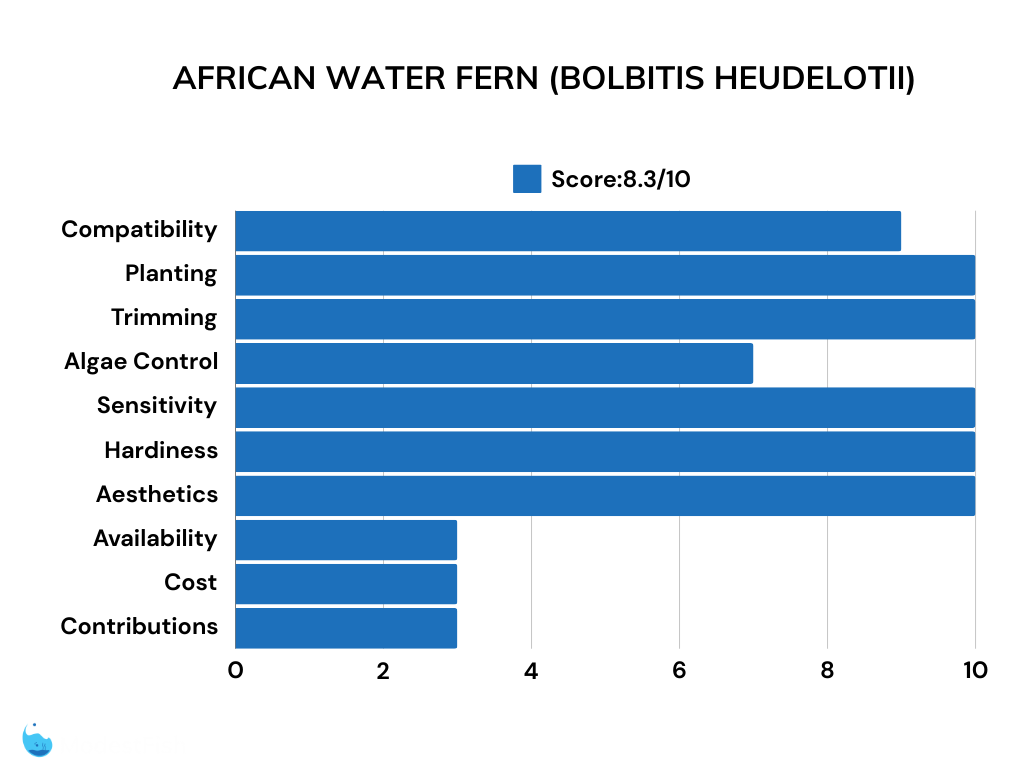
- African Water Fern (Bolbitis heudelotii) 8.3/10: Grows attached to a surface, so goldfish shouldn’t be able to uproot it and its tough leaves make it unappealing as a snack.
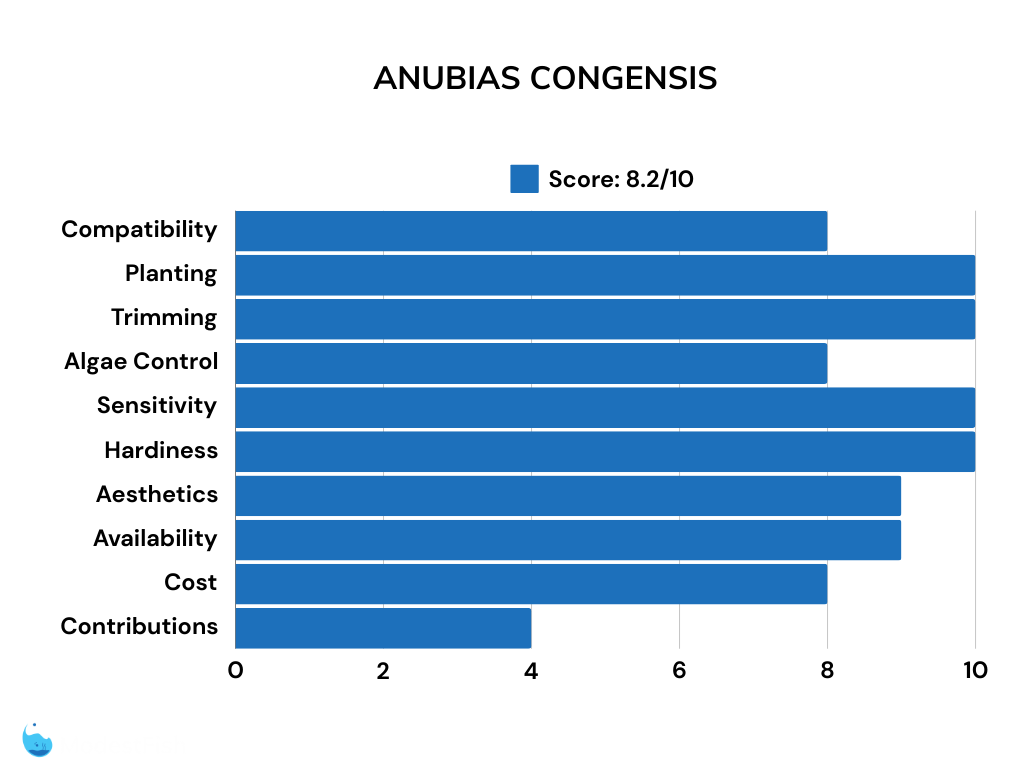
- Anubias congensis 8.2/10: This larger anubias species can be grown attached to a rock or decor and has tough leaves that don’t taste very good, so Goldfish should leave it alone.
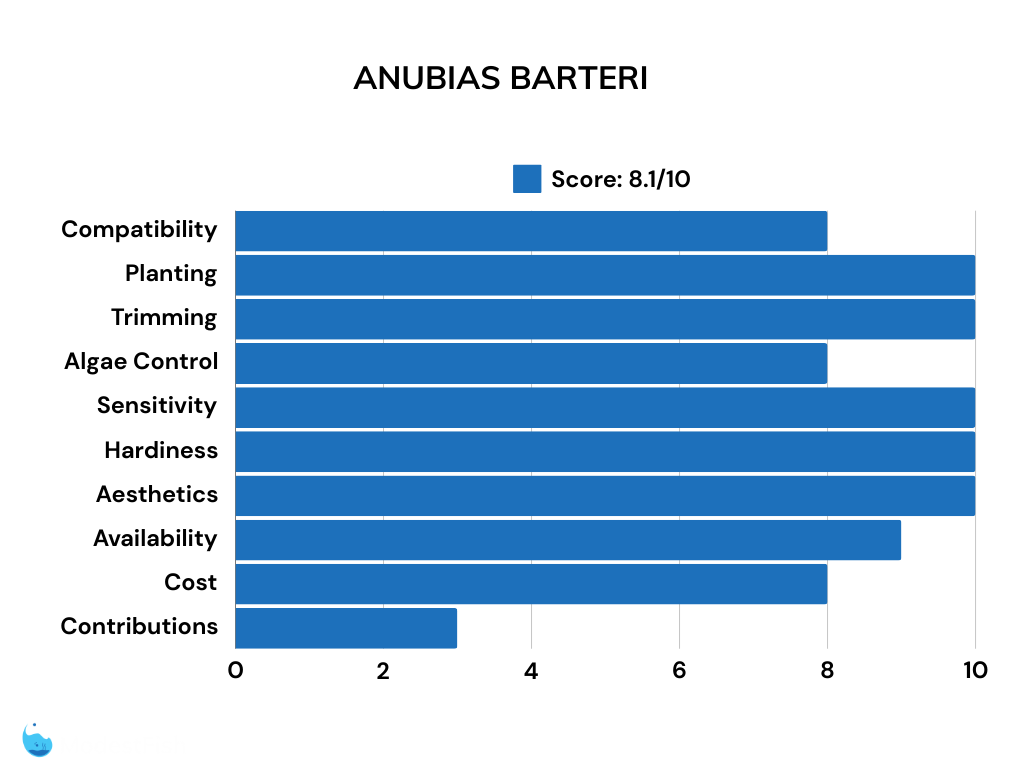
- Anubias barteri 8.1/10: Tough and not very tasty. It can be attached to rocks or decor so Goldfish can’t dig it out of the substrate.
- Anacharis (Elodea sp.) 8.0/10: Some Goldfish will eat anacharis, but it is so fast growing that it can often withstand being munched on a little bit. This plant can also be left to grow as a floating plant if goldfish insist on digging it out of the substrate.
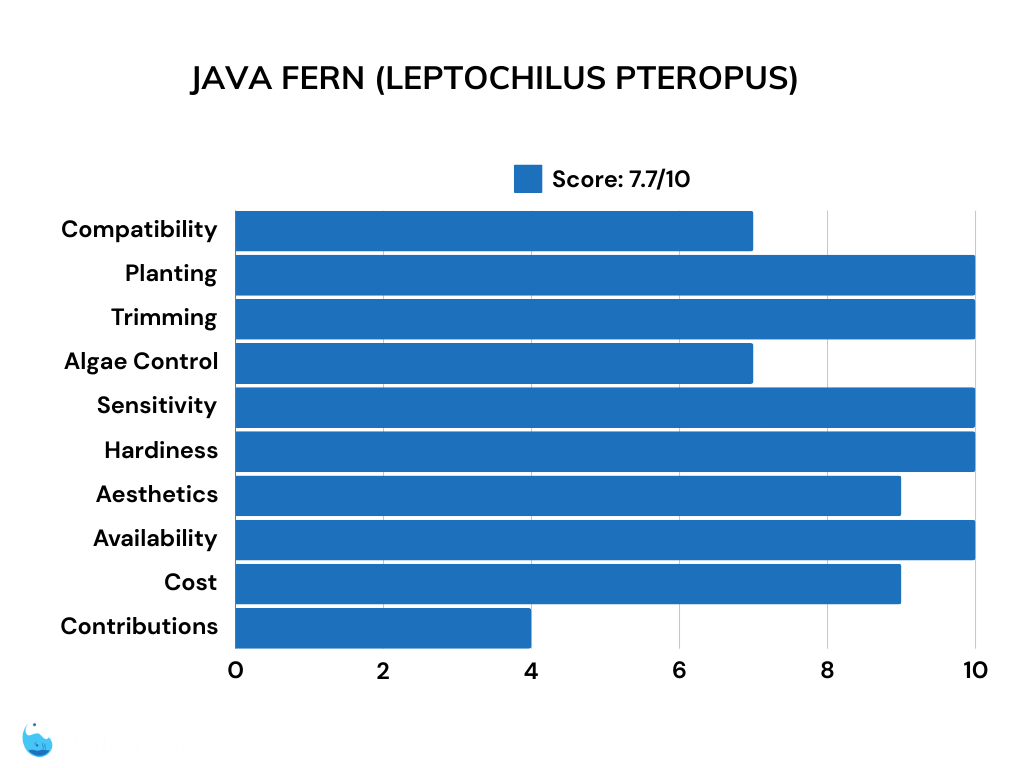
- Java fern (Leptochilus pteropus) 7.7/10: Can grow attached to a surface, rather than rooted in the substrate, so it’s not disturbed by goldfish rooting around at the bottom of the tank.
How I Rated The Plants
Like I mentioned in the introduction, picking plants for goldfish can be tricky. Goldfish think live plants placed in their tank are a delicious salad bar. They’ll gulp and nibble anything tasty they can get their mouths on.
So when it came to picking and rating plants for goldfish tanks, I focused mainly on compatibility (will the goldfish eat the plant) over how easy the plant is to care for. Although, all of the plants I ended up picking are also low-maintenance and thrive on neglect.
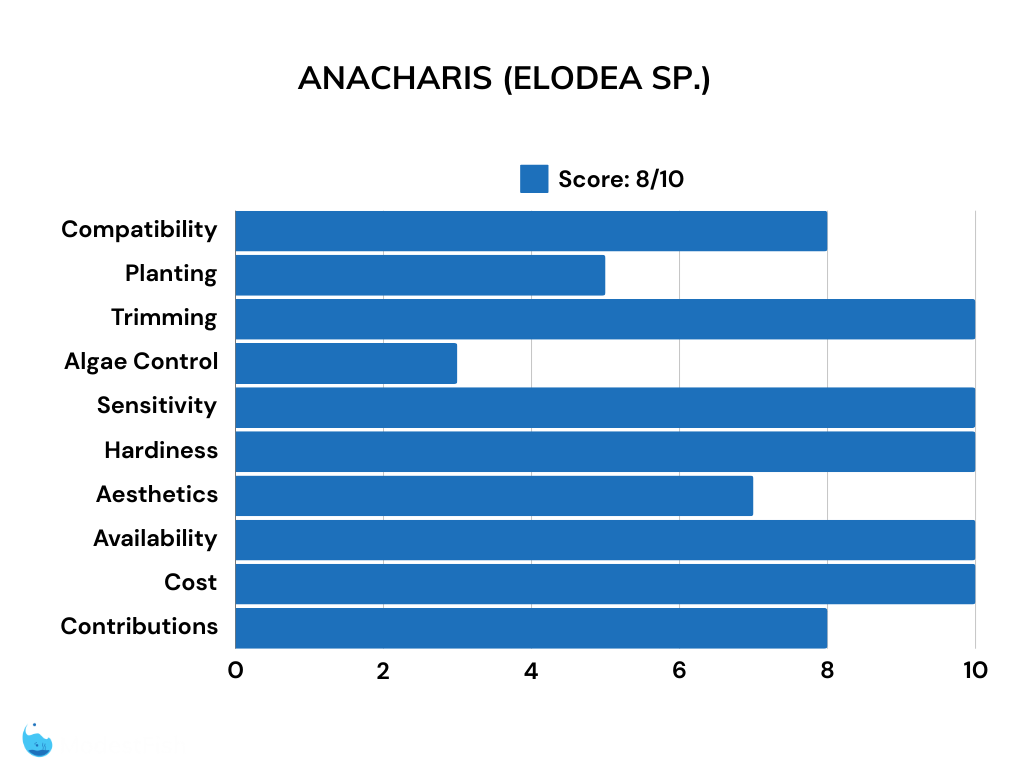
I picked java fern, anubias congensis, anubias barteri, anacharis, african water fern, and hornwort. I rated each of them on compatibility, planting, trimming, algae control, sensitivity, hardiness, aesthetics, availability, cost, contributions.
I weighted compatibility 55% of the total score and because goldfish produce a lot of waste, I weighted contributions at 8%. Then cost 2% (less important factors as most plants don’t cost a huge amount), and the remaining categories at 5% because I believe they are equally as important as each other.
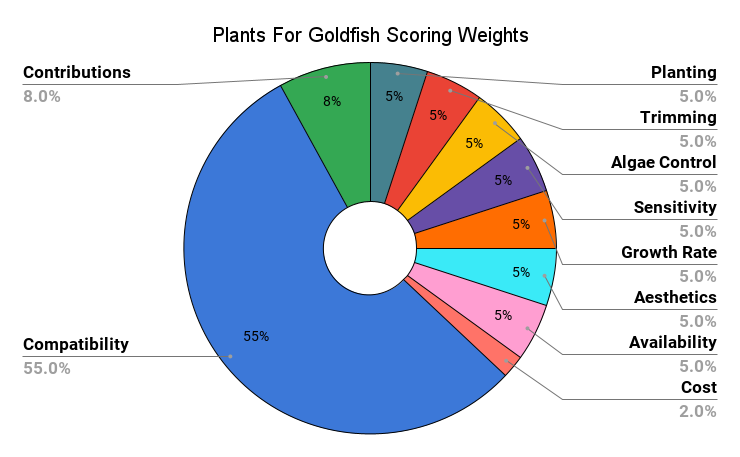
This made sure the most important factors had the biggest impact on the final score. Here is more depth on how the plants scored in each category:
- Compatibility (55% of total score) – The higher the score, the less likely it is your goldfish will eat, dig up, or generally ruin your plant.
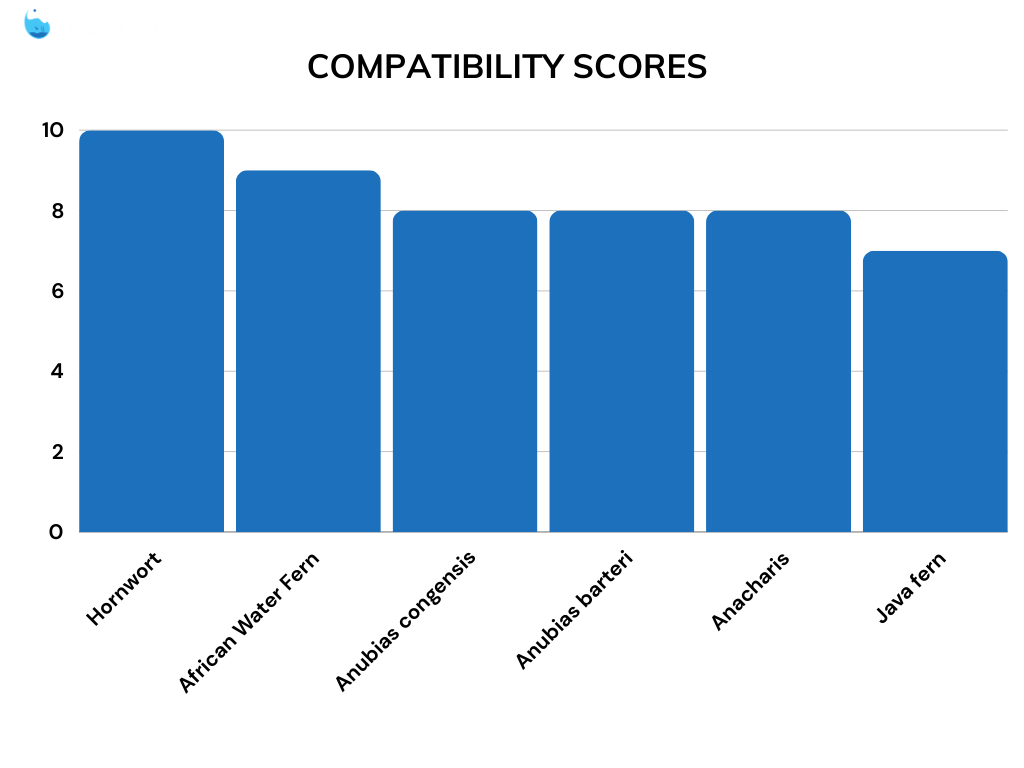
A note I want to highlight here. Although I haven’t had goldfish nibble on anubias and they generally don’t like the taste, I have read of instances where they do. So for that, I rated them an 8/10. Anacharis does get nibbled on like java fern, but the speed it grows at means it’s not generally a problem for the plant, whereas it can be for java fern. So I also gave anacharis an 8/10 and java fern 7/10.
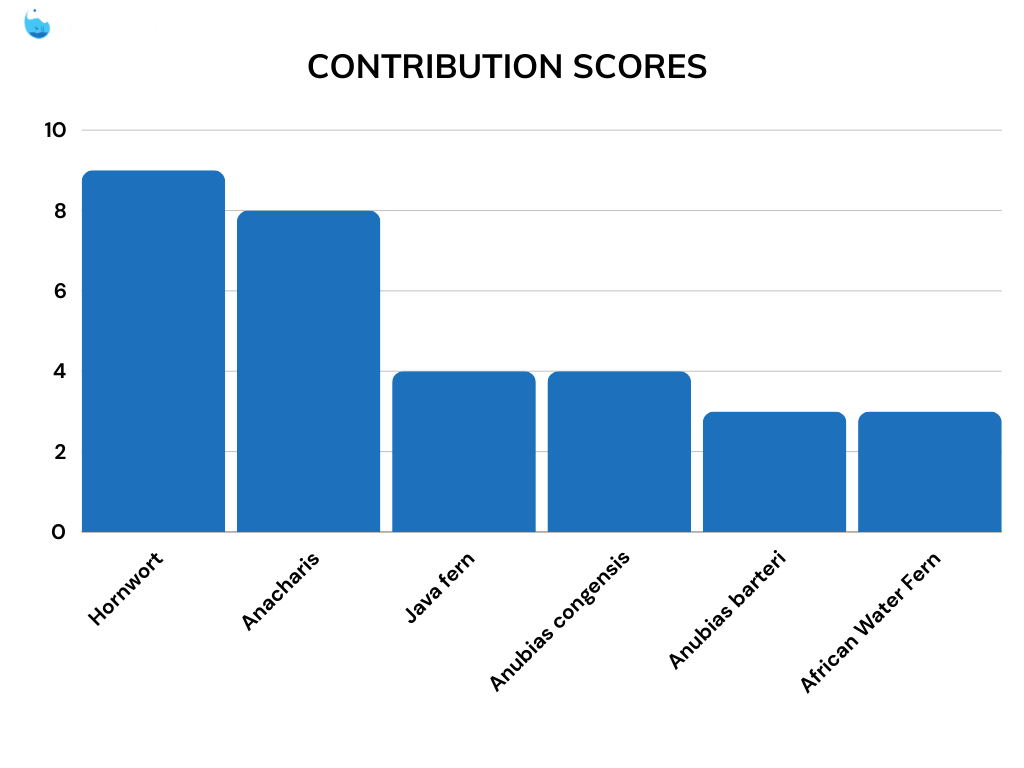
- Contributions (8% of total score) – The higher the score the better the plant does at consuming nitrates. And lord knows you need it in a goldfish tank.
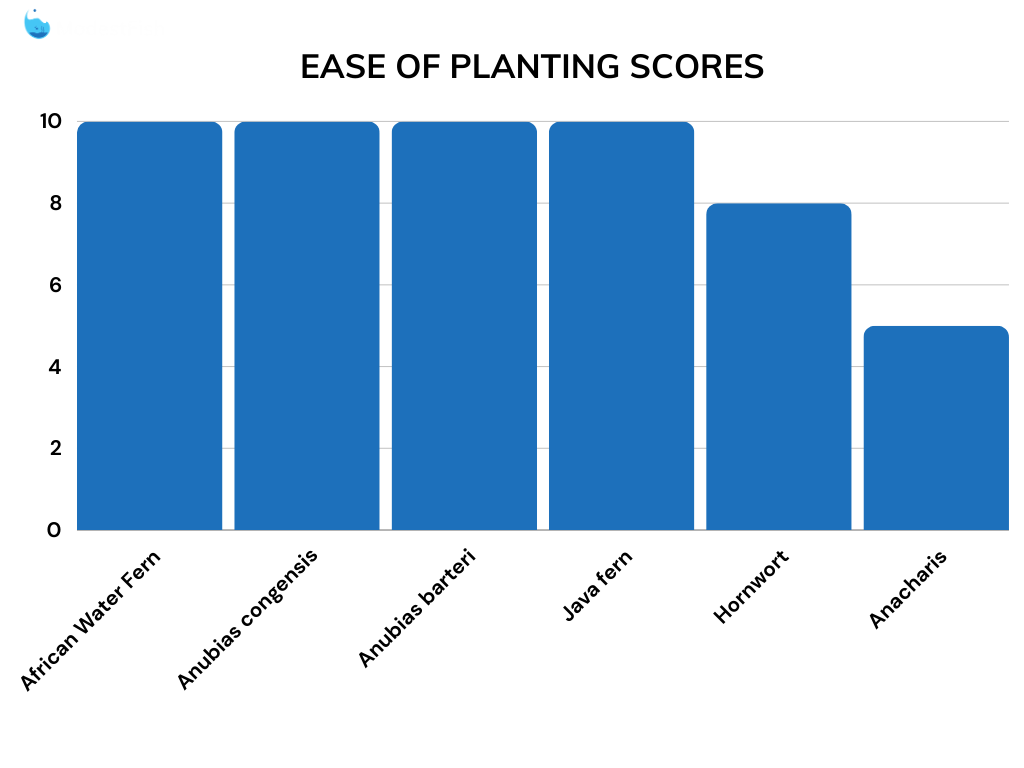
- Planting (5% of total score) – The higher the score the easier it is to plant and stay planted.
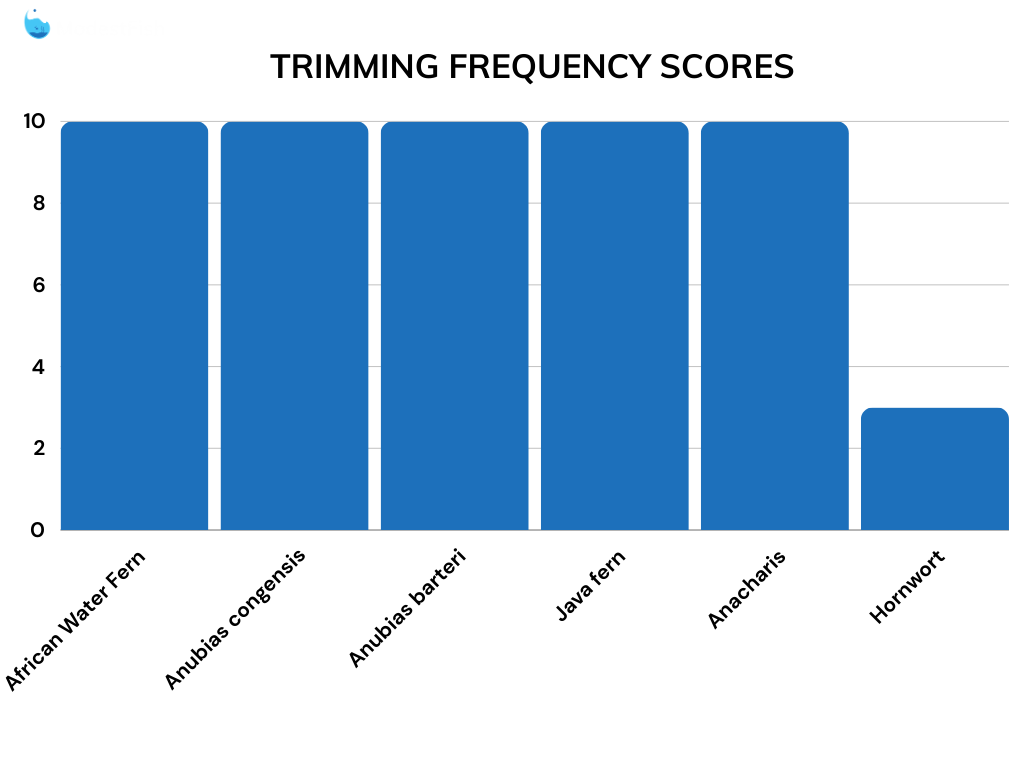
- Trimming (5% of total score) – The higher the score the more frequently you have to trim and maintain it.
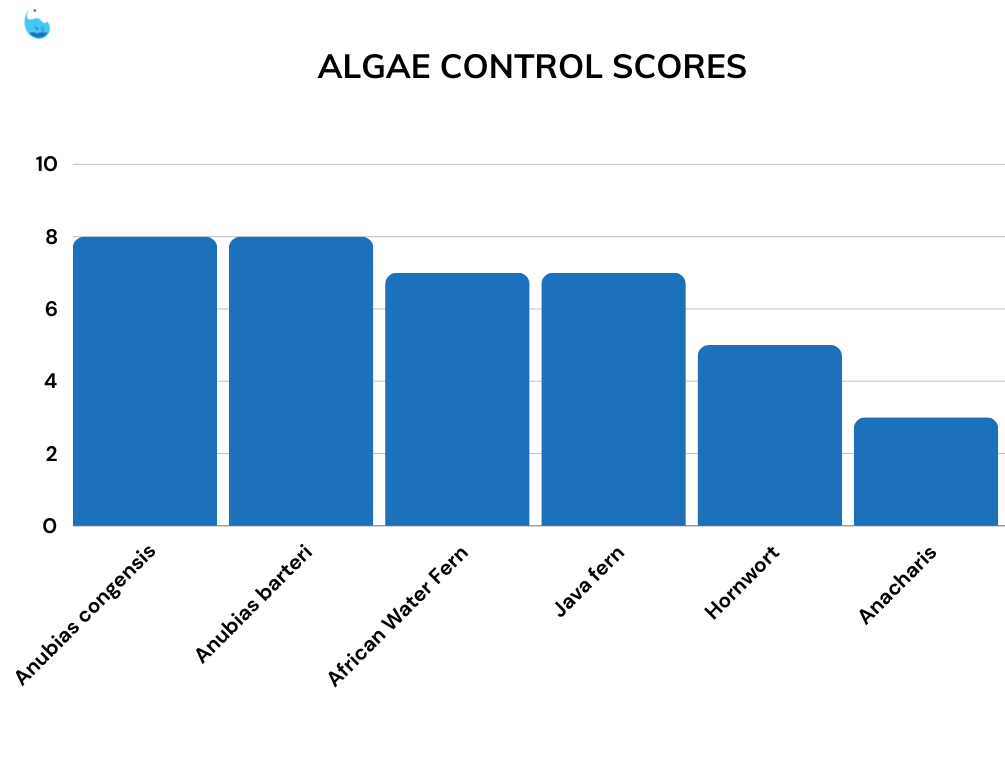
- Algae control (5% of total score) – The higher the score the easier it is to remove algae growth from it.
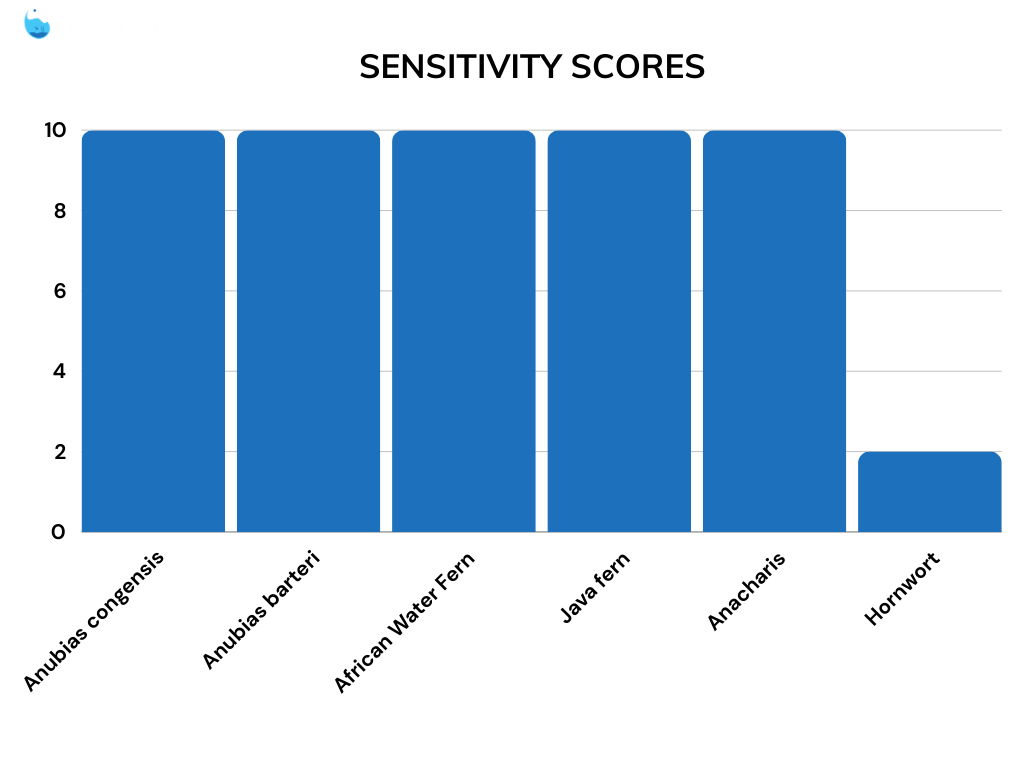
- Sensitivity (5% of total score) – The higher the score the less prone it is to melt back when water parameters change or when first introduced.
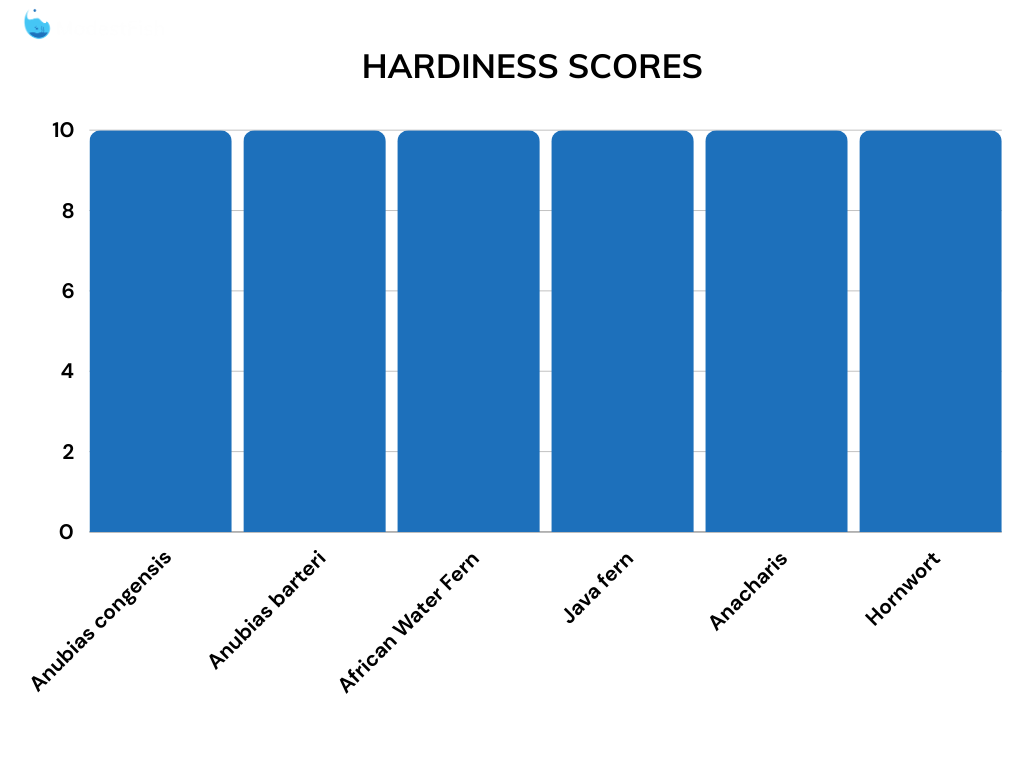
- Hardiness (5% of total score) – The higher the score the more tolerant the plant is to varying conditions and/or benign neglect over time.
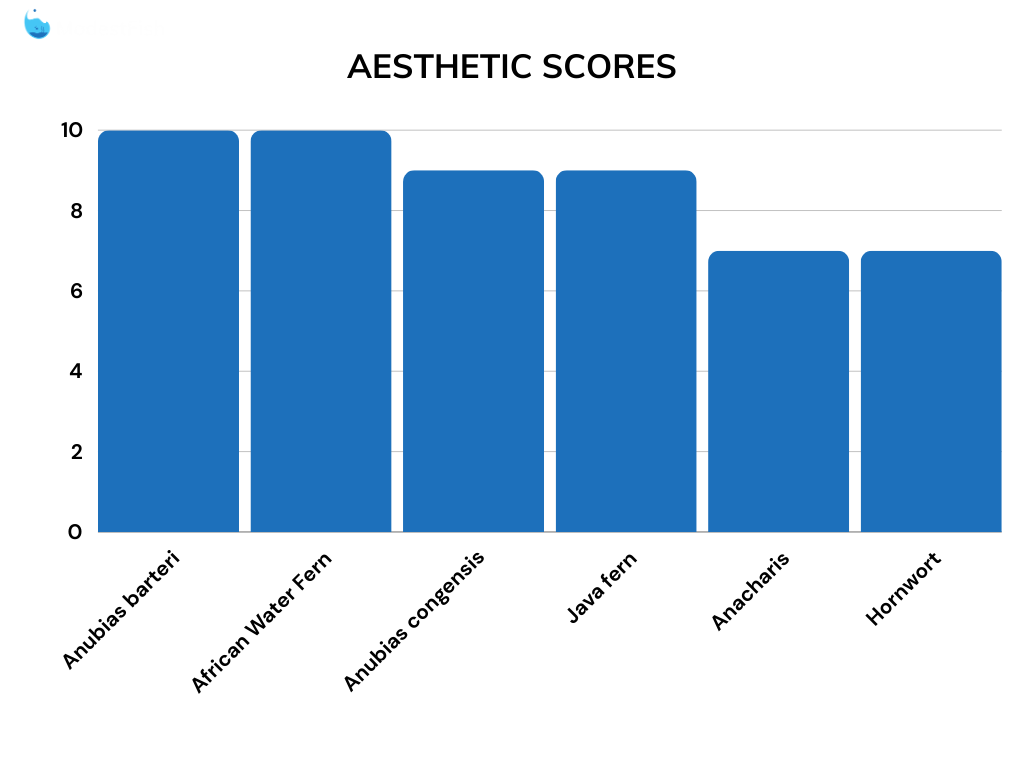
- Aesthetics (5% of total score) – The higher the score the more attractive I think the plant is (subjective I understand).
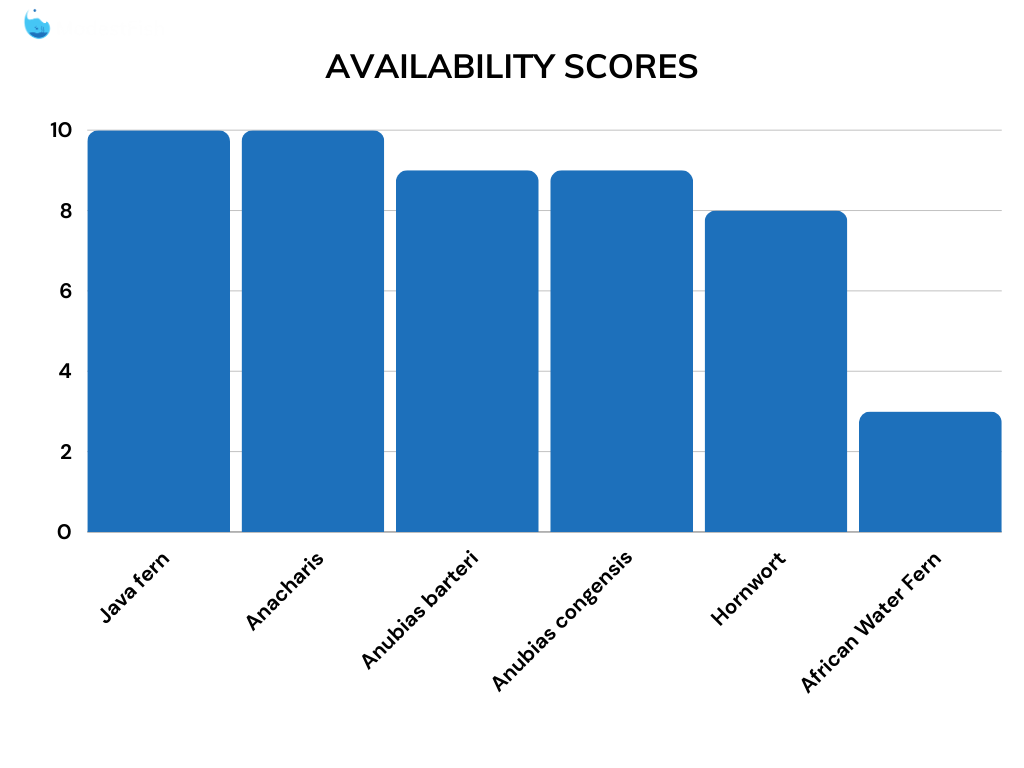
- Availability (5% of total score) – The higher the score the more readily available the plant is.
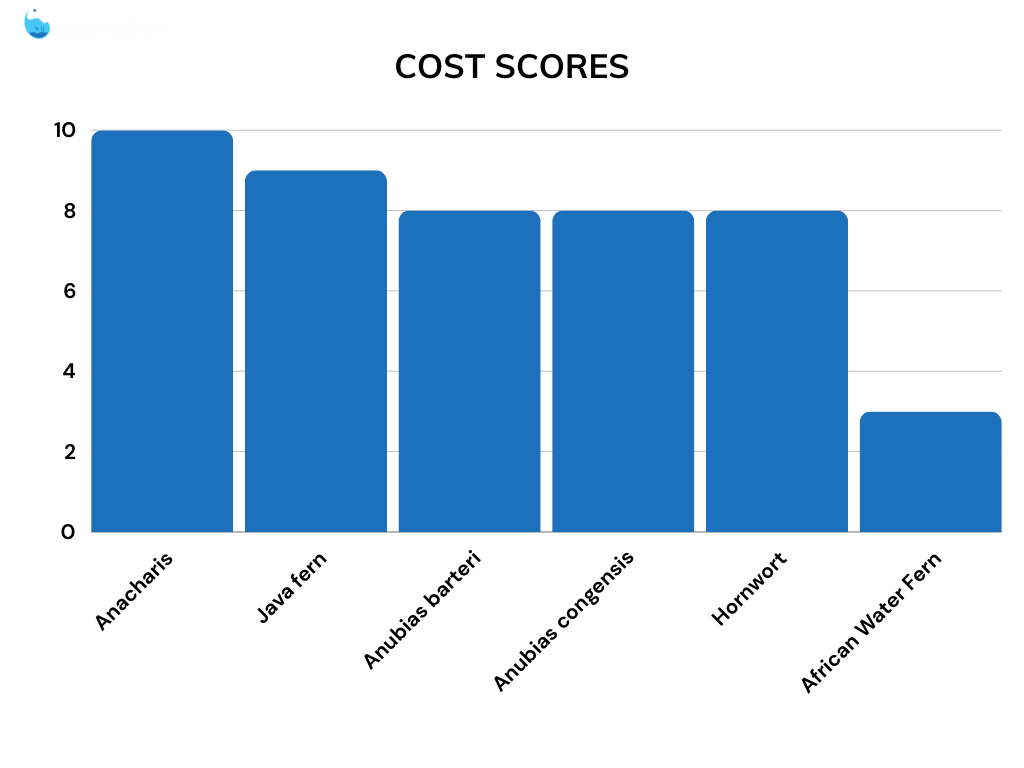
- Cost (2% of total score) – The higher the score the better the price or value of what you get.
This gave the following total scores when averaged out and weight applied to each category:
Reviews For Each Plant For Goldfish Tanks
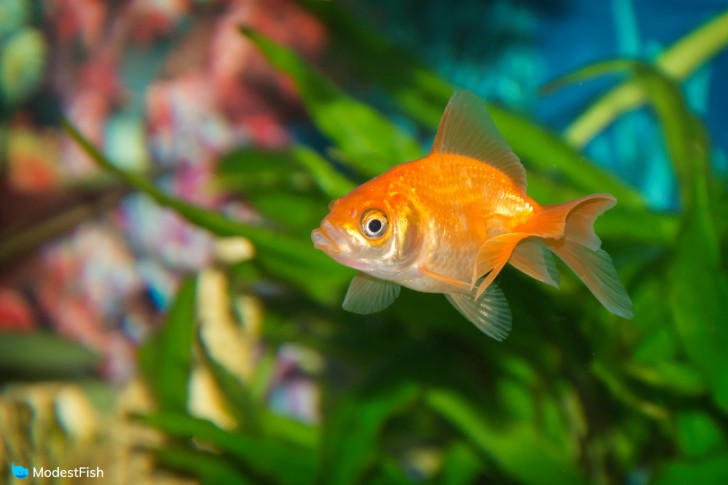
1. Hornwort (Ceratophyllum demersum)
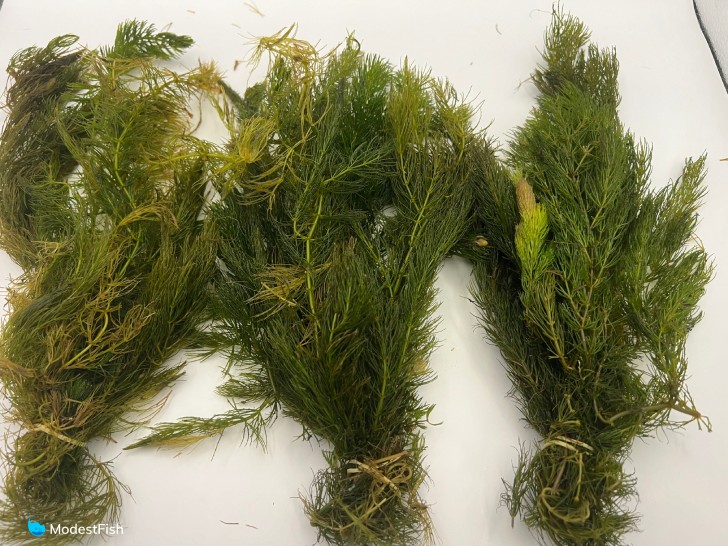
Hornwort is, for me, the best plant you can keep with goldfish – when you float it. The beautiful bright green pine needles are great for you to look at and unappetizing for your goldfish.
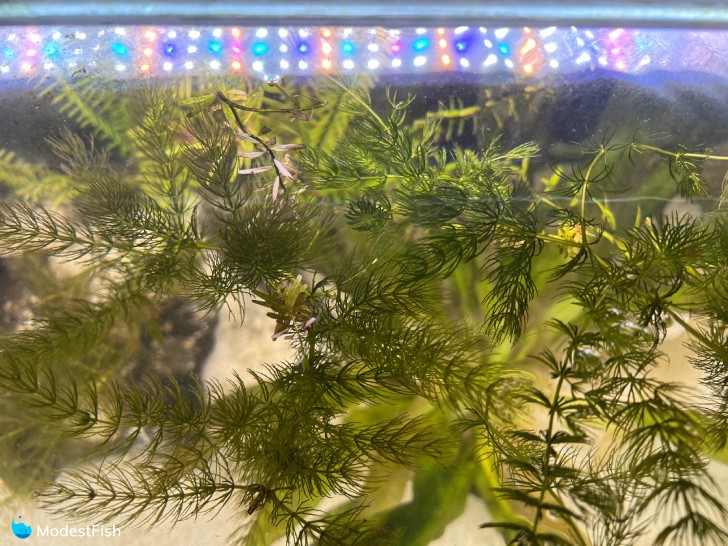
You can plant it in the substrate and it’ll grow well, but your goldfish may decide to just dig it up.
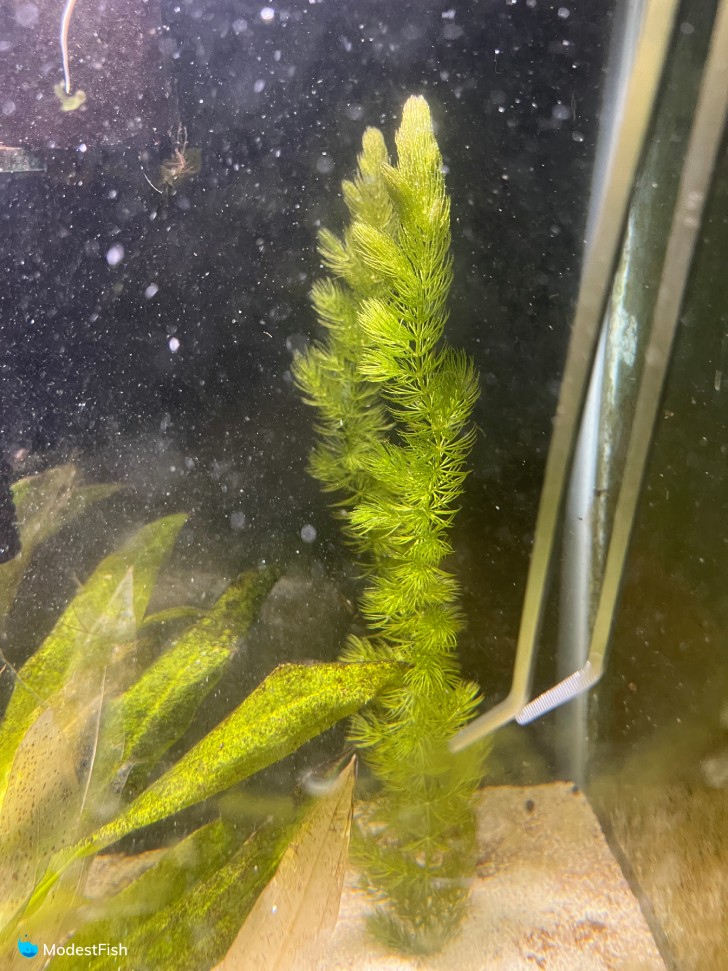
The best role hornwort will play in your goldfish tank is helping maintain water parameters. It’s a beast at eating up nitrates. I always notice a positive effect on nitrate levels when I have hornwort in the tank.
What you need to know, is it can be a bit of an issue getting established in your tank. When hornwort is first introduced, it can start to drop all of its needles and melt back.
I’ve always seen it recover, but all those dropped needles can make a huge mess in the tank that’s hard to clean up.
Because it’s so sensitive, it’s best to quarantine this plant in something like a bucket with bubbler or a bare bottom tank that is easy to clean. Fill the quarantine tank with old aquarium water so the hornwort can get used to your tank’s parameters. Once the plant starts to bounce back, you can move it to your goldfish tank.
Pros:
- Goldfish hate the taste
- Can be planted or floating
- Fast growing plant that eats up nitrate
- Beautiful distinct shape
Cons:
- Very sensitive plant that can be hard to get established
- Very messy if it melts back
Verdict – Hornwort’s needle-like leaves are tough and unappetizing, even for hungry Goldfish. You can grow this as a floating plant if it keeps getting pulled up.

2. African Water Fern (Bolbitis heudelotii)
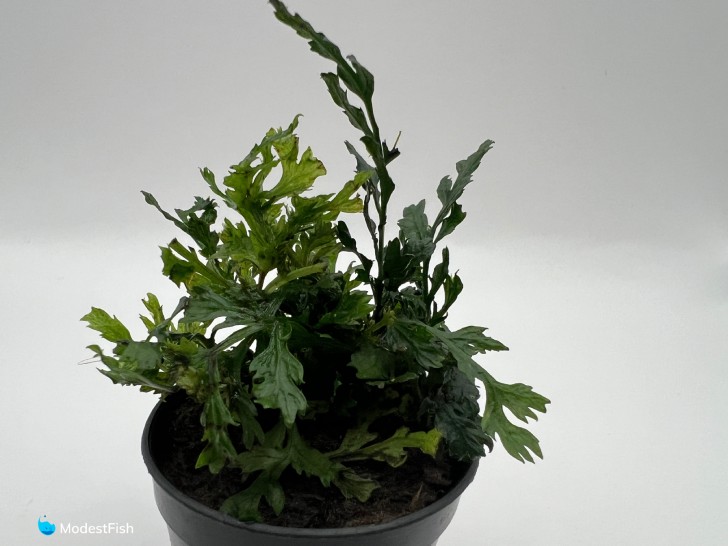
I really love how African water fern looks; so it’s great that goldfish don’t like to eat on the touch leaves.
I’ve had the typical experience with this plant. It was a little slow to get established. It really didn’t grow for the first few months, and when it did start, the growth rate has been rather slow, but steady.
I’ve found this species thrives on benign neglect. It’s an epiphyte, so you must glue or tie it to a rock or driftwood. This is ideal for goldish tanks because they won’t be able to rip it up.
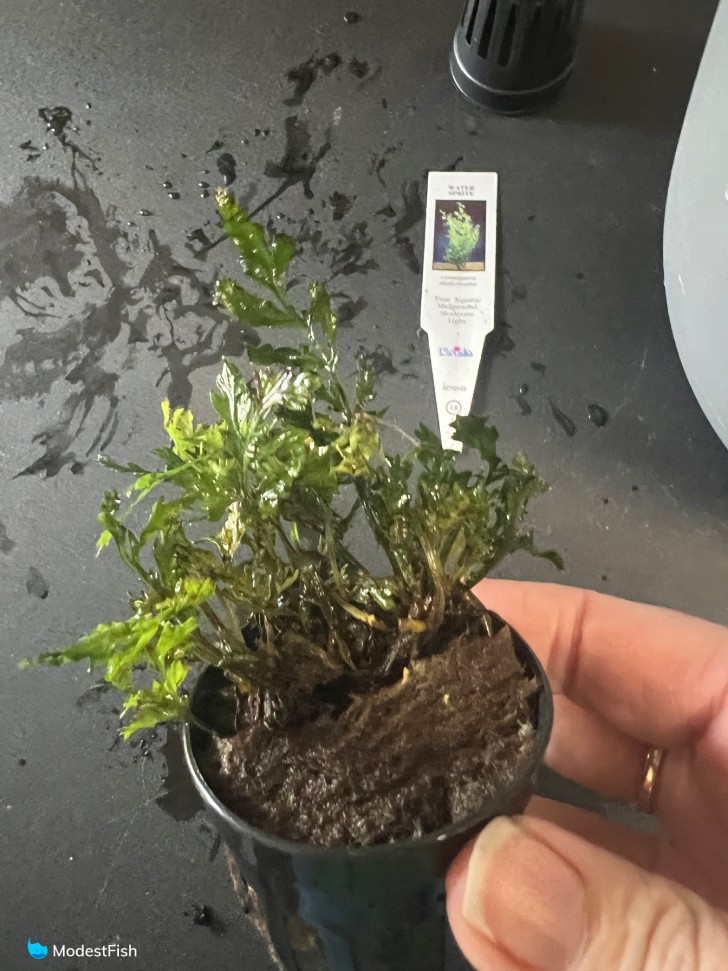
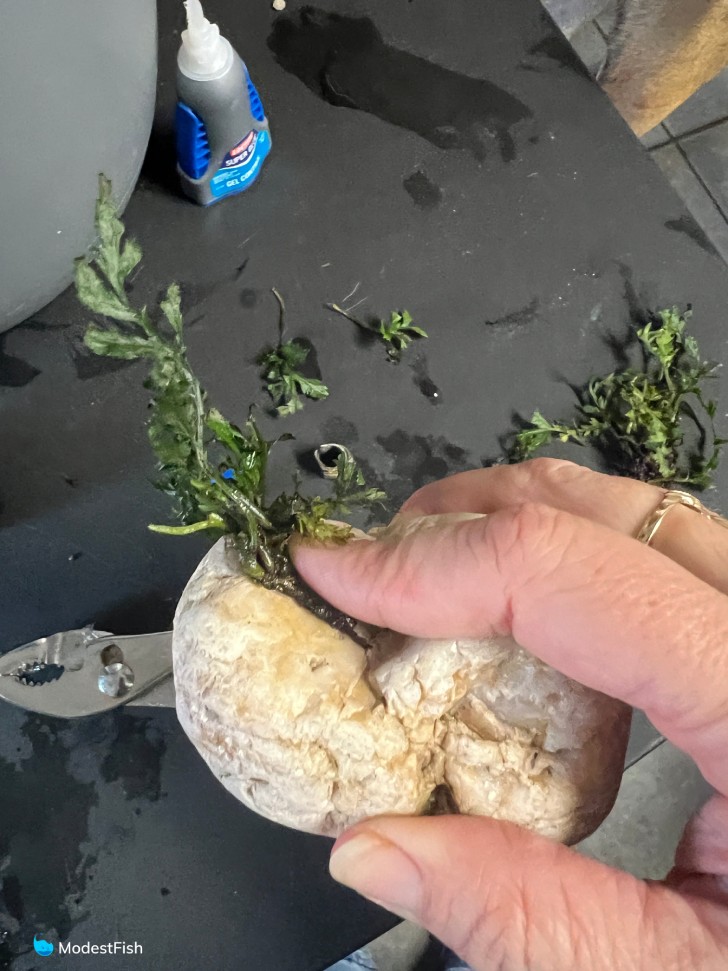
Over time, african water ferns grow in large jungles of frons, which is great for me because the goldfish don’t eat them.
The slow growth rate means it doesn’t eat up a lot of nutrients while it’s small, but as it gets large it will contribute more to water parameters.
Pros:
- Goldfish hate the taste
- Can’t be dug up
- Beautiful, looks like a terrestrial fern
- Makes a great background plant for large tanks
- Tough and resilient
- Easy to trim
Cons:
- Slow to get established and slow growth rate
- Algae control can be a little bothersome
- Doesn’t contribute much to water parameters until it gets large
Verdict – African water fern grows attached to a surface, go Goldfish shouldn’t be able to uproot it and its tough leaves make it unappealing as a snack.

3. Anubias congensis
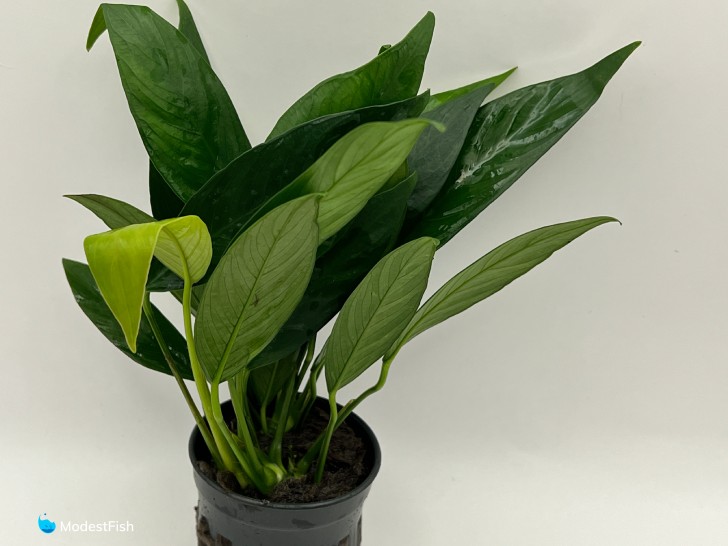
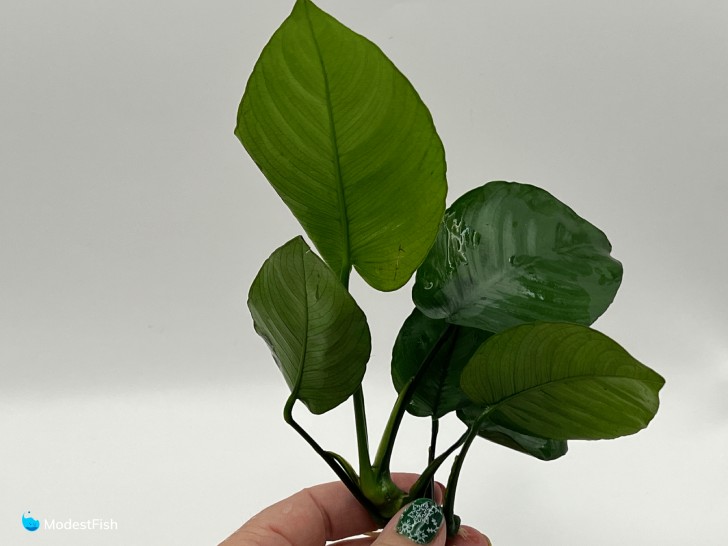
One of the larger species of anubias, it’s a slow grower but overtime the leaves can get to a foot long. And generally, goldfish don’t like the taste. But, sometimes they do just eat anything.
It’s another epiphyte, so you can just attach the rhizome to a rock or piece of driftwood. I then just put it in the tank and leave it alone to do its own thing. Goldfish can’t then dig it up.
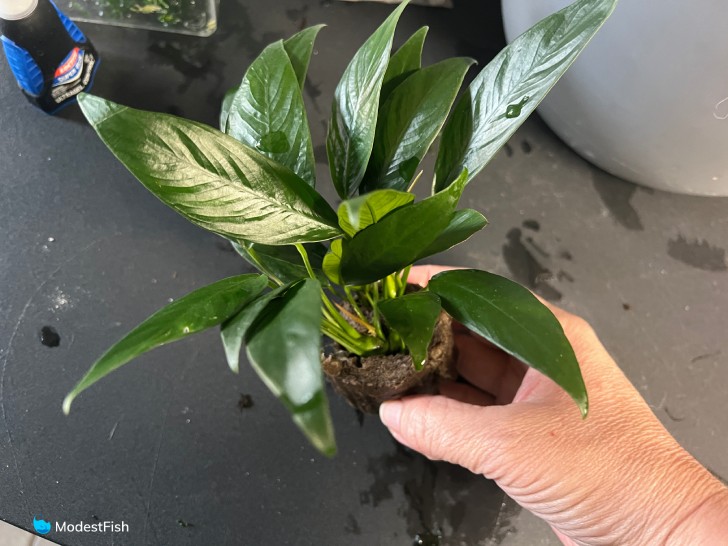
This plant isn’t fussy at all. I’ve always found it to be very tolerant of algae control measures, including rubbing algae off the leaves or spot treating with Seachem Excel and peroxide.
One downside is it doesn’t really contribute much to taking up extra nutrients, which you get a lot of in goldfish tanks.
Pros:
- Not tasty for goldfish
- Goldfish can’t uproot it
- Easy to plant and maintain
- Larger anubias that really stands out
- Beautiful, long, pointed leaves
- Easy to clean off algae
Cons:
- Slow to get established
- Slow growth rate
- Doesn’t eat up much nitrate
Verdict – This larger anubias species can be grown attached to a rock or decor and has tough leaves that don’t taste very good, so Goldfish should leave it alone.

4. Anubias barteri
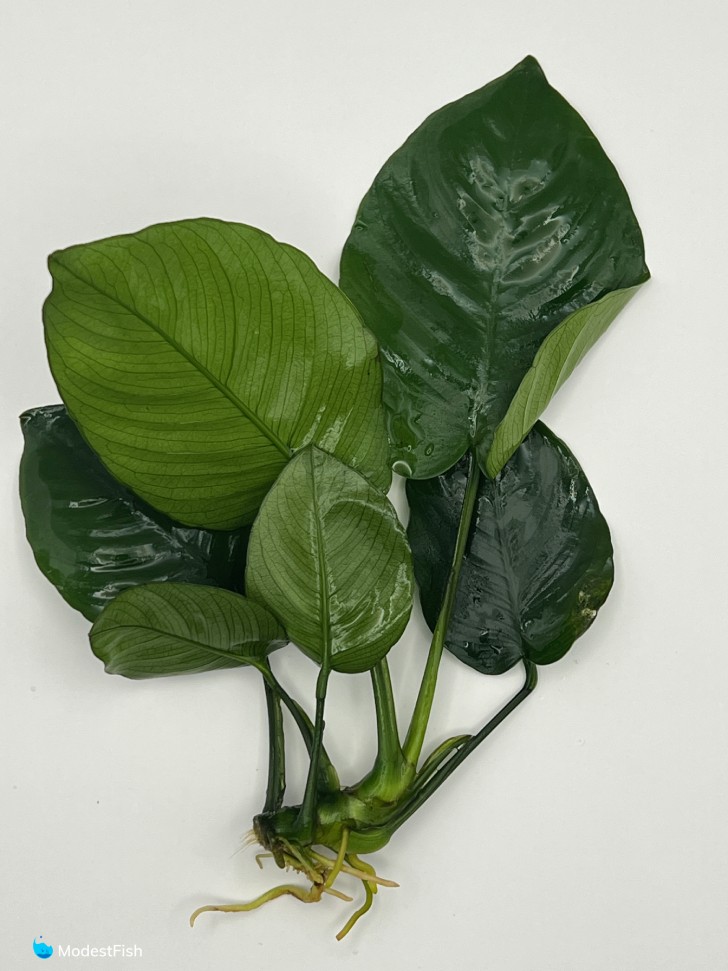
Anubias barteri is again a epiphyte (seeing a pattern?), that looks great and goldfish don’t like the taste of.
It thrives on neglect and I’ve found it tends to take a month or so to get established. Once it has, it’ll grow slowly and surely. I like how it stays around 6 inches in height and it works great as a foreground plant in goldfish tanks.
Like mentioned above, glue or tie the rhizome to a rock or piece of driftwood and goldfish can’t dig it up.
Algae does grow on the broad leaves, but I’ve found it relatively easy to wipe it or use Seachem Excel or peroxide to get it off.
Doesn’t have a notable impact on water parameters, but the cute leaves make a wonderful addition to goldfish tanks.
Pros:
- Goldfish generally don’t eat
- Tough
- Beautiful broad leaves
- Fairly easy to clean algae off
Cons:
- Slow to get established
- Slow growth rate
- Doesn’t eat much nitrate
Verdict – Anubias barteri is also tough and not very tasty. It can be attached to rocks or decor so Goldfish can’t dig it out of the substrate.

5. Anacharis (Elodea sp.)
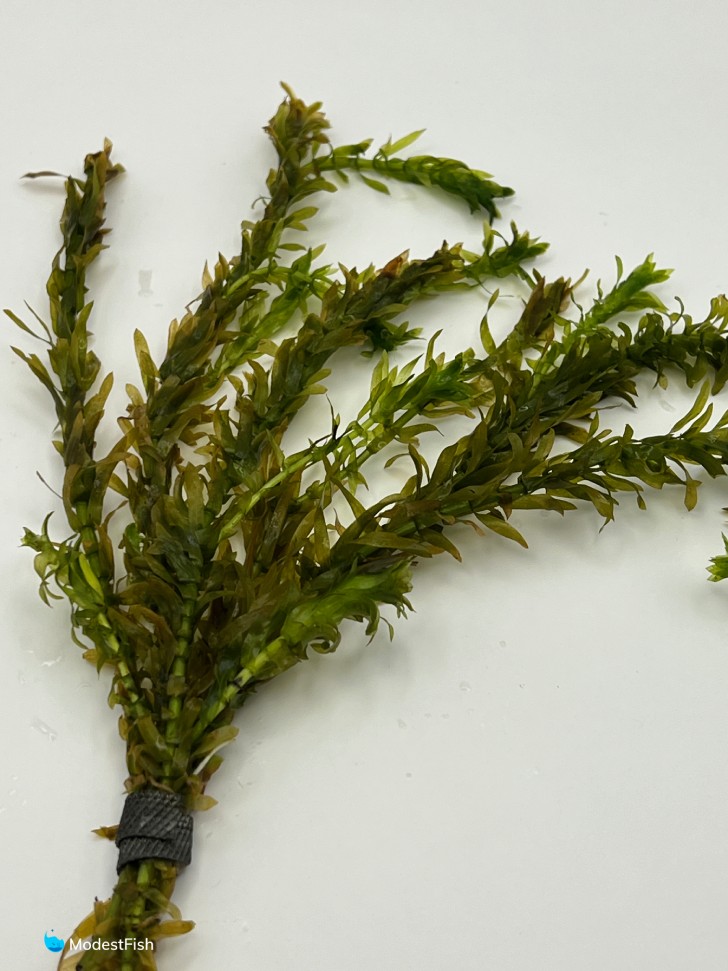
Anacharis is a fast growing stem plant that’ll eat up a ton of nitrates in your goldfish tank.
And when I say it grows fast, I mean really fast. Under medium light or higher, you’ll swear you can sit and watch it grow.
Now, goldfish will eat much of it, but it grows at such a rate that it tends to have no impact on the plant itself.
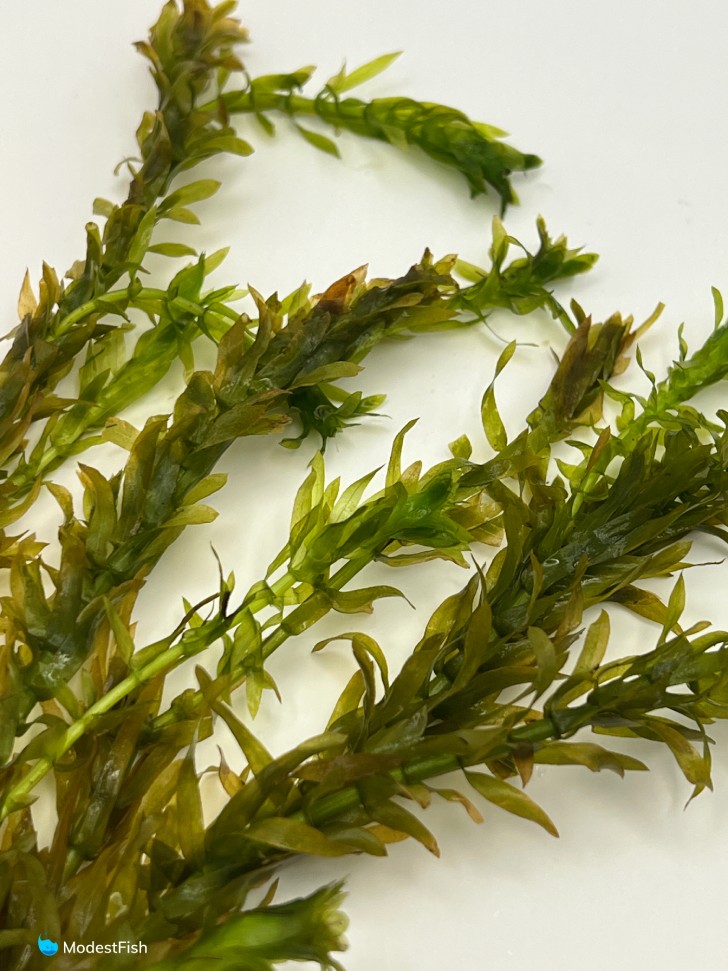
Generally, I tell people this is a great plant, but be ready to trim a lot. But, goldfish often do that for you. So in a way, it could be a match made in heaven. Unless they eat too much.
But, you could always use this plant as a distraction. Let it munch on anacharis so it leaves your lovely anubias or java fern alone.
Pros:
- Eats up a lot of nitrates
- Out grows what goldfish eat
- Super easy plant (can be floating)
- Propagate just by snipping off portions of stem
- Fast growth eats up nitrate quickly
Cons:
- Requires frequent trimming
- Goldfish will dig it up if planted into substrate
- Hard to keep algae off of it
- Goldfish do eat it (but speed of growth can counter)
- Not the best looking plant
Verdict – Some Goldfish will eat anacharis, but it is so fast growing that it can often withstand being munched on a little bit. This plant can also be left to grow as a floating plant if Goldfish insist on digging it out of the substrate.

6. Java Fern (Leptochilus pteropus)
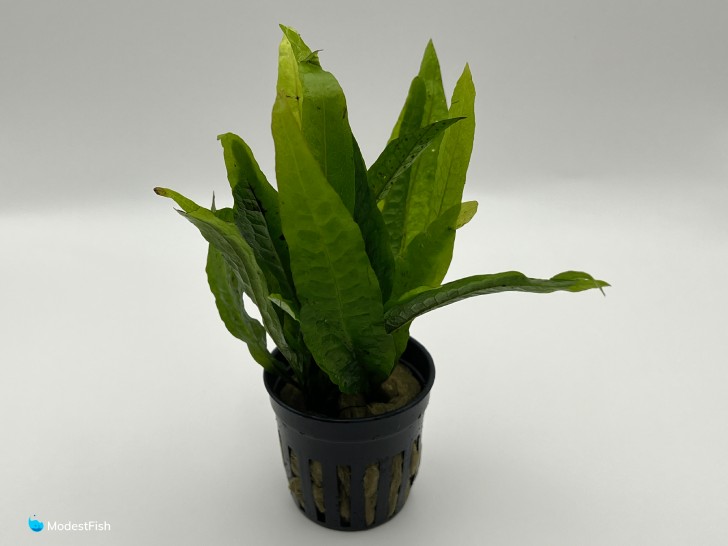
Java fern works in pretty much every tank because of how hardy it is and easy to care for. You may find goldfish nibble on it, but generally they leave it alone.
You plant it by attached the rhizome to a surface. I usually just glue it to rocks or driftwood and place it in the tank. As it grows, its roots will stick to whatever surface it’s attached to.
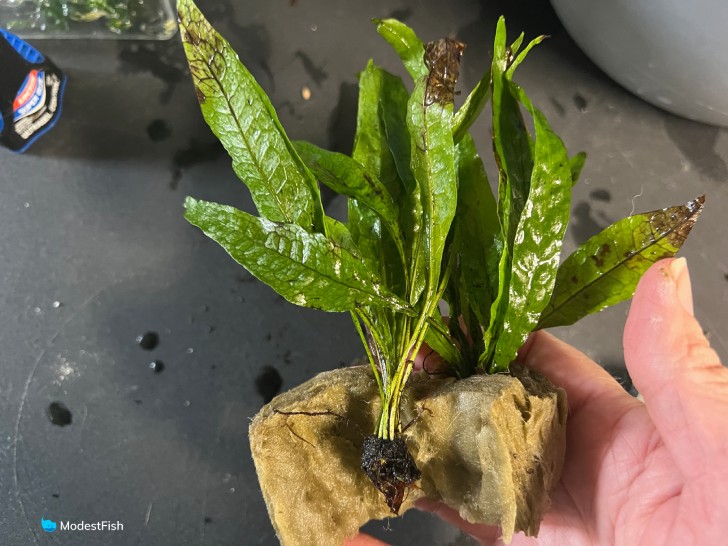
I have this plant in several of my tanks. For me, it’s always been easy to take care of and extremely hardy.
I’ve definitely noticed that this plant grows slowly, but steadily. It doesn’t need frequent trimming and it’s fairly easy to clean algae off if necessary.
It’s so cheap and readily available, it’s worth putting in with goldfish and seeing how it goes.
Pros:
- Tough and versatile plant
- Goldfish tend to leave it alone
- Can’t be dug up
- Doesn’t require much maintenance
- Easy to plant
Cons:
- Grows slowly
Verdict – Java fern can grow attached to a surface, rather than rooted in the substrate, so it’s not disturbed by Goldfish rooting around at the bottom of the tank.

Conclusion
Goldfish are notoriously hard on plants. Many plant species can’t hold up to their relentless nibbling and constant digging. It’s important to keep in mind that some goldfish (like common and comet goldfish) may be so ravenous that they’ll tear apart even the hardiest plants.
Hornwort is the best plant to keep with goldfish. They taste horrible, look great, and eat up a ton of nitrates. After that, you should look at african water fern and anubias species as they also taste gross, and can’t be dug up as they’re attached to hardscape.
I wish you and your fish the best of luck!
