

To get a full understanding on how to provide your cichlid with a healthy diet, I encourage you to read this article in full.
I don’t just want to give you a list of foods (yes I will share my favorites). I want you to understand the framework on how to spot the difference between good and bad foods.
By the end, you won’t need to seek external sources of information, you’ll simply be able to pick up any type of fish food and know if it’s right or wrong for your cichlid.
Table of Contents
What Type of Cichlid Do You Own?
Depending on the type of cichlid you own, the diet will vary. So the first step for finding the best food for your cichlid so it thrives, is understanding their natural requirements.
You have three types: Carnivores, Herbivores, and Omnivores:
Carnivores
Carnivores eat mostly animal sources of food. This could mean other fish, insects, crustaceans or a combination of these three. Jack Dempseys, Oscars and jaguar cichlids are all carnivores.
These fish usually have a short digestive tract meant to break down high fat and protein-rich food sources.
Herbivores
Herbivores eat mostly plant sources of food. Many African cichlids, like Tropheus and Mbuna, primarily eat algae, biofilm and aquatic plants.
These fish are meant to graze all day and have a really long intestinal tract so they can absorb as many nutrients as possible from food that has a lower fat and protein content.
Omnivores
Omnivores will eat both animal and plant sources of food. A lot of cichlids are at least partly omnivorous, although they may lean more one way or the other.
Angelfish, firemouths and peacocks are all omnivores. They’ll eat just about anything edible that doesn’t eat them first.
They have a digestive tract that is in between that of a carnivore and herbivore, meant to break down a variety of foods.
Fish are Opportunistic Feeders
There’s something really important to remember about all of this: in nature, what a fish eats isn’t always cut and dry.
Fish are pretty darn opportunistic. A lot of times, if they come across something edible, they’re not picky and will gulp it down.
Even for fish that are pretty strict carnivores or herbivores, there’s some crossover.
For example, when a predator eats another fish, it also eats what’s in that fish’s gut. So all the algae and other plant material the little fish had in its stomach, the big fish ends up digesting, too.
Fish that primarily eat algae end up eating tiny crustaceans and other little critters that are also feeding on the algae.
This means that all fish end up eating a varied diet that balances out all of their nutritional needs.
Quality vs Poor Ingredients
One of the biggest things to look for when selecting a good cichlid food is that the major ingredients are derived from aquatic sources of food or from insects.
Fish have evolved over millions of years to eat certain kinds of foods. Their guts just aren’t equipped to break down most terrestrial foods, like beef heart or gluten.
These ingredients are not easily digested by fish. This can mean that the food just passes through as waste. Worse yet, some of these proteins can put extra strain on a fish’s kidneys.
This extra strain can end up causing health problems for fish, like dropsy.
Let’s now go through what else you should look out for.
Nutrients from the Species’ Preferred Food Source
It’s best to research the species of fish that you keep so that you know what they eat in the wild.
Many species of fish eat insects as a major part of their diets. For these fish, look for ingredients like black soldier fly larvae meal. Black soldier fly larvae provide complete, rich proteins. The larvae don’t have an exoskeleton, so they’re easy to digest without a lot of waste.
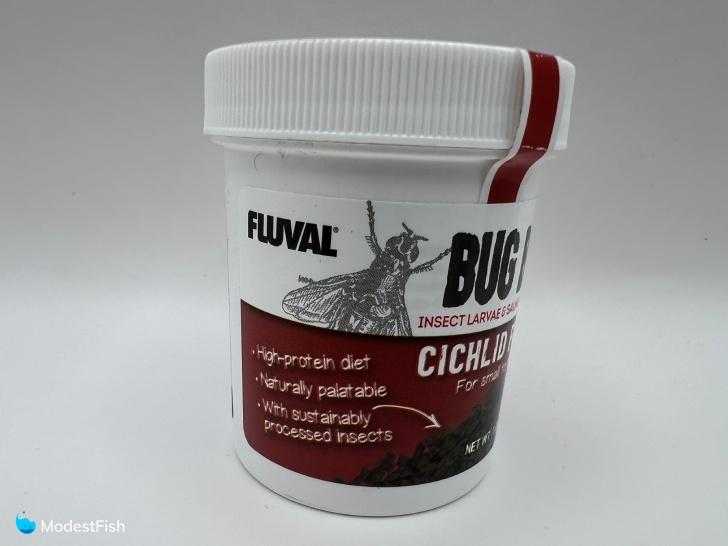
Cricket flour, dried ground crickets, is also good for insectivorous fish. It’s high in protein and calcium.
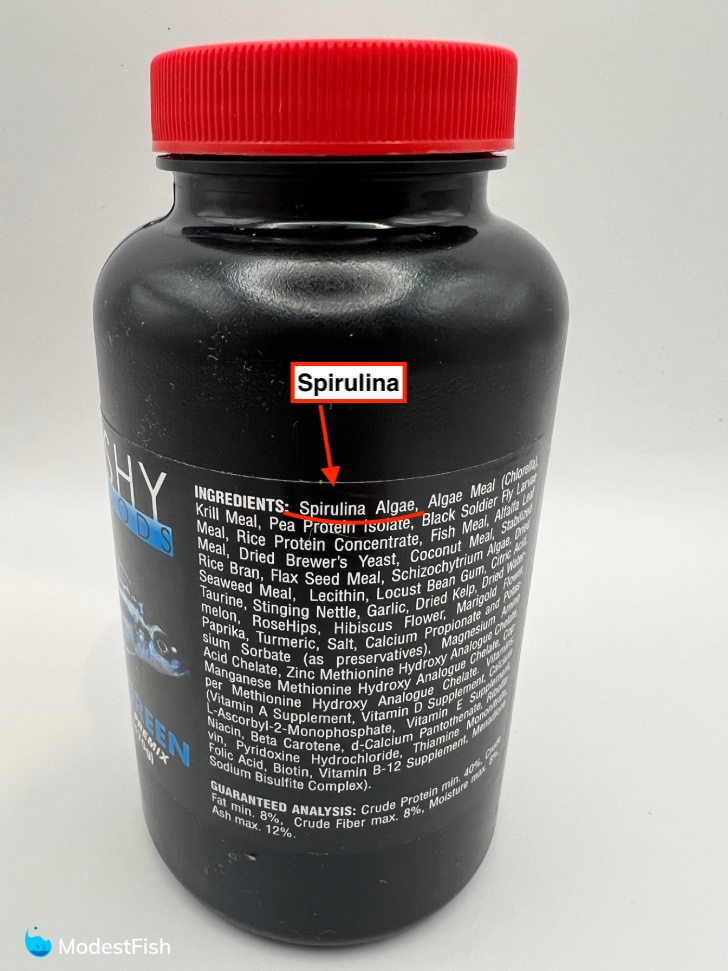
For herbivorous species, look for foods whose main ingredients are things like spirulina algae. This blue-green algae (technically a cyanobacteria) is loaded with vitamins, minerals and easy to digest protein. It’s especially good for Mbuna and Tropheus species who would normally graze all day on algae.
Carnivore species naturally need a higher percentage of protein and fat. It’s best to give them foods where whole fish meal or shrimp meal is a main ingredient.
For omnivores, you want to see a balance of high quality animal and plant food sources. Offering a bigger variety better mimics their natural diet.
Pay attention to the difference between fish or shrimp meal and whole fish/shrimp meal. Whole fish/shrimp meal is just what it sounds like. The entire fish or shrimp is ground up whole before being dried.
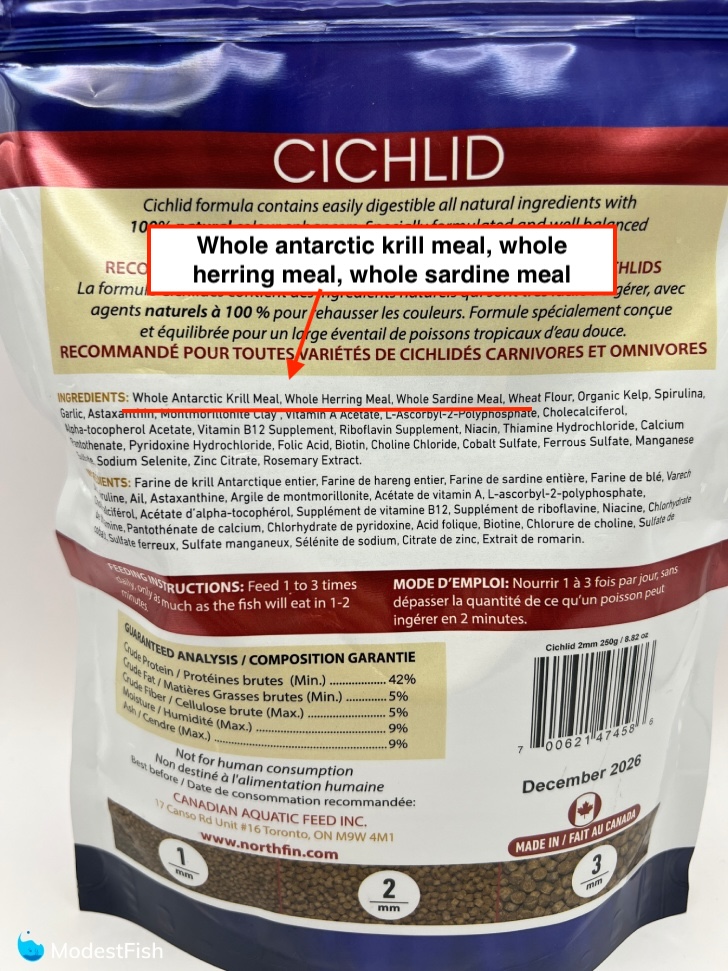
But if the label just says fish/shrimp meal, this can be very different. It could just be the bones, skin and scales left over after the fish was processed for human consumption. Or it could be just the tails and shells of shrimp.
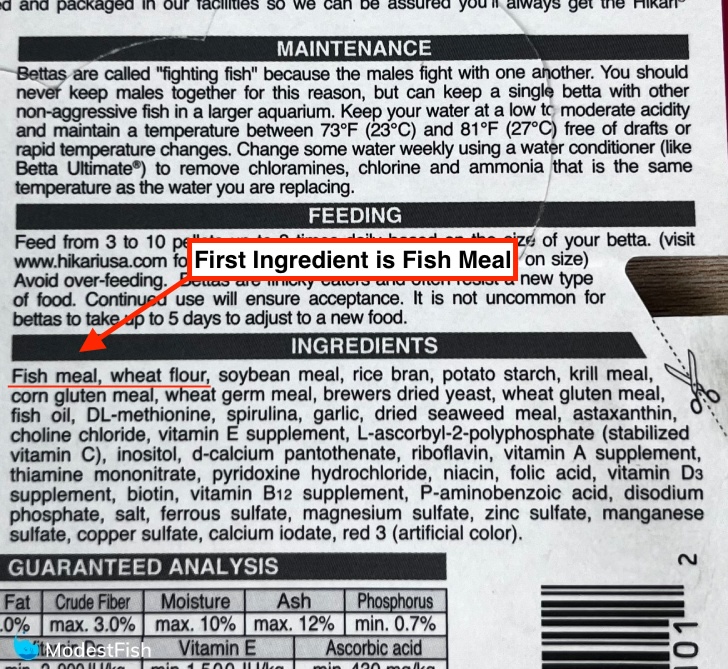
Fish or shrimp meal can be completely empty calories that will just pass through the fish as waste.
Additional Nutrients
Here are some additional nutrients you’ll want to look out for:
Omega 3 and 6
Omega-3 and omega-6 fatty acids are a kind of polyunsaturated fats. Polyunsaturated refers to the chemical structure of the fat molecules. It means the molecules have multiple parts where carbon atoms are bonded to other carbon atoms.
Omega-3 and 6 are important nutrients that help reduce inflammation, aid growth and brain development and provide energy (for people, too!).
Freshwater fish can’t produce these nutrients on their own, it has to come from their diet.
In the wild, fish would get fatty acids from eating things like algae or eating other fish and invertebrates that eat algae.
Foods that have a high percentage of aquatic food sources, like whole fish or spirulina algae, will provide the omega fatty acids your fish need.
Insoluble Fiber
For some fish, especially herbivores, getting enough fiber is absolutely essential.
Fish can’t actually digest fiber. It passes through their digestive systems almost completely unchanged. So fish don’t get vitamins or other nutrients from fiber.
One nice thing though, the fiber that gets passed through as waste doesn’t break down and foul your water like other compounds do.
Fiber is a really important digestive aid. It actually slows down digestion. This gives the fish’s gut more time to absorb nutrients as food passes through the intestines.
Also, it adds bulk to stool as it passes through the gut. Larger stools are easier to pass so fiber helps prevent constipation. This can be really important since fish can die from constipation.
How Salt Levels Can Increase Growth
It might surprise you, but higher salt levels in fish food have been shown to increase the growth rate. Researchers studied farm raised tilapia and found that higher salt content foods (1-1.5%) significantly increased growth over a 10 week period.
The theory is that increased salt lessens a fish’s need to push out excess water as urine. If the fish puts out less energy towards excreting urine, it has more energy to put towards growth.
Color Pigment Enhancers
Ever wonder what gives plants their color? Plants produce compounds known as carotenoids. They are pigments that make fruits and vegetables orange, red or yellow. For example, beta carotene is what makes carrots and sweet potatoes orange.
Most animals, fish included, can’t produce these compounds themselves. They have to get them from their food. Feeding fish a diet rich in carotenoids can greatly increase their color.
- Red – red pigment comes from the carotenoid astaxanthin. Whole krill, whole shrimp, red algae, marigold extract and red bell peppers are all potential sources.
- Yellow – yellow pigment comes from the carotenoids zeaxanthin and lutein. These two compounds are also believed to be important for eye health. Turmeric, yellow bell peppers, egg yolk, yellow snap beans are good sources.
- Orange – beta carotin is the carotenoid mainly responsible for orange coloration. Carrots and paprika are both good sources.
- Blue/green– a little bit different. These colors are not produced from a carotenoid. They come from compounds called phycocyanins that are found in cyanobacteria. The best source for phycocyanins for aquarium fish is spirulina.
Foods With The Right Ingredients For Cichlids
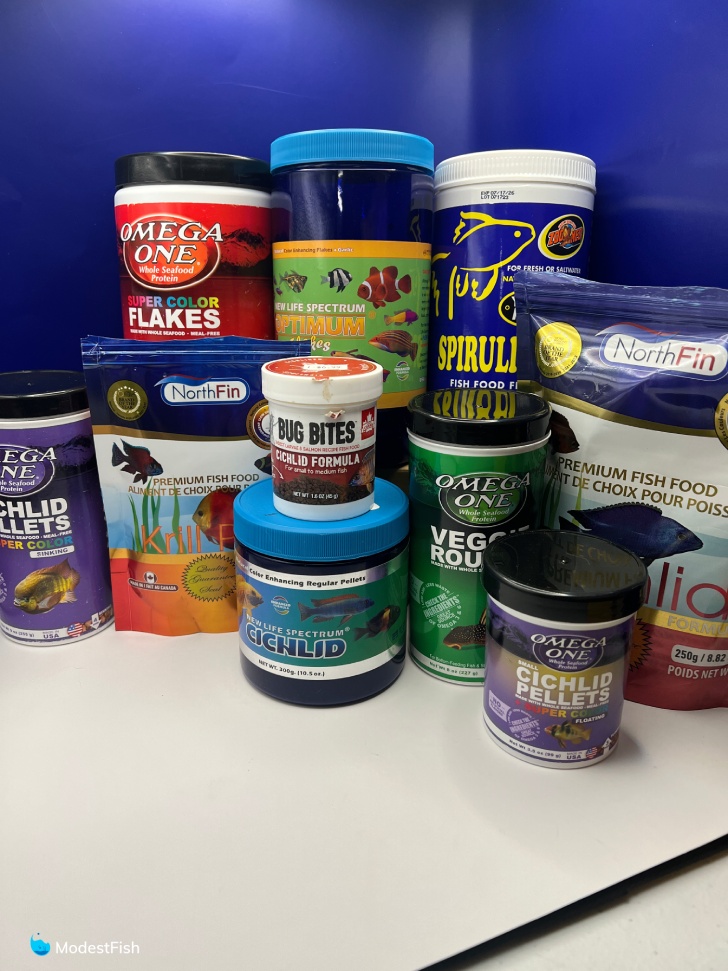
Now you understand the theory behind choosing the best food for your cichlids, I’ll share with you my favorite foods for cichlids.
New Life Spectrum Naturox Optimum All Purpose Flakes
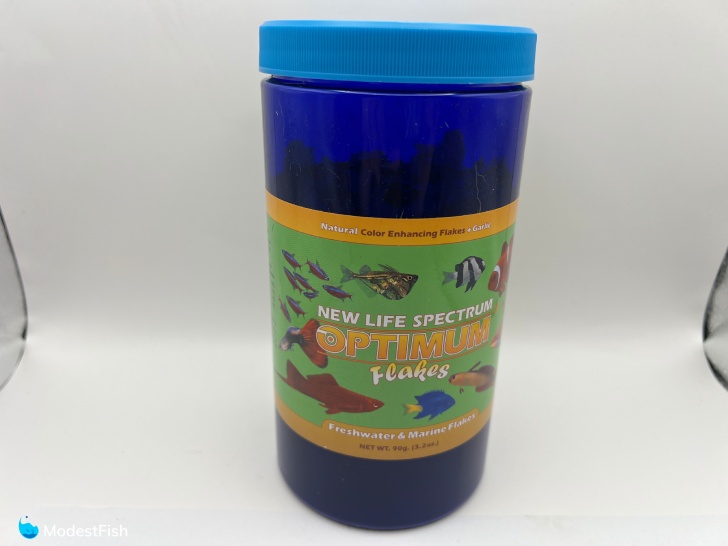
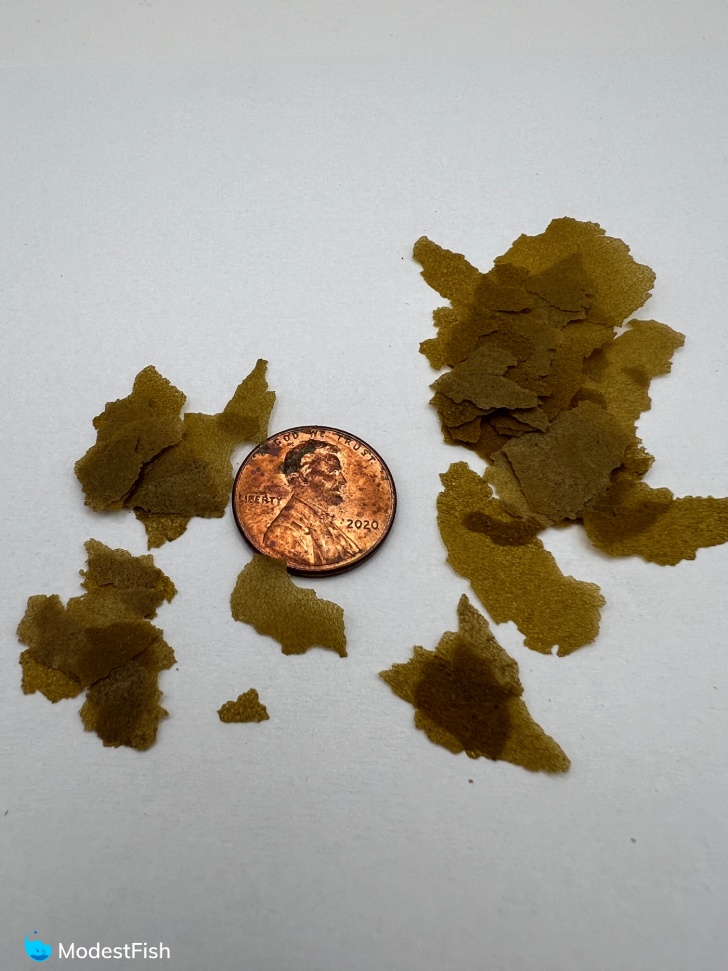
These are a great choice; I feed them to my angels, even crumble them up for juveniles that I’m growing out. Optimum flakes provide a great mix of animal-based and plant-based ingredients that help provide a varied diet. Fish love these, I’ve never had one turn their nose up at this food.
Best for: A good fit for most sizes and diets. Can be crumbled for small cichlids, like rams, or left whole for bigger species, like Mbuna. An excellent choice for gentle feeders like angelfish.
Click For Full Ingredients
Krill (Euphasia superba), Squid (Dosidicus gigas), Whole Wheat Flour, Fish (Brevoortia tyrannus), Garlic, Fish Oil, Seaweed (Ulva latuca, Undaria pinnatafida, Euchema cottonii, Euchema spinosum, Chondrus crispus), Green Algae (Chlorella pyrendoidosa), Kelp, Ginger, Astaxanthin, Spirulina, Marigold, Bentonite Clay, Sea Salt, Vitamin A Acetate,Vitamin D Supplement, Vitamin E Supplement,Vitamin B12 Supplement, Niacin, Folic Acid, Biotin, Thiamine Hydrochloride, Riboflavin Supplement, Pyridoxine Hydrochloride,Calcium Pantothenate, L-Ascorbyl-2-Polyphosphate (Vitamin C), Choline Chloride, Ethylenediamine Dihydroiodide, Cobalt Sulfate, Ferrous Sulfate, Manganese Sulfate, Tocopherols (a preservative)
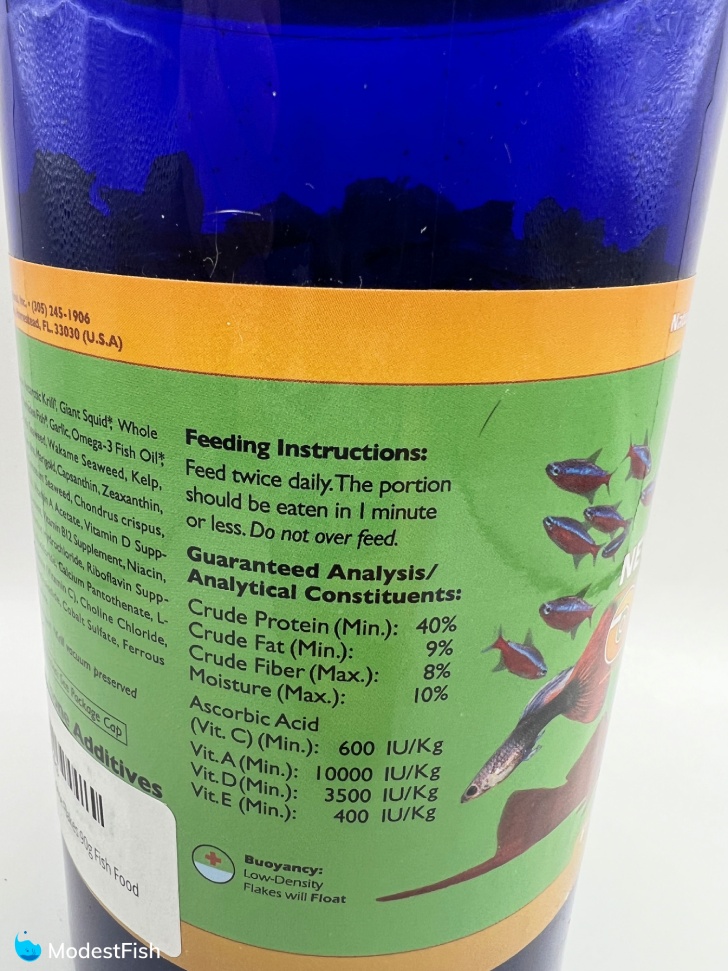

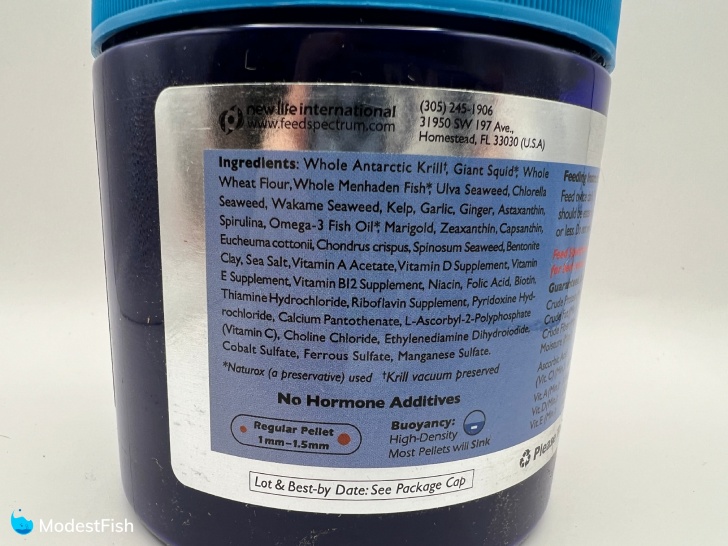
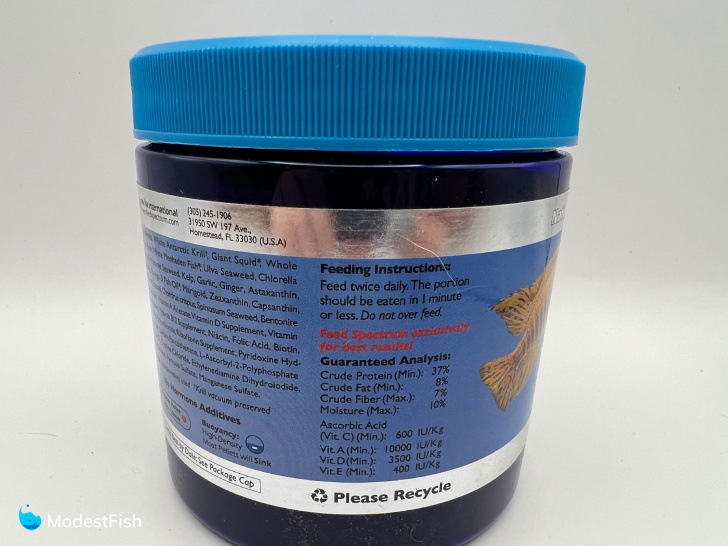
New Life Spectrum Naturox Series Cichlid Formula
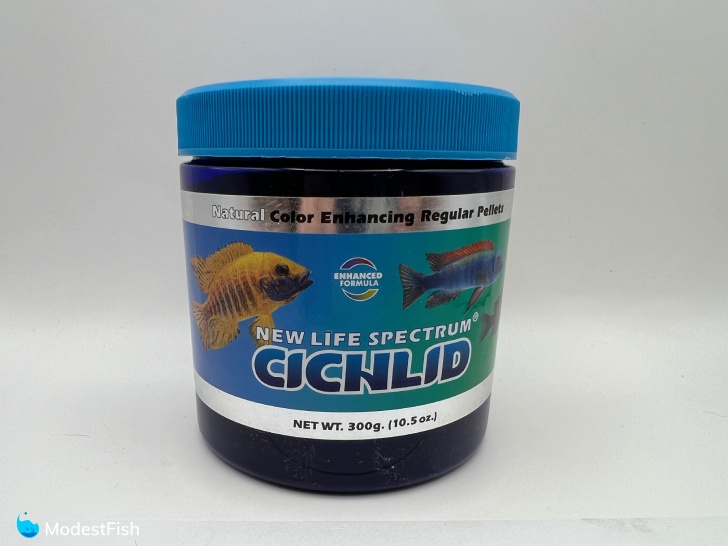
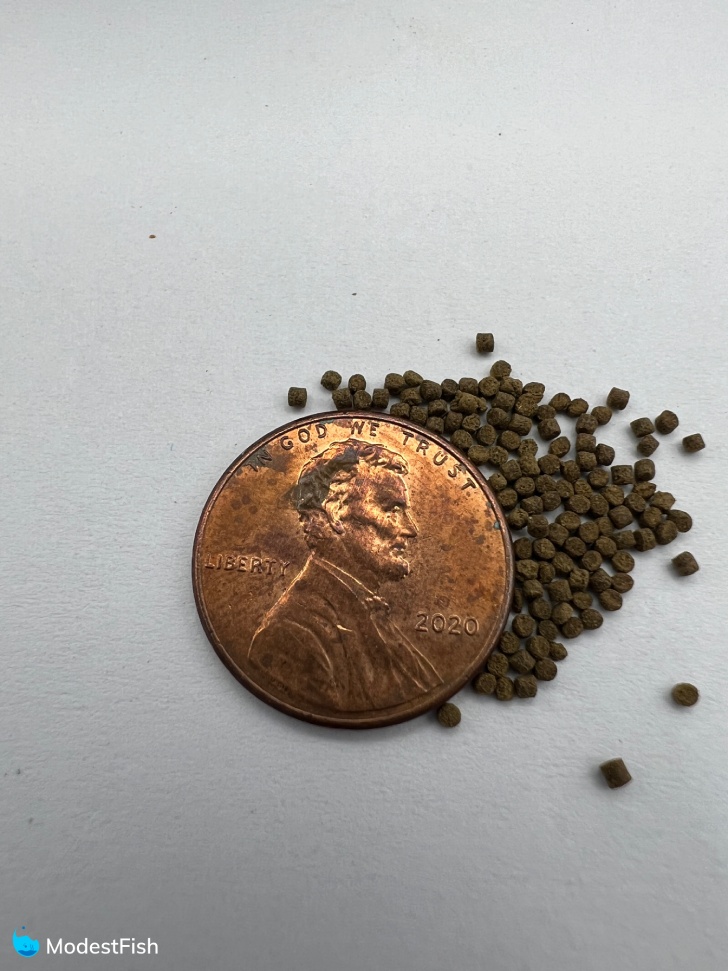
These pellets are fairly small and can sink quite quickly. They’re a great choice for smaller, quick fish that like to feed from the water column.
My angels love them, but I have to feed them only one or two pellets at a time because they sink so fast. I put in a few, let the fish eat them, put in a few more, let those get eaten, etc. I love that krill and squid are the major ingredients for this food and it provides such a wide variety of algaes.
Best for: A good choice for small cichlids, like rams or apistogrammas. Excellent for omnivorous and carnivorous fish.
Click For Full Ingredients
Krill (Euphasia superba), Squid (Dosidicus gigas), Whole Wheat Flour, Fish (Brevoortia tyrannus), Seaweed (Ulva latuca, Undaria pinnatafida, Euchema cottonii, Euchema spinosum, Chondrus crispus), Green Algae (Chlorella pyrendoidosa), Kelp, Garlic, Ginger, Astaxanthin, Spirulina, Fish Oil, Marigold, Bentonite Clay, Sea Salt, Vitamin A Acetate, Vitamin D Supplement, Vitamin E Supplement, Vitamin B12 Supplement, Niacin, Folic Acid, Biotin, Thiamine Hydrochloride, Riboflavin Supplement, Pyridoxine Hydrochloride, Calcium Pantothenate, L-Ascorbyl-2-Polyphosphate (Vitamin C), Choline Chloride, Ethylenediamine Dihydroiodide, Cobalt Sulfate, Ferrous Sulfate, Manganese Sulfate, Tocopherols (a preservative)

Northfin Fish Food Cichlid Formula Slow Sinking Pellets
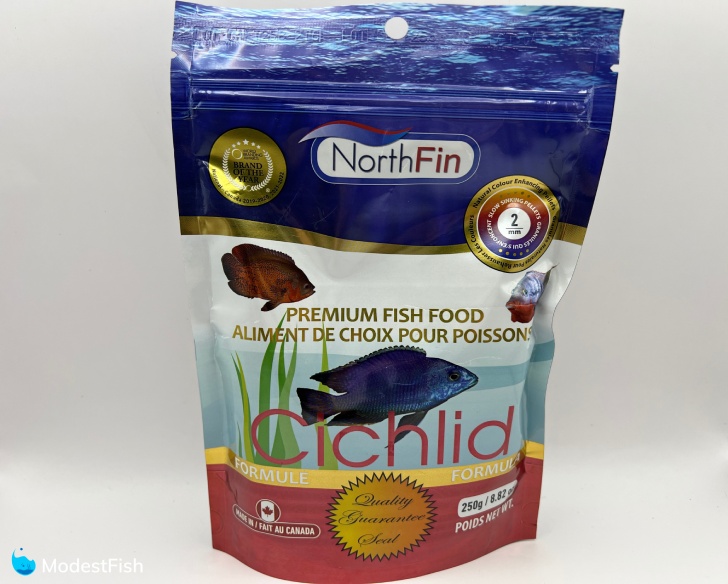
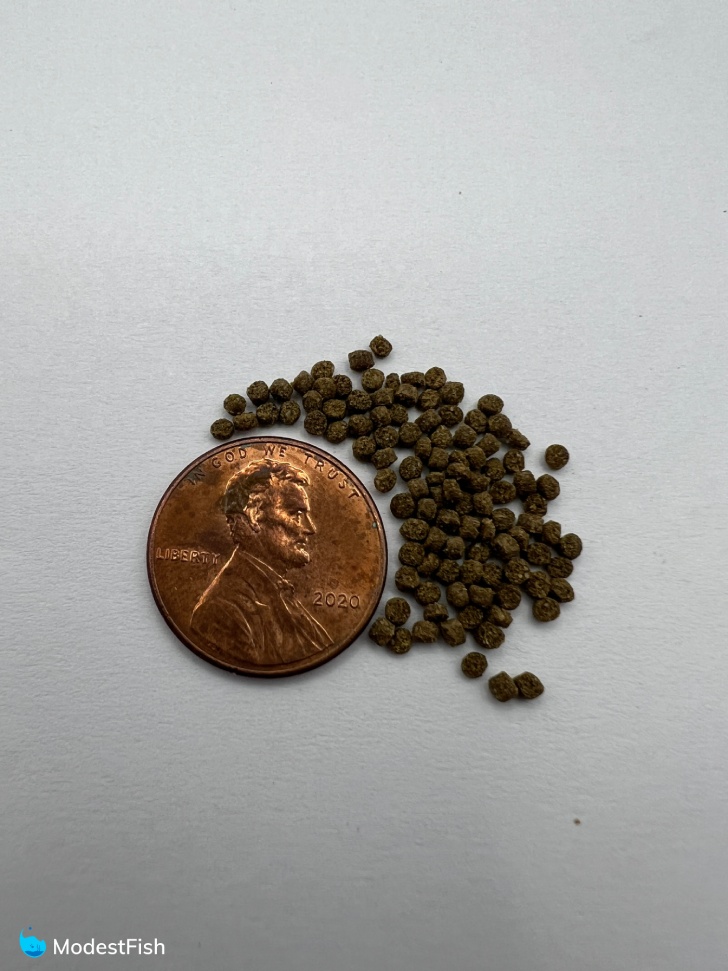
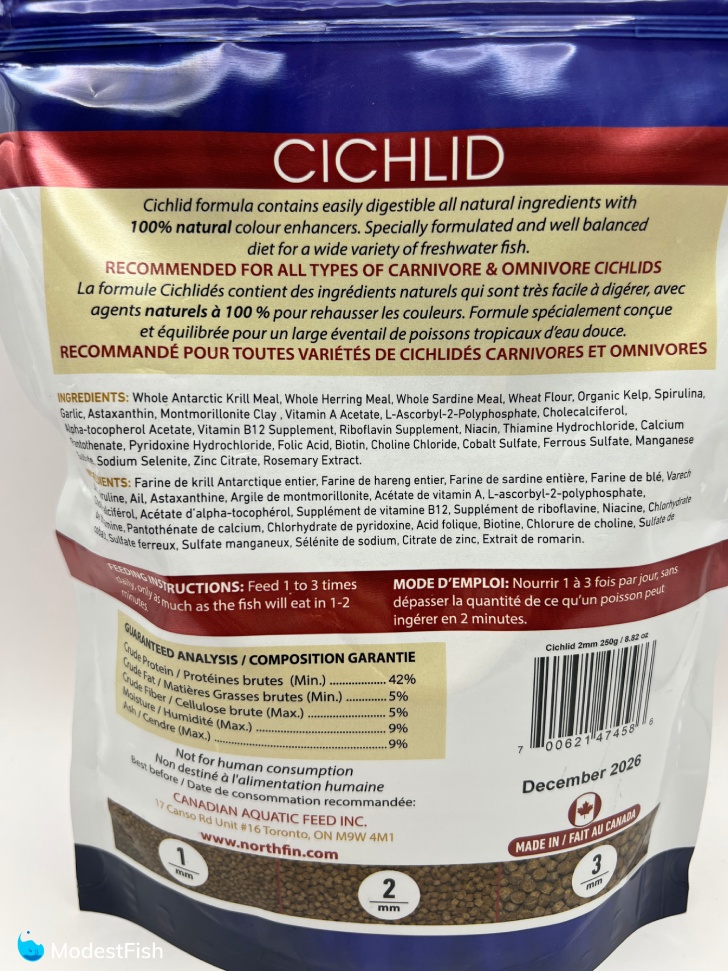
These Northfin Cichlid Pellets are quite popular in my tanks. They’re slow-sinking, so they have a little hang time, but they still sink fairly quickly, especially if there’s any water current. I do give these to my angels, but I only feed them a few at a time so they have a chance to eat them before they sink. The animal-based ingredients are great, and does have kelp and spirulina for plant-based sources as well.
Best for: This food comes in a 1mm, 2mm and 3mm size so it is good for small to medium size fish, everything from rams to angels to Mbuna. Excellent for carnivorous and omnivorous fish.
Click For Full Ingredients
Whole Antarctic Krill Meal (Euphausia Superba), High DHA Omega-3 Whole Herring Meal, Whole Sardine Meal, Wheat Flour, Organic Kelp (Laminariales), Spirulina, Garlic (Allium Sativum), Astaxanthin, Montmorillonite Clay, Vitamin A Acetate, L-Ascorbyl-2-Polyphosphate, Cholecalciferol, Alpha-tocopherol Acetate, Vitamin B12 Supplement, Riboflavin Supplement, Niacin, Pantothenic Acid, Thiamine, Calcium Pantothenate, Pyridoxine Hydrochloride, Folic Acid, Biotin, Choline Chloride, Cobalt Sulfate Ferrous Sulfate, Manganese Sulfate, Selenium, Zinc, Rosemary Extract (Rosmarinus Officinalis)

Northfin Fish Food Krill Formula Slow Sinking Pellets
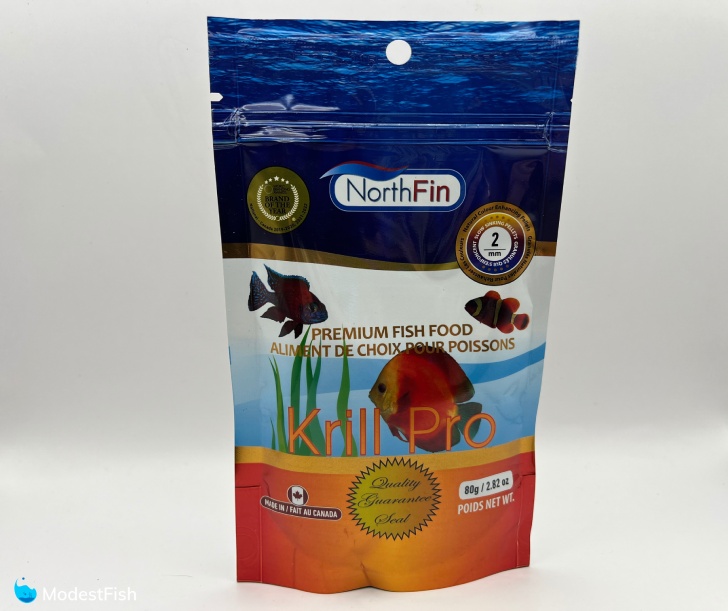
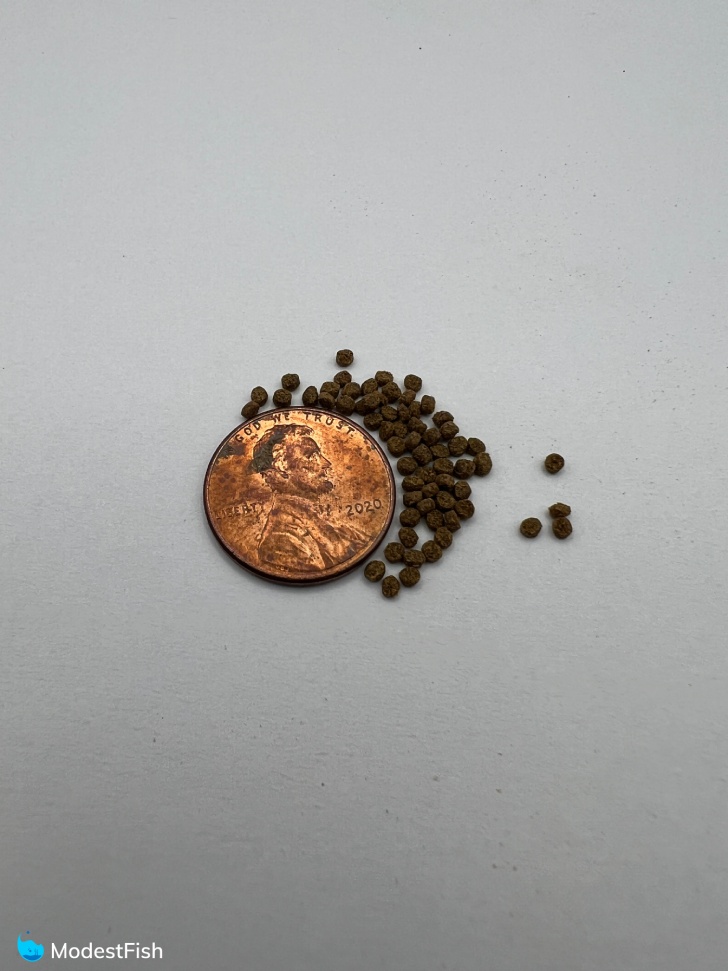
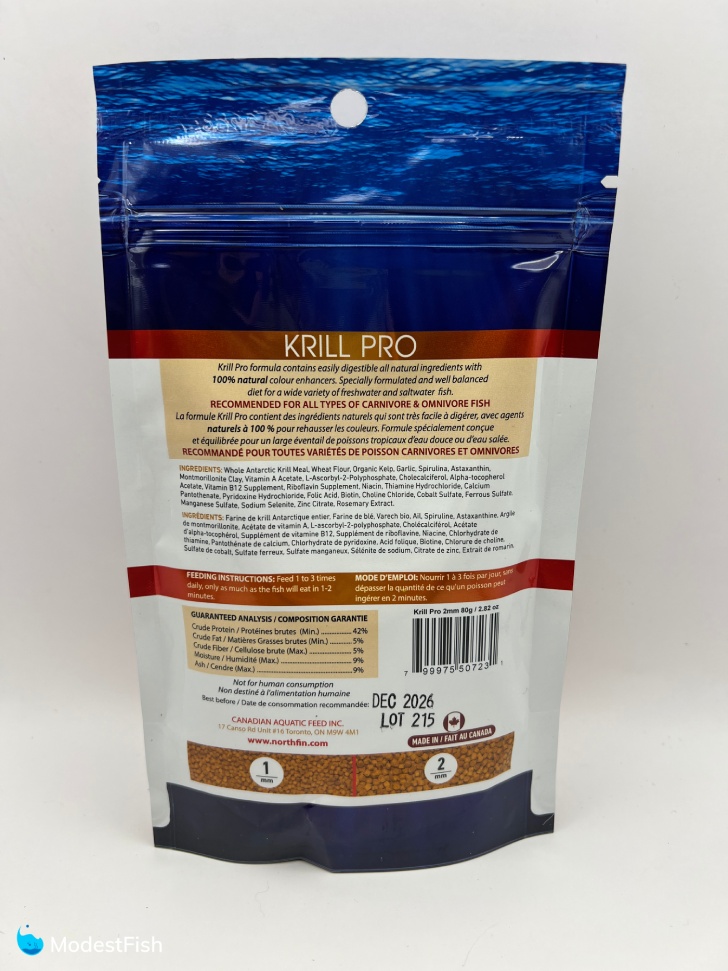
If you have carnivorous fish, especially ones that are red or orange, these pellets are an awesome choice. The pigments in the krill can help enhance red and orange coloration. Krill is a great aquatic protein source that also helps provide calcium. There is kelp and spirulina, but this food is geared more towards animal-based foods.
Best for: Great for carnivorous fish, like rams, Jack Dempseys, etc. These pellets come in 2mm, 3mm and 6mm sizes, so they’re good for small to large fish.
Click For Full Ingredients
Whole Antarctic Krill Meal (Euphausia Superba), Wheat flour, Organic Kelp (Laminariales), Garlic (Allium Sativum), Spirulina (Dietary Supplement), Astaxanthin, Montmorillonite Clay, Vitamin A Acetate, L-Ascorbyl-2-Polyphosphate, Cholecalciferol, Alpha-tocopherol Acetate, Vitamin B12 Supplement, Riboflavin Supplement, Niacin, Pantothenic Acid, Thiamine, Calcium Pantothenate, Pyridoxine Hydrochloride, Folic Acid, Biotin, Choline Chloride, Cobalt Sulfate, Ferrous Sulfate, Manganese Sulfate, Selenium, Zinc, Rosemary Extract (Rosmarinus Officinalis)

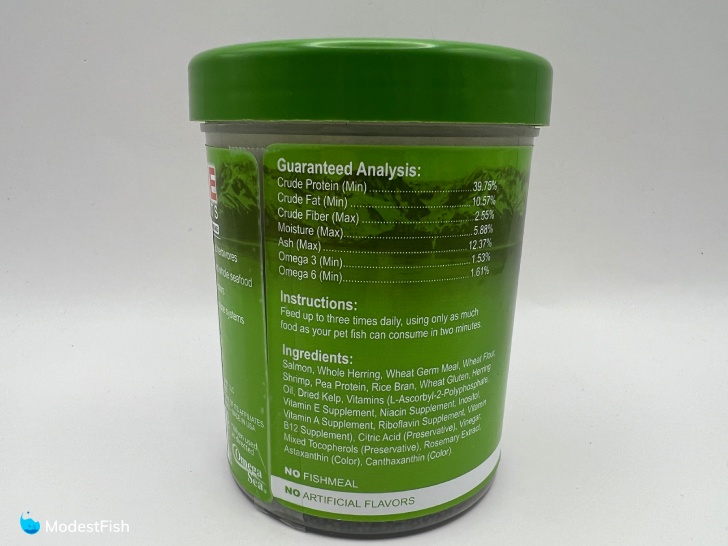
Omega One Super Color Flakes
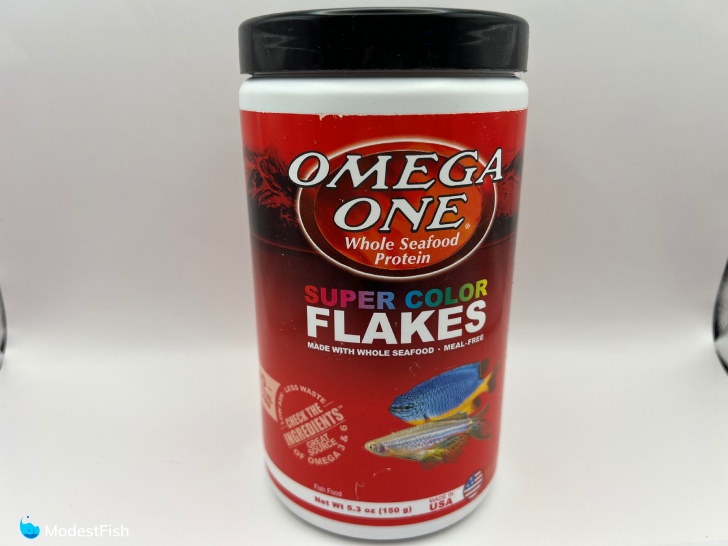
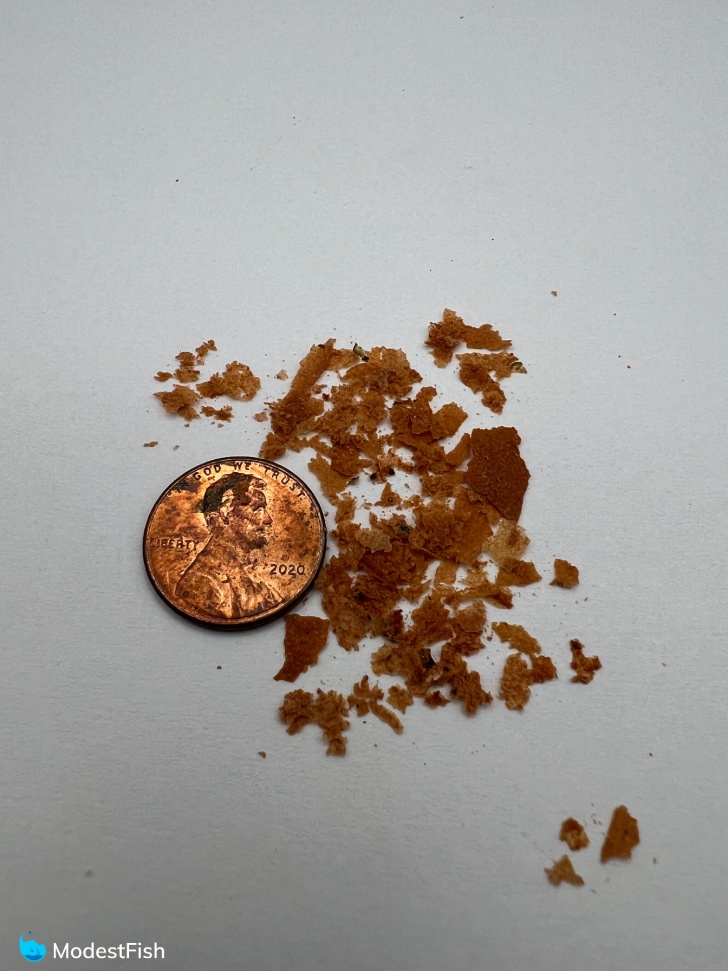
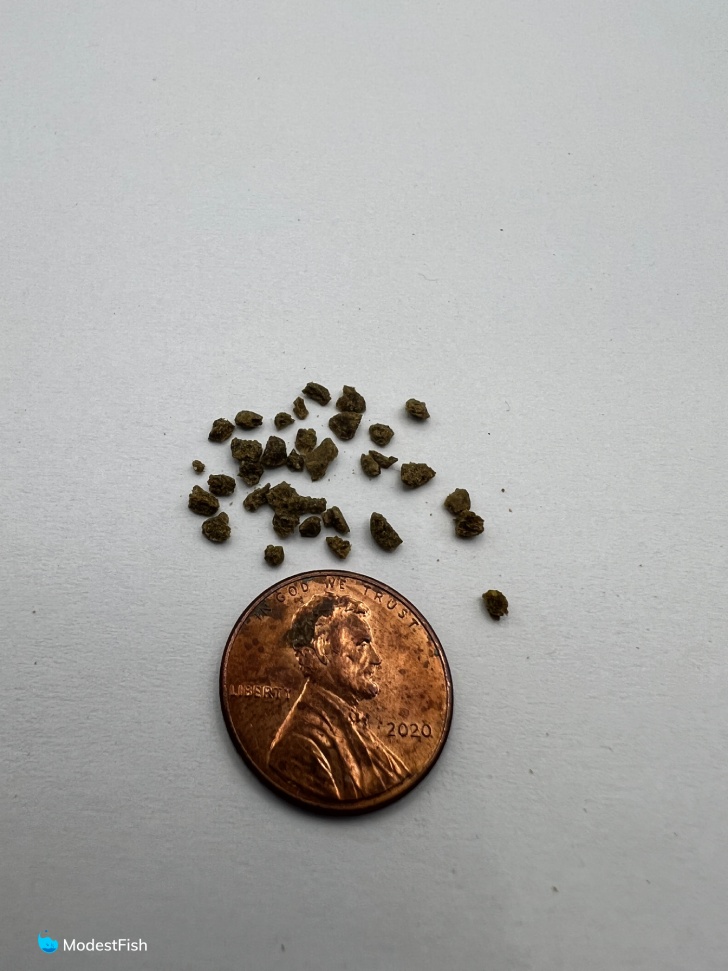
These Omega One flakes are packed with great protein sources. There is some kelp and pea protein, but otherwise, this is a mostly animal-based food. The flakes tend to be pretty small, so it’s not great for larger fish. My angels and medium-sized fish love these.
Best for: These are smaller sized flakes that are good for carnivorous and omnivorous fish. A good size for small cichlids, like kribensis. I feed these to my adult and juvenile angels.
Click For Full Ingredients
Salmon, Whole Herring, Wheat Flour, Whole Shrimp, Pea Protein, Wheat Gluten, Herring Oil, Kelp, Mixed Tocopherols, Carmine, Annatto Extract, Citric Acid, Ascorbic Acid, Marigold Extract, Vitamin E Supplement, Niacin, Inositol, Astaxanthin, Canthaxanthin, Riboflavin, Vitamin A Supplement, Vitamin B12 Supplement
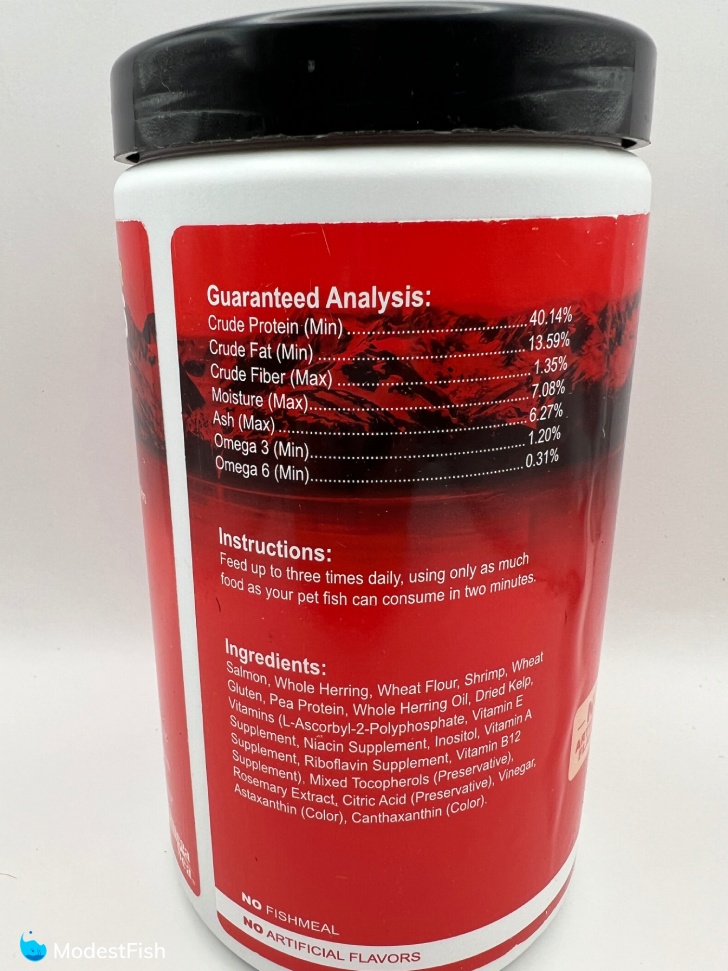

Omega One Super Color Floating Cichlid Pellets
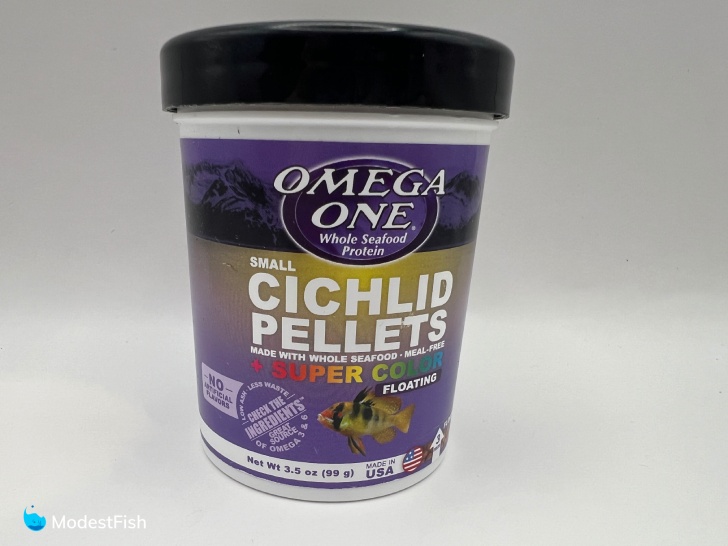
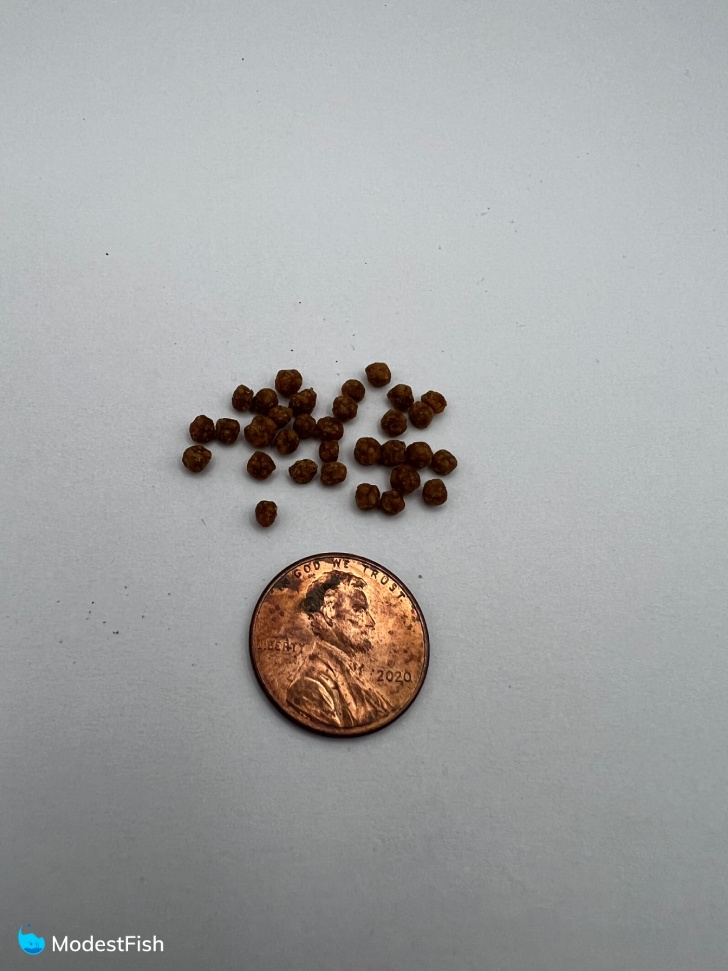
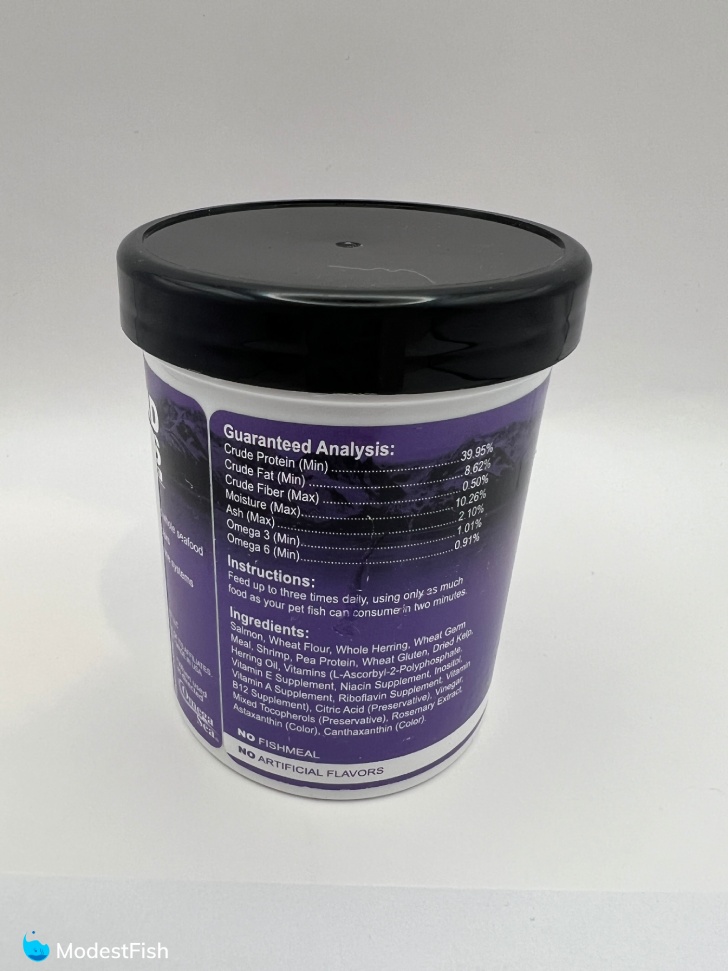
When I kept larger cichlids, like my green severums and Dempseys, these larger pellets were a mainstay for my tanks. It’s got great protein from salmon, herring and whole shrimp. And the marigold extract can help enhance red, yellow and orange coloration in fish.
Best for: Good for larger cichlids, like severums, Discus or young Jack Dempseys. Good for carnivorous or omnivorous fish.
Click For Full Ingredients
Salmon, Wheat Flour, Whole Herring, Wheat Germ, Whole Shrimp, Pea Protein, Wheat Gluten, Herring Oil, Kelp, Citric Acid, Ascorbic Acid, Marigold Extract, Vitamin E Supplement, Mixed Tocopherols, Niacin, Inositol, Astaxanthin, Canthaxanthin, Riboflavin, Vitamin A Supplement, Vitamin B12 Supplement

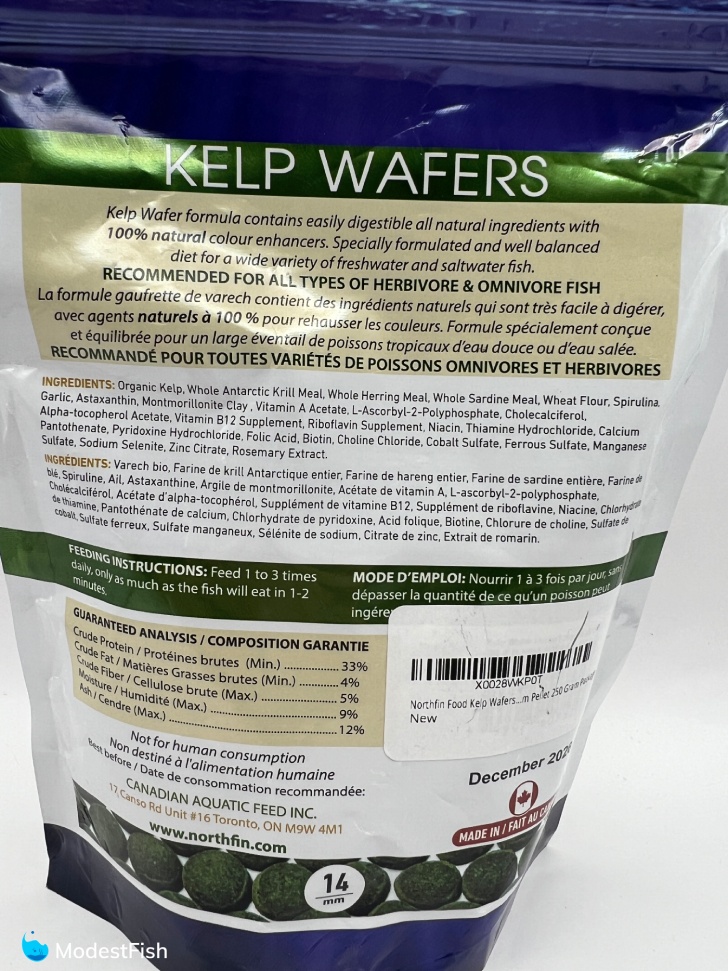
Northfin Fish Food Kelp Wafers
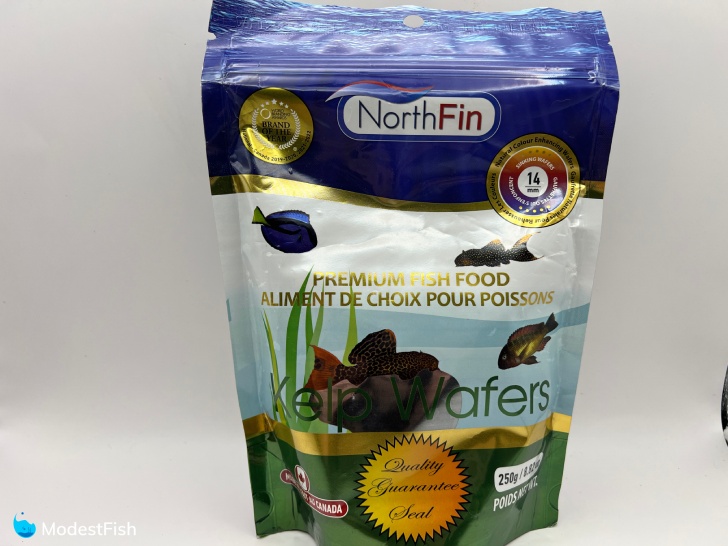
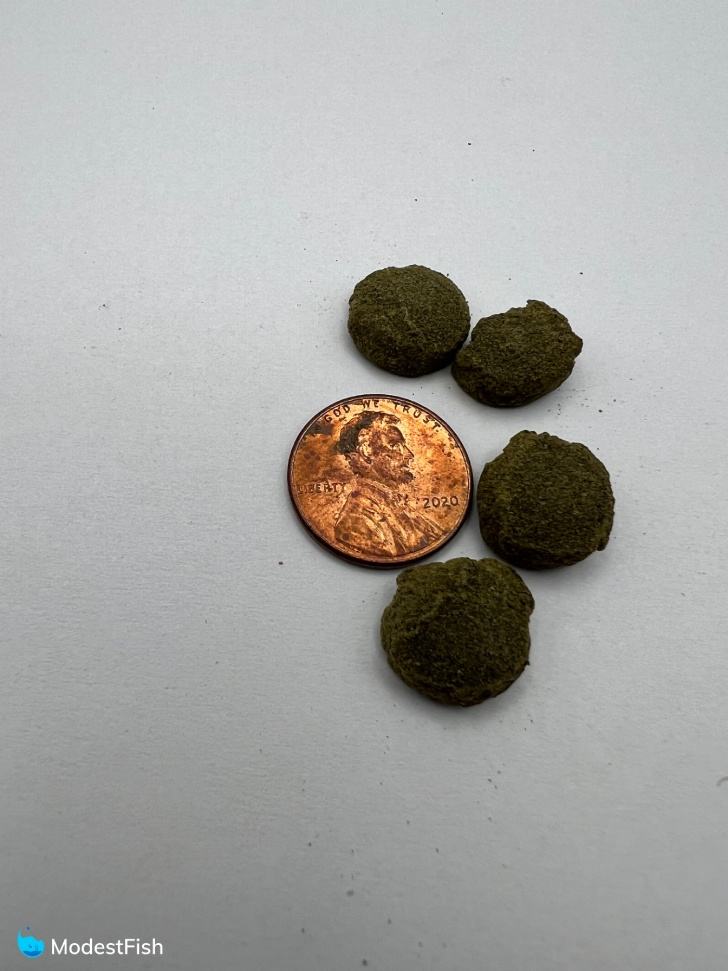
These have become my new favorite algae wafers. I love that the first ingredient is kelp. So many sinking wafers have absolutely garbage ingredients, but these are great.
I have fed these in both South American and African cichlid tanks with outstanding results. Even my angels will gladly swim down and pick these to pieces. If you’re feeding other foods that are super heavy on just animal-based food sources, these wafers are an excellent way to add in some plant-based sources to your fish’s diet.
Best for: I think this is a great addition for most cichlids’ diets, whether they’re carnivorous, herbivorous or omnivorous. I especially like them for herbivorous Mbuna. It’s a great mix of kelp, krill, herring, sardines and spirulina. They do sink straight to the bottom, but most fish will happily nibble away at these along the substrate.
Click For Full Ingredients
Kelp, Whole Antarctic Krill Meal, High Omega-3 (DHA) Herring Meal, Whole Sardine Meal, Wheat Flour, Spirulina, Garlic, Astaxanthin (Haematococcus Algae), Calcium Montmorillonite Clay, Vitamin A Acetate, L-Ascorby-2-Polyphospate (Source of Vitamin C), D-Activated Animal-Sterol (D3), DL Alphatocopherol (E), Vitamin B12 Supplement, Riboflavin Supplement, Niacin, Pantothenic Acid, Thiamine, Calcium Pantothenate, Pyridoxine Hydrochloride, Folic Acid, Biotin, Choline Chloride, Cobalt Sulfate, Ferrous Sulfate, Manganese Sulfate, Selenium, Zinc

Omega One Veggie Rounds
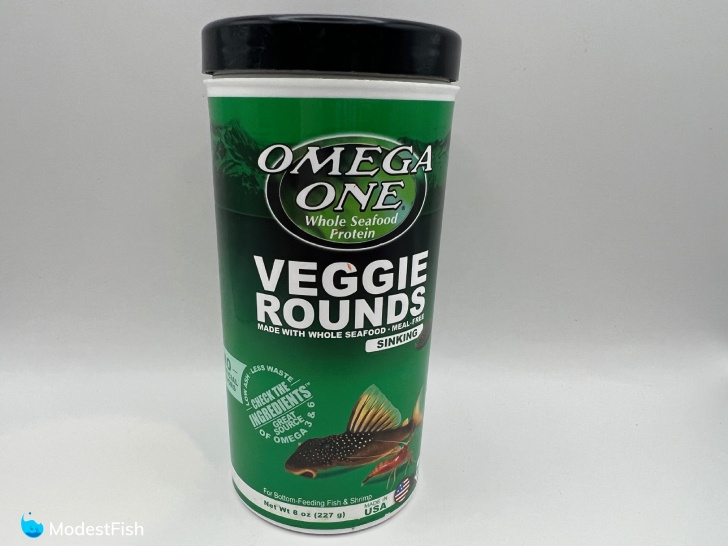
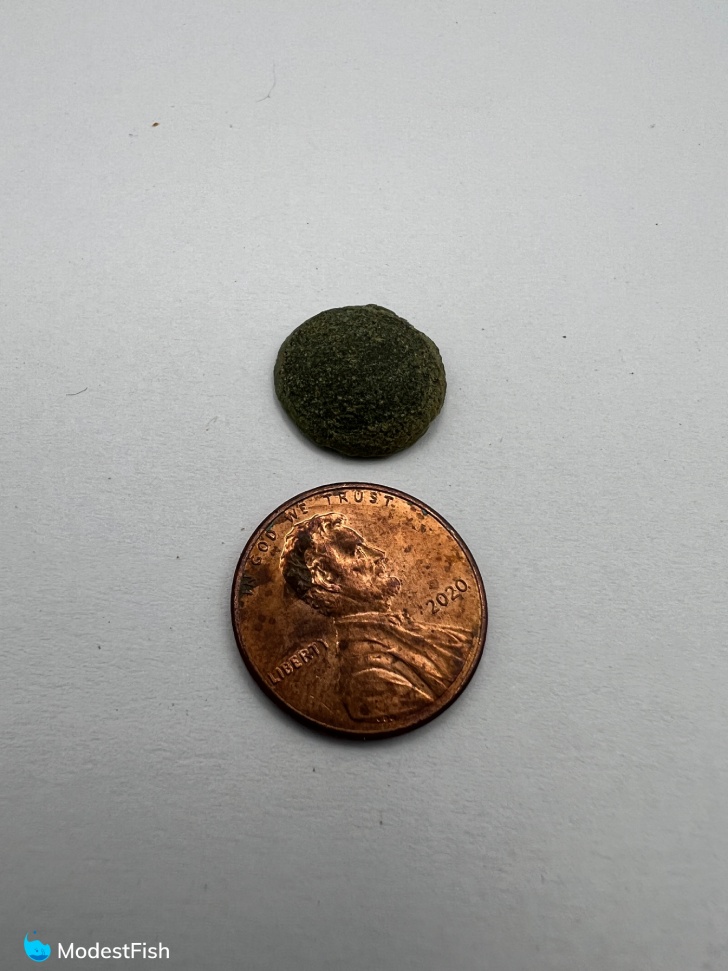
Omega One Veggie Rounds are made from high quality ingredients, they’re just a little light on the actual veggies, in my opinion. Having said that, these have been a staple in my tanks for many years. I often throw these in for my angels to eat. Over time, I’ve fed them to everything from rams to green terrors. Like other Omega One foods, they’re made up of really high quality aquatic proteins and have some kelp and spirulina as well.
Best for: Despite the name, these Veggie Rounds are best for carnivorous and omnivorous fish. These are good for bottom feeding cichlids, like apistogramma, that will pick at them along the substrate as they soften up.
Click For Full Ingredients
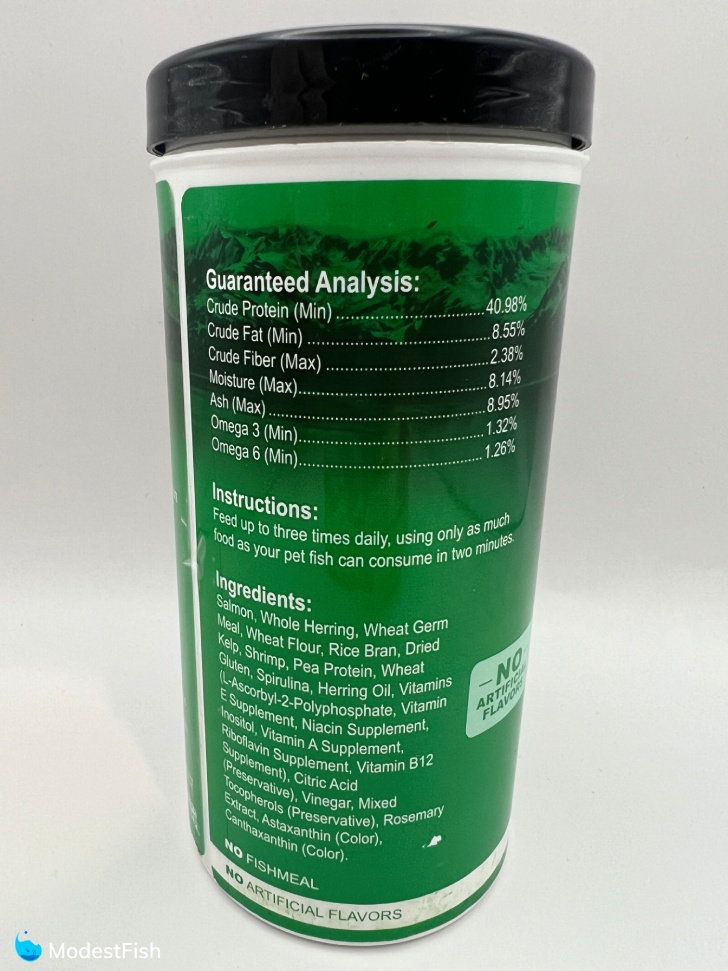
Salmon, Whole Herring, Wheat Germ Meal, Wheat Flour, Rice Bran, Dried Kelp, Shrimp, Pea Protein, Wheat Gluten, Spirulina, Herring Oil, Vitamins (L-Ascorbyl-2-Polyphosphate, Vitamin E Supplement, Niacin Supplement, Inositol, Vitamin A Supplement, Riboflavin Supplement, Vitamin B12 Supplement), Citric Acid (Preservative), Vinegar, Mixed Tocopherols (Preservative), Rosemary Extract, Astaxanthin (Color), Canthaxanthin (Color).

Omega One Super Veggie Sinking Pellets
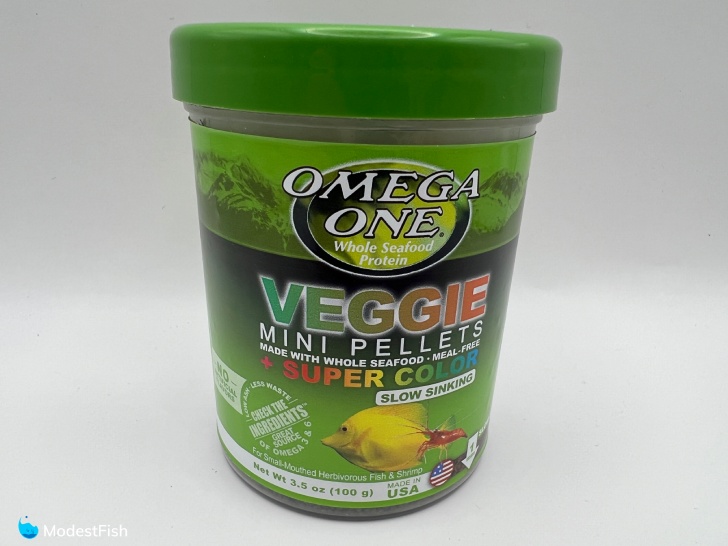
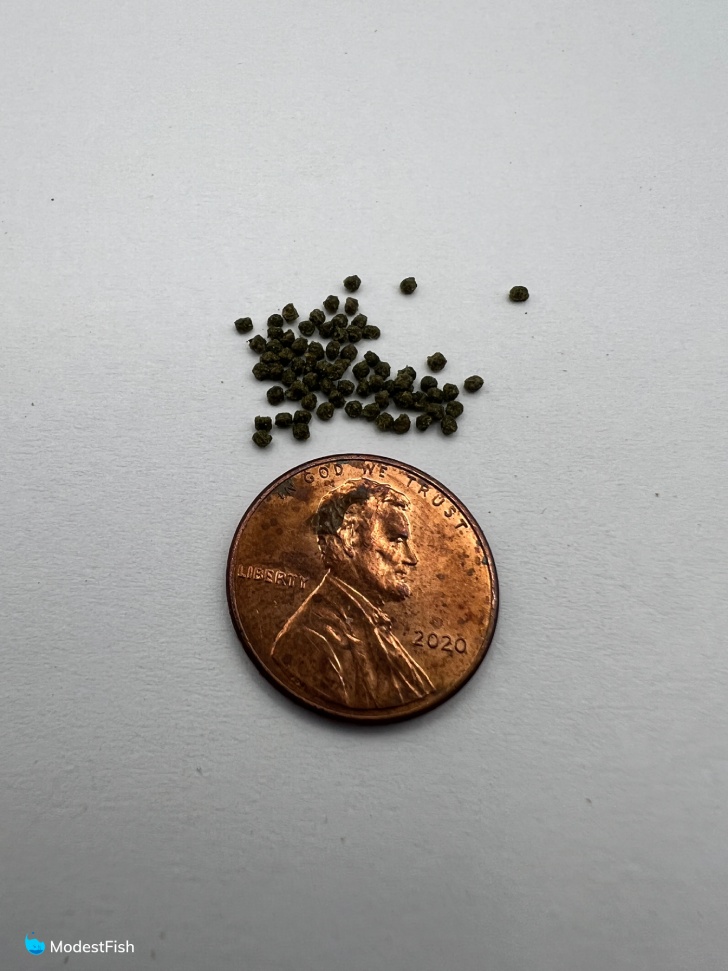
These sinking pellets are heavier on animal-based sources than plant ones, but the ingredients are still very good. I like these for smaller bottom-feeding cichlids, like kribensis or shell dwellers.
Best for: These are a good choice for small, carnivorous or omnivorous cichlids. They sink quickly so they’re best for mid-water or bottom-feeding fish.
Click For Full Ingredients
Salmon, Whole Herring, Rice Bran, Wheat Flour, Wheat Germ, Kelp, Pea Protein, Whole Shrimp, Wheat Gluten, Spirulina, Herring Oil, Citric Acid, Ascorbic Acid, Vitamin E Supplement, Mixed Tocopherols, Marigold Extract, Niacin, Inositol, Astaxanthin, Canthaxanthin, Riboflavin, Vitamin A Supplement, Vitamin B12 Supplement

Fluval Bug Bites Cichlid Formula
Bug Bites Cichlid Food is a great way to add in some protein to your angelfish’s diet. Its main protein sources are black soldier fly larvae and salmon. The larvae helps mimic the insects that most fish eat in the wild. Because of the limited ingredient list, I would use this food as an add-on, rather than a staple.
Click For Full Ingredients
Dried Black Soldier Fly Larvae, Salmon, Fish Protein Concentrate, Green Peas, Potato, Wheat, Dicalcium Phosphate, Calcium Carbonate, Dl-Methionine, Lecithin, Choline Chloride, L-Lysine, Vitamin E Supplement, Biotin, Niacin, Calcium L-Ascorbyl-2 Monophosphate, Calendula, Zinc Oxide, Manganous Oxide, D-Calcium Pantothenate, Vitamin B12 Supplement, Beta-Carotene, Rosemary Extract, Riboflavin, Copper Sulfate, Pyridoxine Hydrochloride, Thiamine Mononitrate, Inositol, Folic Acid, Vitamin A Supplement, Calcium Iodate, Sodium Selenite, Vitamin D3 Supplement

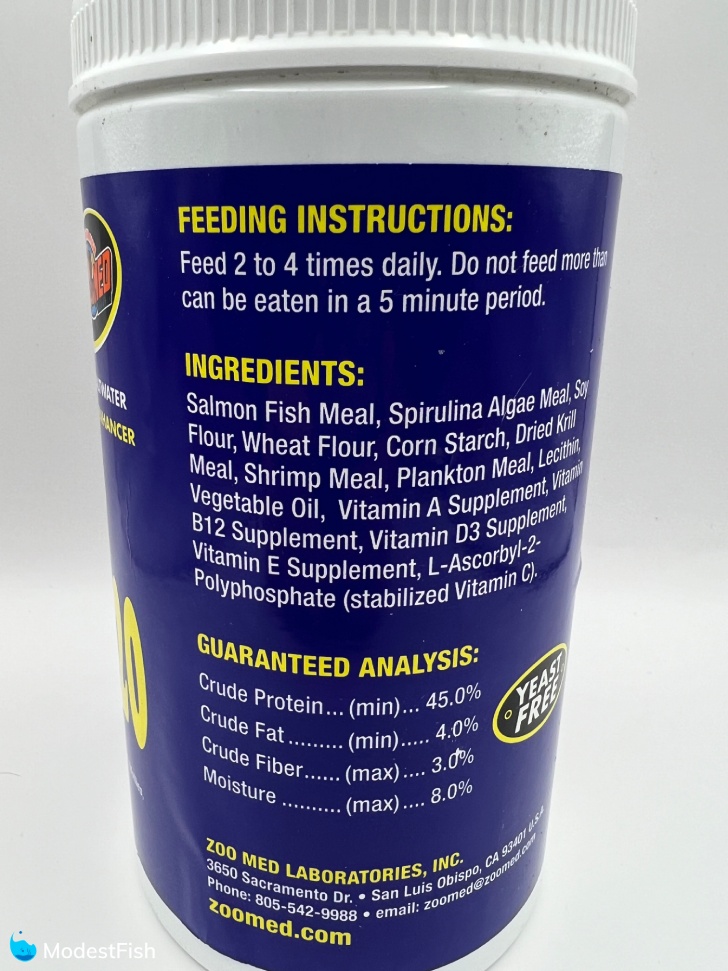
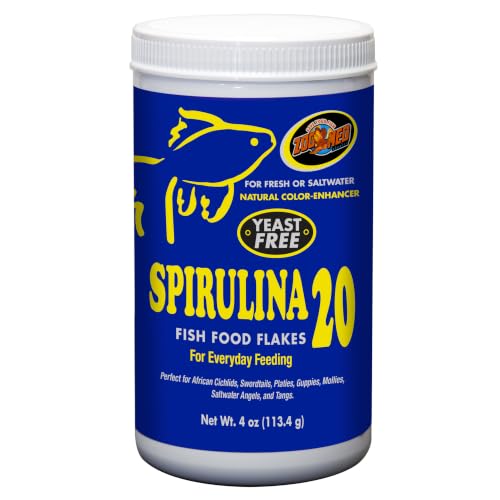
Zoo Med Spirulina 20 Flake Fish Food
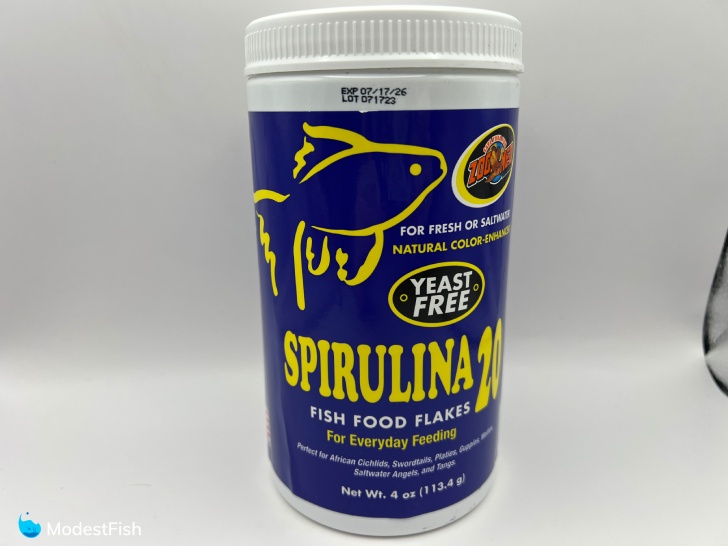
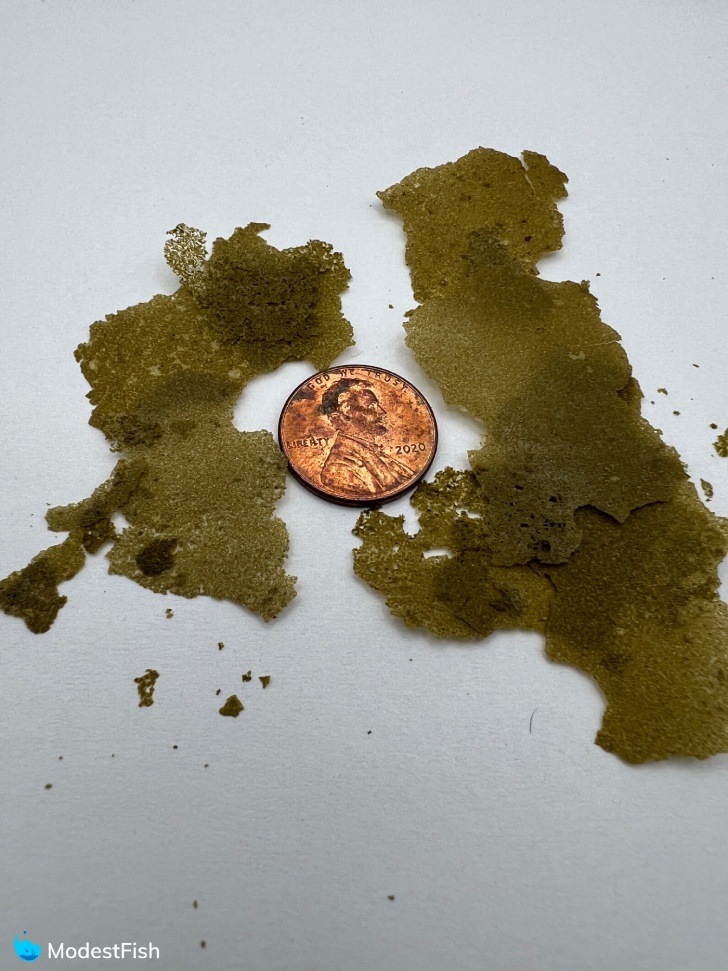
I’ve used these flakes as a supplemental food for almost all of my tanks for years. I like that they contain such a high percentage of spirulina, which is rich in plant-based protein, minerals and vitamins, all of which are easily digestible.
Best for: These flakes are a great add-on for almost any size or species of cichlids.
Click For Full Ingredients
Salmon Fish Meal, Spirulina Algae Meal, Soy Flour, Wheat Flour, Corn Starch, Dried Krill Meal, Shrimp Meal, Plankton Meal, Lecithin, Vegetable Oil, Vitamin A Supplement, Vitamin B12 Supplement, Vitamin D3 Supplement, Vitamin E Supplement, L-Ascorbyl-2-Polyphosphate (stabilized Vitamin C)
Final Word on Choosing the Best Cichlid Food
Plain and simple, all of these foods have high quality ingredients. I handpicked all of them and completely ignored brands that I would consider to have garbage ingredients.
Since it’s a good idea to feed your fish as varied a diet as possible, I’d recommend getting a few different foods and rotating them around. Most of my tanks have a mix of fish, so I do things like feed some flakes or pellets to the top dwelling fish and then throw in some sinking wafers for the bottom dwellers, fully expecting that all the top dwelling fish will also swim down to munch on them.
Just make sure that all the food is getting eaten. With pellets that sink quickly, I put them in a few at a time, wait for the fish to catch them, then put in a few more, wait for them to get eaten, etc. If I just dump in the full ration at once, they sink too fast, and the fish miss a bunch of them. You don’t want uneaten food breaking down in the substrate fouling the water.
I hope you find this article helpful.
I wish you and your fish the very best!
Cichlid Food FAQs:
How often should I feed my cichlids?
This depends on the species and how active they are. It can be tough, but you’ve got to strike a balance between feeding your fish enough for them to be healthy, but still make sure you don’t overfeed.
For smaller, high energy cichlids, you should be feeding small meals up to three times a day. Their stomachs are smaller and their metabolisms are faster. So a single meal doesn’t last them very long.
Active, medium-sized fish (3-4 inches or 7.6-10.1 cm) can go a bit longer between meals. They should be fed twice a day.
In the wild, large carnivorous fish don’t necessarily eat every day. It’s quite common for predatory fish to go without food for several days if their attempts to catch something aren’t successful.
So, you don’t need to feed them as often, maybe only once a day or every other day.
How much food should I feed my cichlids?
This is always a tough question to answer. It really depends on the fish.
Usually, it’s more important to make sure you’re not feeding too much, rather than too little.
But with cichlids, if they feel like they’re not getting enough food, their aggression can go off the charts. You don’t want your fish to decide that its tank mates are on the menu.
One of the best ways to gauge how much your fish really need to eat is to dole food out a little at a time. Don’t just dump a huge portion in there.
Put in a small pinch of food and wait for the fish to eat it. If they gobble it up within a few seconds, add some more. Keep doing this for about a minute, longer if you have slow eaters.
When you start to see the fish slow down a little bit, or lose interest completely, stop feeding. Over time, you’ll start to get a feel for how much your fish really need to eat.
Feeding this way means less uneaten food ends up in the substrate.
What vegetables are good for cichlids?
There are lots of tasty veggies that you can use to supplement your fish’s diet. You should blanch veggies before you put them in the tank:
Peas (pop the skin off the pea)
Zucchini
Romain
Spinach
Squash
Sweet potato
Why are my cichlids losing their color?
The single biggest thing that causes cichlids to lose their color is stress.
This stress can be caused by many different factors:
Aggression
Overcrowding
Poor water quality
Poor diet
The easiest way to have happy colorful fish is to give them the best possible environment:
Keep up with water changes so your water stays clean
Rehome fish if you have a serious bully or there are too many fish in the tank Feed a high quality, varied diet appropriate to the species

Great advice. Thank you much ?