

Freshwater shrimp like to eat a variety of algae, plants, and bacteria.
In this guide, I’ll explain what do freshwater shrimp eat, and what you can do to mimic their natural diet with different types of foods.
What Do Shrimp Eat?
Shrimp are scavengers and eat a huge variety of foods as they travel along their native waterways.
A shrimp will eat anything that doesn’t eat it first. Including, but not limited to, algae, other dead shrimp, left over fish food, living plants, and any decaying organic matter.
As a shrimp keeper, it’s your job to help provide your shrimp with a diet that mimics their natural one.
Here are a few commercial foods your shrimp will love to eat. Below, I’ll go into more depth into the different kinds of foods freshwater shrimp like to eat.
And remember they’ll also like to eat veggies, plants etc. so be sure to provide plenty for them to graze on.
| Preview | Product | |
|---|---|---|

|
FANCYTE 18-25CM 50 Grams(25PIECES ) INDIAN ALMOND LEAVES Fish Tank for Shrimp Crayfish, Betta Fish... | Buy on Amazon |
Diet Requirements For Shrimp
So what do freshwater shrimp eat?
In the wild, freshwater shrimp are scavengers that scour their native waterways looking for algae, bacteria and other microorganisms, decaying plant matter.
They will also scavenge dead fish and even dead shrimp that they happen to find.
It’s best to mimic this when providing a diet for the shrimp in your aquarium.
This means they need a mostly plant-based diet with some animal protein mixed in. It’s also best to offer them a varied diet that provides a broad spectrum of nutrients.
It’s not always best to just rely on commercially prepared foods since many contain a much higher percentage of animal protein than what is ideal for most species shrimp.
Luckily, there are a wide variety of things you can feed your shrimp to make sure they’re happy and healthy.
Best Food for Freshwater Shrimp
Let’s go through how you can go about creating a natural diet for your shrimp.
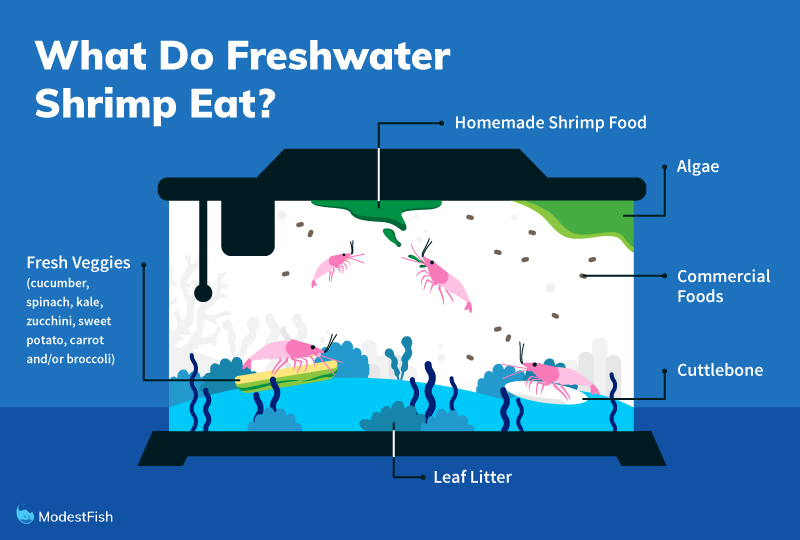
Algae
Algae should make up the majority of your shrimps’ diet. This is why it’s so important to only add shrimp to a mature tank that already has lots of algae.
There just isn’t enough for them to eat in a brand new tank that super clean.
As long as it’s there, shrimp will gladly pick at algae all over the tank, pretty much day and night.
Frankly, this is one of the best reasons to keep shrimp. They’re a great cleanup crew that can get into tiny places other species can’t reach.
You should see your shrimp contentedly scraping and grazing around the tank. This means they’re happy and finding food. This lets you know that you can probably go a few days between feedings.
But, if it looks like they’re restlessly zipping around the tank, they’ve eaten up all the algae and really need some supplementary feeding.
If it seems like your shrimp are being total slackers when it comes to algae cleanup, this means you’re feeding them too much other stuff. Start skipping a day or two between feedings and they’ll get back to work on the algae.
Fresh Veggies
Fresh veggies give shrimp a healthy plant-based supplement to their core diet of algae.
You can use things like cucumber, spinach, kale, zucchini, sweet potato, carrot and/or broccoli. Basically, all that stuff your mom was always trying to get you to eat when you were a kid.
Veggies do take a little bit of preparation, but it’s really simple. And you can make up a bunch ahead of time and freeze it for easy feeding later on.
You should peel veggies like sweet potato, cucumber and zucchini. Fish and shrimp won’t eat the peel and peeling it eliminates possible pesticides.
Slice your veggies so they’re about ½ inch (1.25 centimeters) thick (broccoli can just be broken into small pieces).
Then place them in a pot of boiling water and boil for about 2 minutes. Remove them and immediately place them in a bowl of ice water to stop the cooking process.
Boiling and chilling the veggies breaks them down enough so they’re easier for your shrimp to eat. It should also make them sink to the bottom so they’re not floating all over the tank.
You can offer veggies several times a week. It’s fine to leave a piece in the tank overnight and then remove whatever the shrimp haven’t eaten.
Leaf Litter
Yep, that’s right, I’m saying to put leaves in your tank.
This mimics a shrimp’s natural environment since leaves fall into waterways and accumulate on the substrate.
Infusoria, a collection of harmless bacteria and other microorganisms, will grow on the leaves as they break down. Shrimp LOVE this stuff and will be more than glad to munch on it.
I know, gross. But, they’re shrimp, so there’s no accounting for taste.
You can collect clean, dry leaves from your local area, but make sure that they haven’t been exposed to things like chemical fertilizers or pesticides.
Or, you can purchase Indian almond leaves (also known as Catappa leaves).
Indian almond leaves are great because they’re a large leaf that provides a lot of surface area for shrimp to graze on or even hide under. These leaves also leech tannins and flavonoids that have antimicrobial and anti-inflammatory properties.
Cuttlebone
OK, this one might sound weird, but just bear with me.
Dried cuttlefish bones are sold in pet stores in the bird section. You can break off a small piece and place it in your tank.
Weigh it down with decor and it will sink on its own after a few days.
Cuttlebone is made of almost pure calcium carbonate, but it’s also fairly soft, unlike something like crushed coral.
Shrimp will graze on it, which will give them a source of dietary calcium, important for shell growth, it will also leach small amounts of calcium into the water.
Homemade Shrimp Food
The coolest thing about homemade shrimp food is that you know exactly what’s in it.
It does take some time and effort to prep the food, but you can make big batches and freeze them for later.
There are hundreds of recipes and videos out there that can take you through the process step by step.
Commercial Foods
The reason I list commercial foods last is that they aren’t necessarily the healthiest foods for shrimp.
This is because they are mostly animal protein based, even foods marketed as being meant for shrimp.
Here’s the bottom line when it comes to this, ingredients like fish meal or shrimp meal are a lot cheaper than things like algae meal or spirulina. So companies use formulas that are the most profitable, not necessarily the most nutritionally sound.
Look for shrimp foods that are mostly plant-based, like Shirakura Shrimp Food or Repashy Super Green to use as a staple. Then you can use meatier commercial foods once a week or so for some added protein.
Choosing Food for Your Freshwater Shrimp
Shrimp are scavengers. So, they eat a huge variety of foods as they travel along their native waterways. Basically, they eat whatever they find that doesn’t eat them first.
It’s our job as shrimp keepers to mimic what they would eat in nature.
Providing them with a varied diet, made up mostly of plant-based foods, will go a long way towards helping your shrimp live happy and healthy lives.
Make sure that your tank is mature enough to have plenty of algae and tasty biofilm for them to graze on before you add shrimp to the tank.
Provide leaf litter to give them even more surfaces to munch on and offer a variety of blanched fresh veggies so they have all the plant material they need.
Cuttlebone is also a welcome addition that can provide a bit of extra dietary calcium.
Just like with human food, sometimes the best thing you can do is make food from scratch. This does mean putting in a bit more time and effort, but you can customize ingredients and know exactly what your shrimps’ food contains.
When it comes to commercial foods, look for plant and/or algae-based feeds to be your staple. Then you can offer meaty foods once or twice a week to provide a boost of protein.
Figuring out the best food for your freshwater shrimp can seem a little overwhelming at first. But once you understand a few basic principles, you can play around with things and figure out what’s going to work best for you and your tanks.
