

There are a lot of different kinds of CO2 setups that you can use. Some rely on compressed CO2 gas that you get from a store, while others utilize chemical and biological reactions to produce CO2 on the spot.
In this guide, I’ll discuss these methods and how you can implement them in your aquarium.
Passive CO2
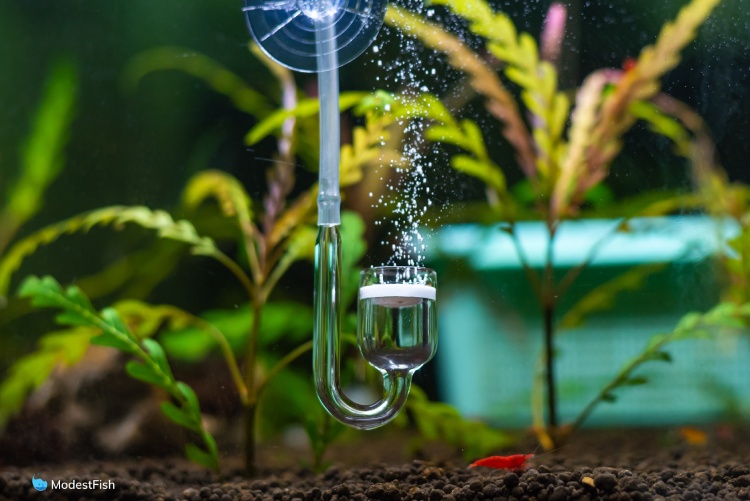
Passive CO2 systems involve trapping a bubble of CO2 in a device, reminiscent of an old-timey diving bell, that sits inside the tank.
The bottom of the bell is open to the water and the CO2 will slowly dissolve into the water column.
The CO2 comes from disposable canisters and most people find that they need to refill the bell two or three times a day. So, it’s a bit labor intensive.
These systems are really only effective for smaller tanks, 20 gallons (76 liters) is the largest I would recommend one of these for.
While passive systems are easy to use, they don’t produce the most consistent results, the way pressurized CO2 does.
Pros:
- Simple to set up and use
- Doesn’t require a big investment
- Can’t accidentally overdose CO2 in the tank
Cons:
- Only good for smaller tanks
- Bell has to be refilled several times a day
- Disposable canisters create more waste than other kinds of CO2 systems
| Preview | Product | |
|---|---|---|
|
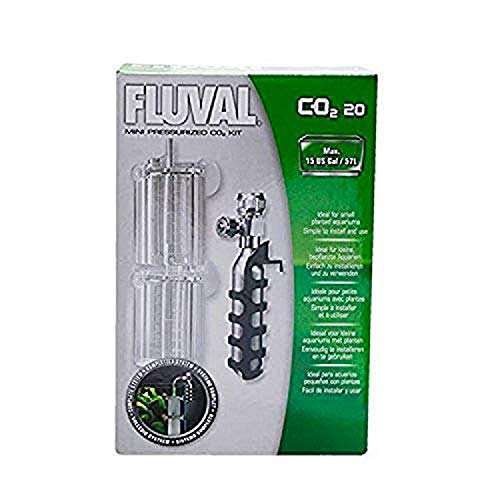
Hagen FL Mini Pressurized 20g CO2 Kit | Buy on Amazon |

|
ISTA Disposable CO2 Can 3 Pack Bundle | Buy on Amazon |
DIY CO2 Systems
Most CO2 systems rely on some sort of concentrated source of CO2 gas, either from small disposable canisters or much larger refillable ones.
But, DIY systems make their own CO2, either from yeast or from mixing citric acid, baking soda and water.
Systems that use yeast are very simple to make and pretty much the cheapest possible way to add CO2 to your tank. As yeast feeds on a mix of water, sugar and gelatin, it puts off CO2 as a waste product.
There are some downsides, like it can be hard to regulate the amount of gas that’s produced, you can’t turn the CO2 off at night and the yeast culture can be smelly.
CO2 pumping into the tank at night, when the lights are off, can be problematic. Plants don’t use CO2 at night. So, gas can build up in the water while the lights are out, potentially suffocating livestock in the aquarium.
It’s best to make sure that there is some extra surface agitation so enough oxygen enters the water to combat the CO2 levels.
There are also citric acid and baking soda setups that range from super simple rigs made out of soda bottles to much more elaborate metal canister setups.
The citric acid and the baking soda mix together and cause a reaction that puts off CO2 gas. It’s just like when you mixed baking soda and vinegar in science class when you were a kid.
Generators that use citric acid aren’t smelly like yeast ones, but the really simple soda bottle setups can’t be left to run on their own for weeks at a time.
However, if you’re willing to drop a little more cash, the fancy citric acid generators can be.
Pros:
- Smaller investment than pressurized CO2
- Some setups can run for weeks on their own
Cons:
- Difficult to regulate
- Can be smelly
- May not be able to turn it off at night



Pressurized CO2
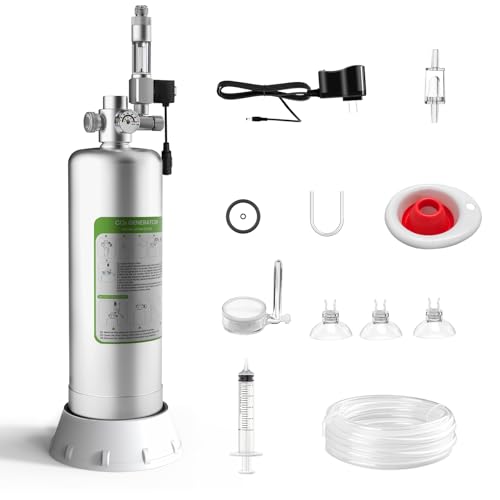
Pressurized CO2 systems utilize canisters of CO2 that you can buy at sporting goods and hardware stores.
The tanks vary in size from tiny canisters that you would use for paintball, all the way up to large canisters the size of a fire extinguisher.
This kind of CO2 system can be quite expensive, but they produce the most consistent levels of gas, and can be put on a timer so they don’t run at night.
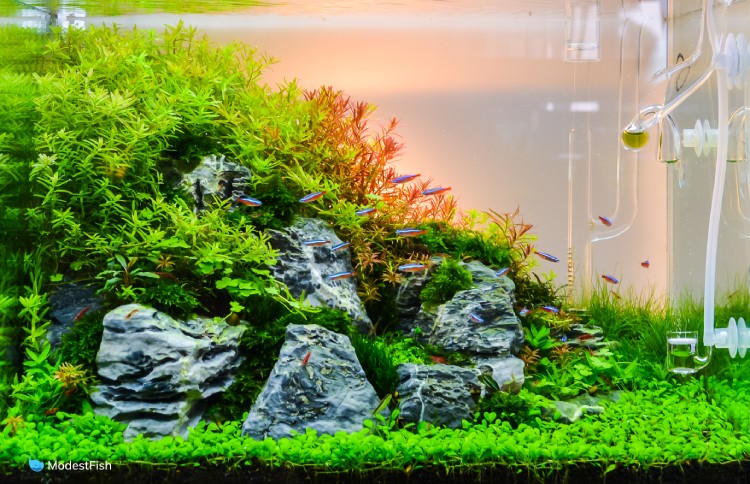
Pressurized CO2 uses a regulator that only allows tiny amounts of gas to escape the canister. Just like with a DIY setup, the gas builds up pressure that pushes it through an airline hose, into the tank and out through a diffuser.
Although these systems are the most costly, they’re fairly easy to set up and use and they provide the best results.
Pros:
- Consistent results
- Gas output can be fine tuned
- Timers can shut it off at night
Cons:
- More expensive than other setups


Final Thoughts on Adding CO2
Whatever kind of system you decide to go with, adding CO2 to your tank can really help boost plant growth.
Passive systems are probably the easiest to use, but you’ll need to refill the bell several times a day.
DIY systems can be set up and allowed to run, possibly for weeks at time, but many can’t be shut off at night. You’ll need to take precautions to protect your fish and invertebrates.
Pressurized CO2 setups can be turned off at night, and will provide the most consistent results. But, they also have a much higher price tag than other kinds of systems.
I hope you find this article helpful.
I wish you and your fish the very best!
